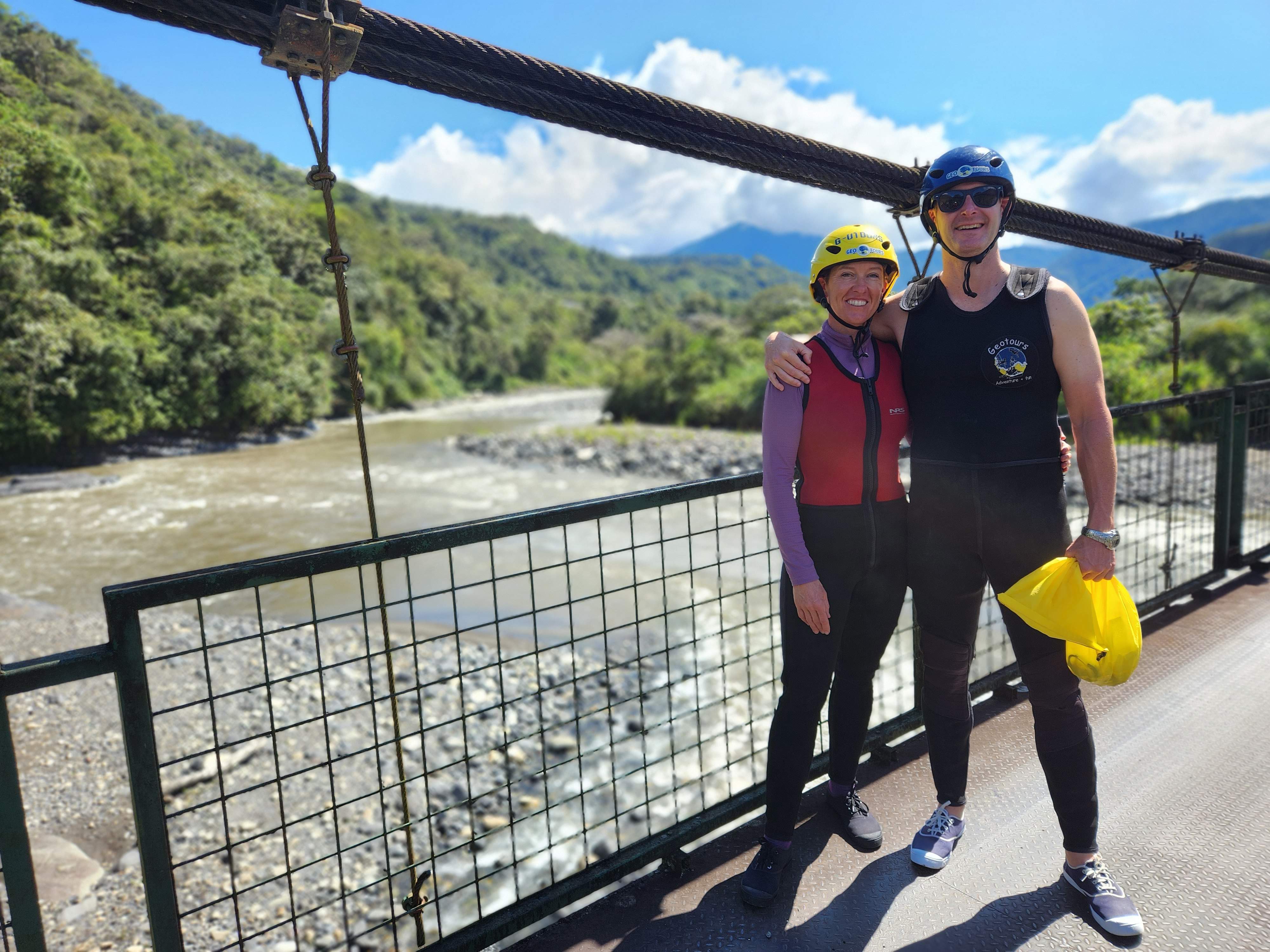
Baños is often called the “Adventure Capital of Ecuador” and all sorts of adrenaline spiking opportunities abound in this city and the surrounding area. Yesterday we had biked parallel to the Pastaza river and saw all of the impressive waterfalls along it, and today our adventure would be going rafting on the Upper Pastaza, a section about five miles downstream1 of the Pailón del Diablo, that was made up of Class III-IV rapids.
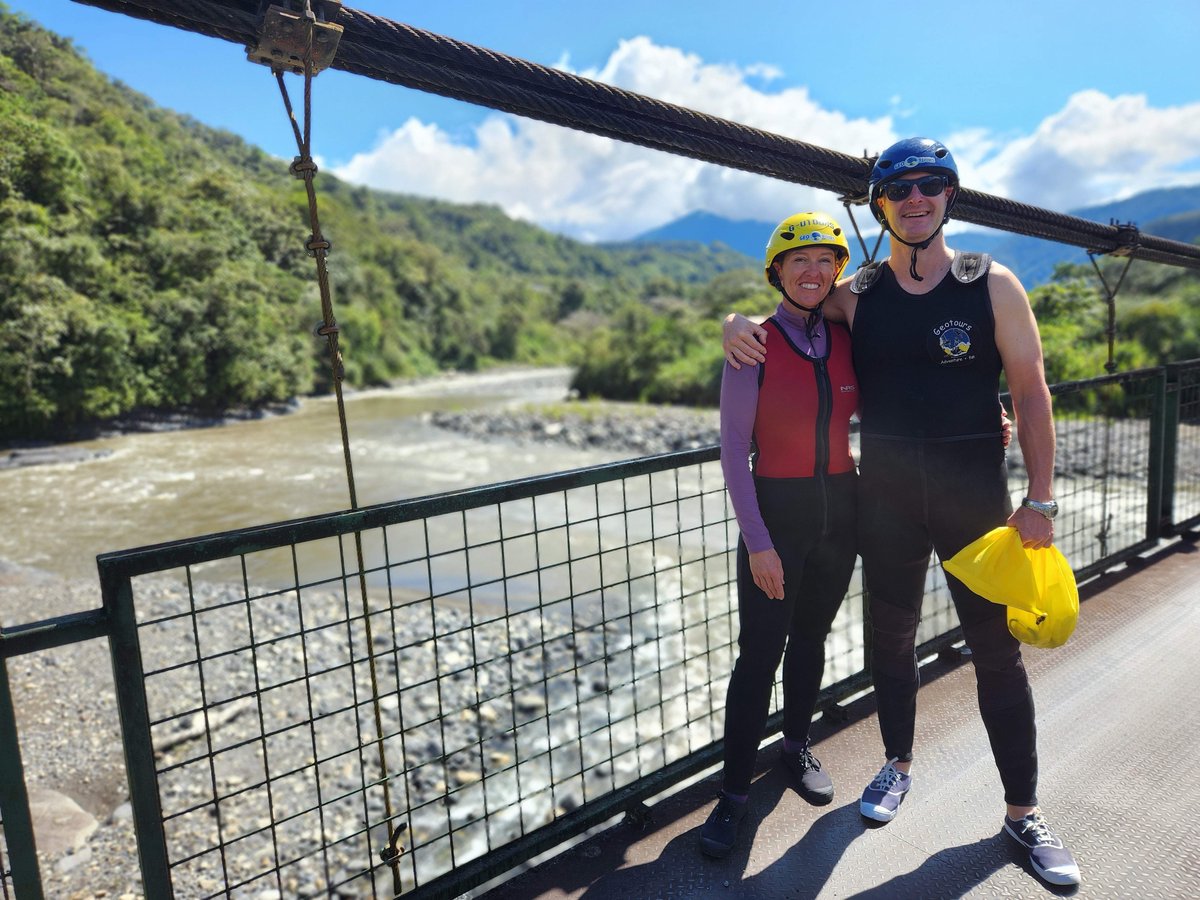
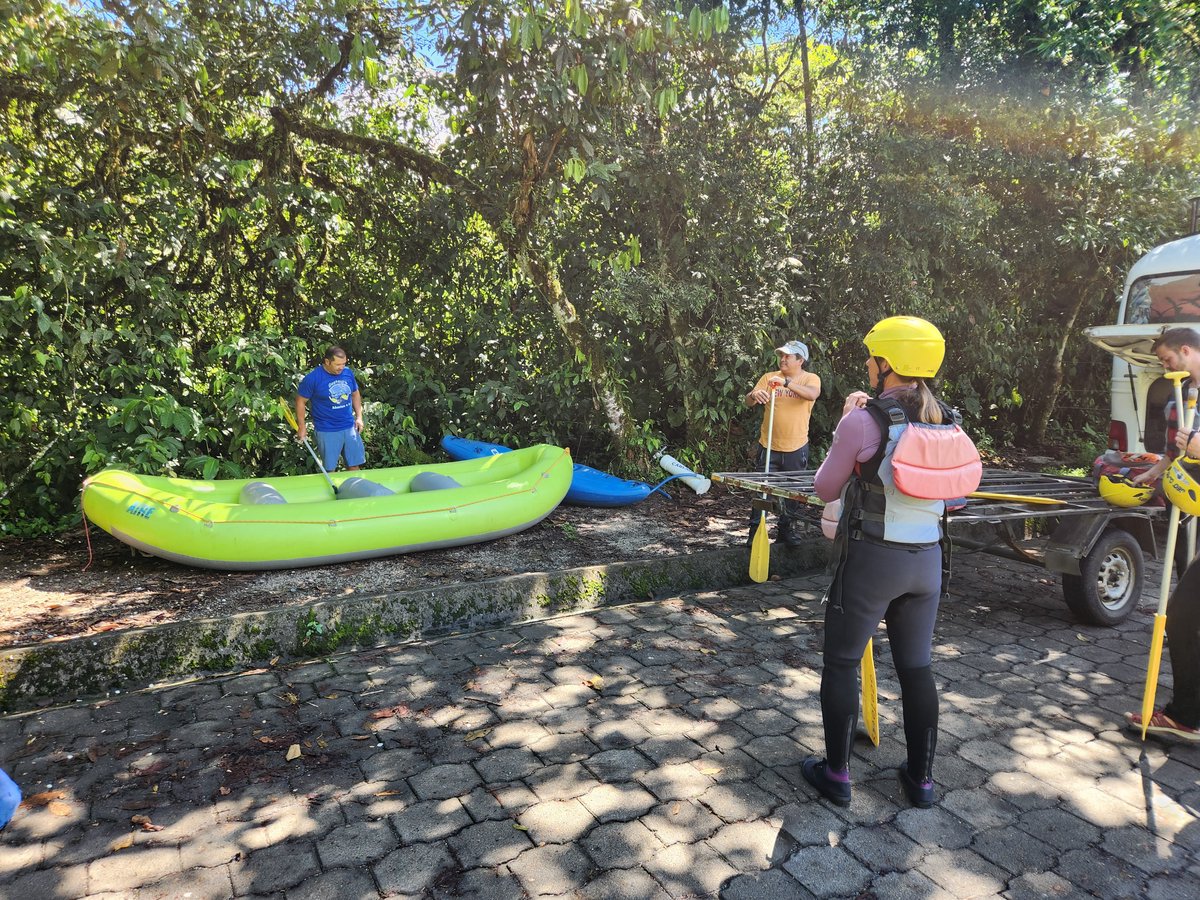
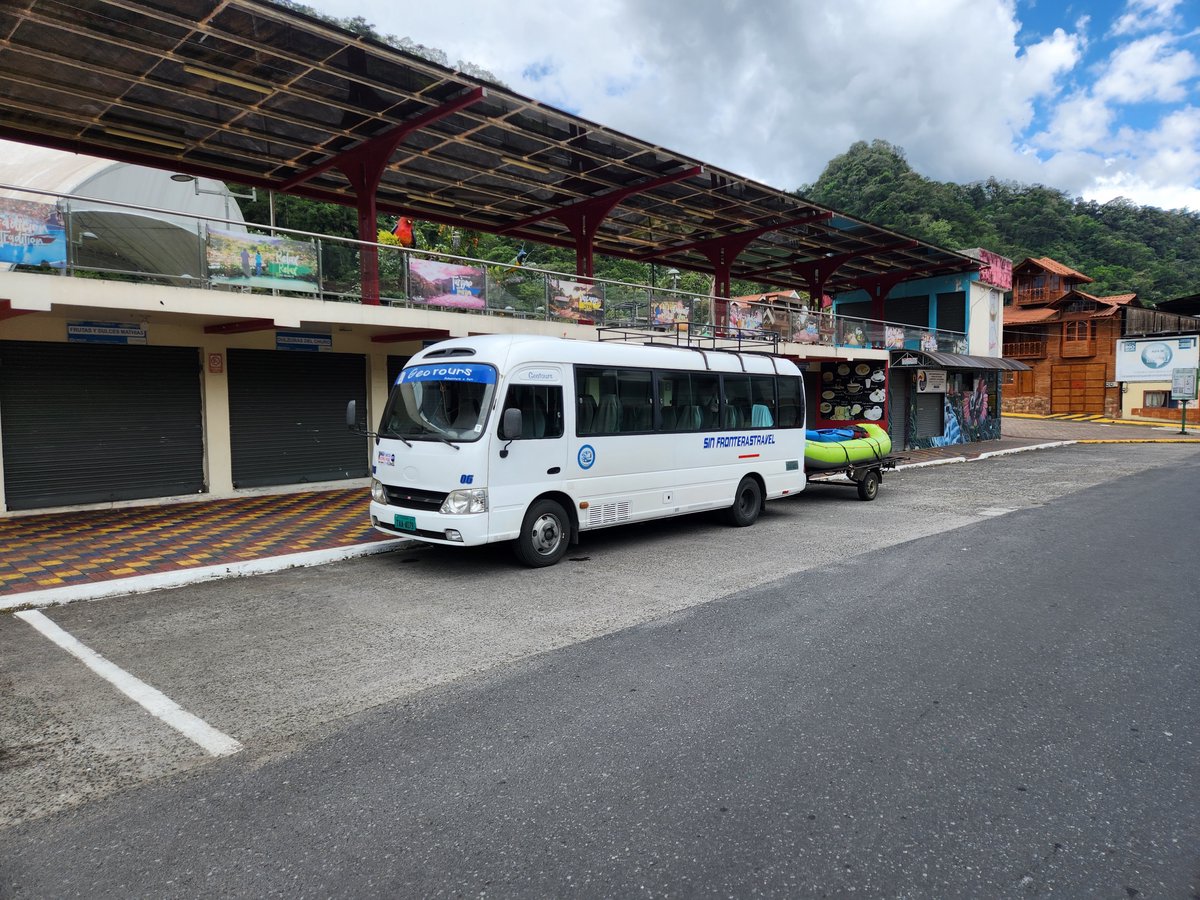
We went with Geotours, the same company that we had rented bikes from the day before. The cost was $30 per person, and included lunch, and that seemed to be the going price for rafting in this area. Their bus picked us up from our hotel that morning, and we drove about half an hour to their equipment outpost to get decked out with wetsuits, helmets, PFD’s, and shoes, and for them to pick up their raft. According to the guides, we’d be on the upper section today as it was just low enough to run. If it were any higher, we’d have gone a bit further down stream to a more tame section of the river.
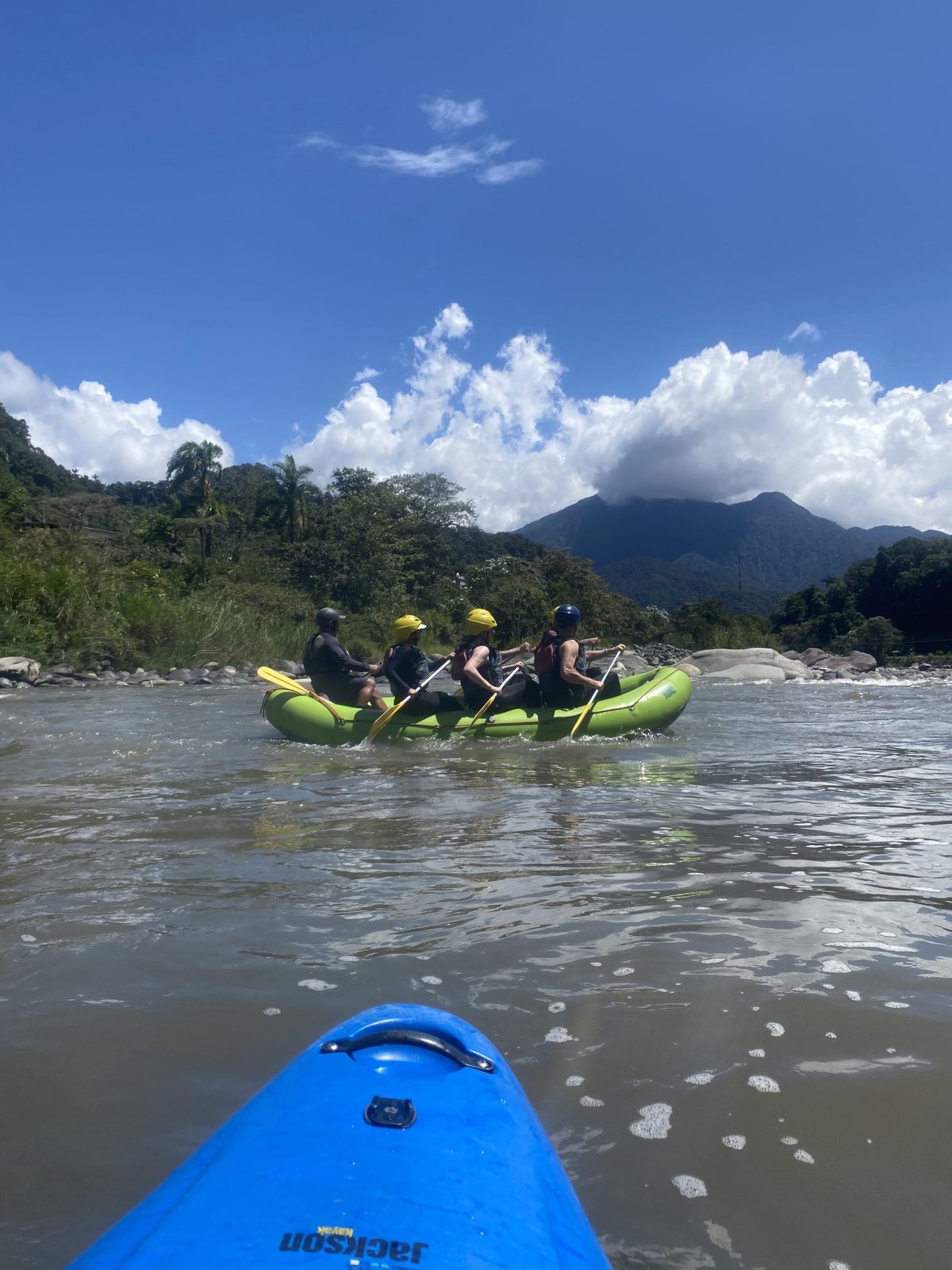
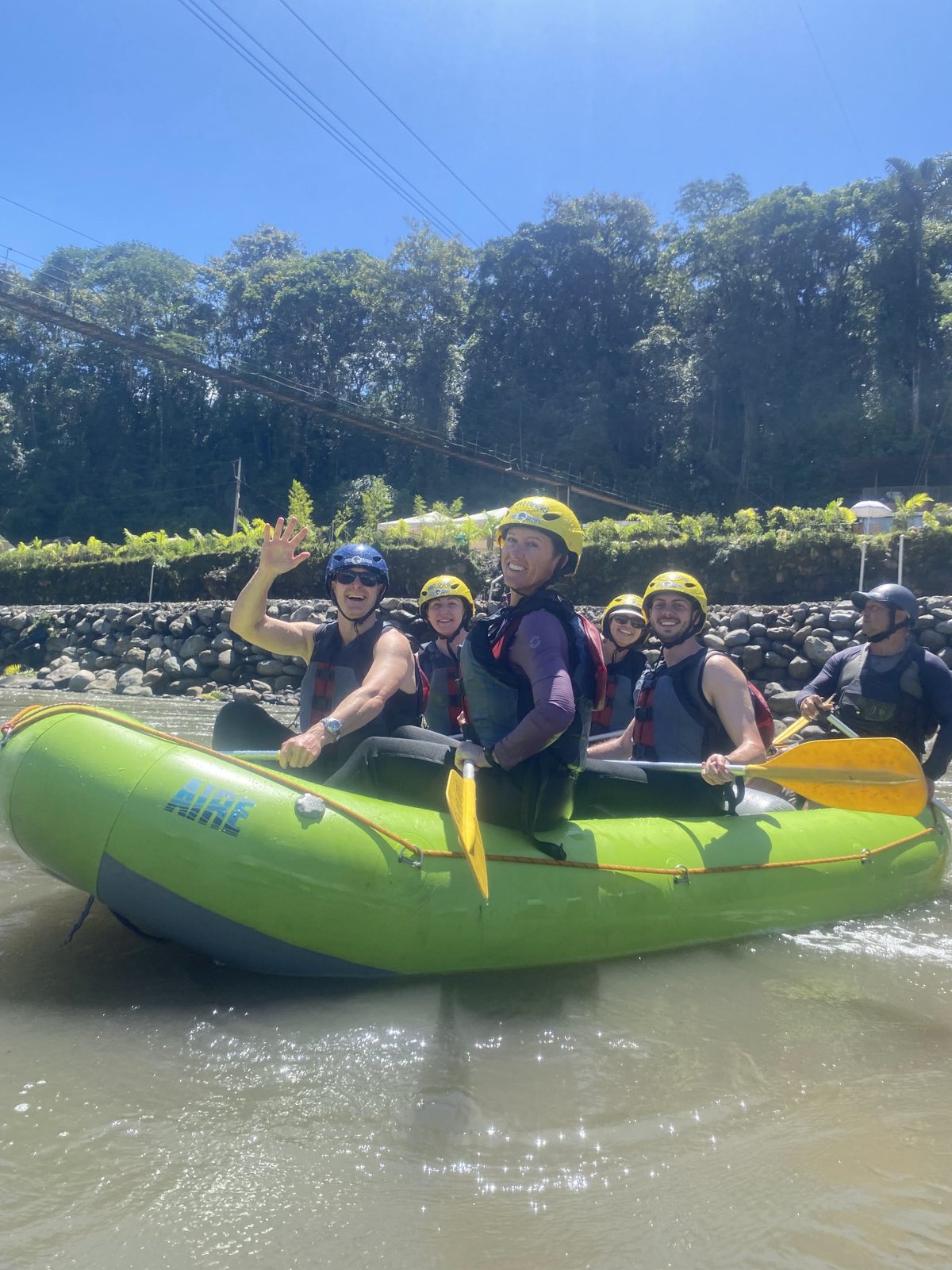
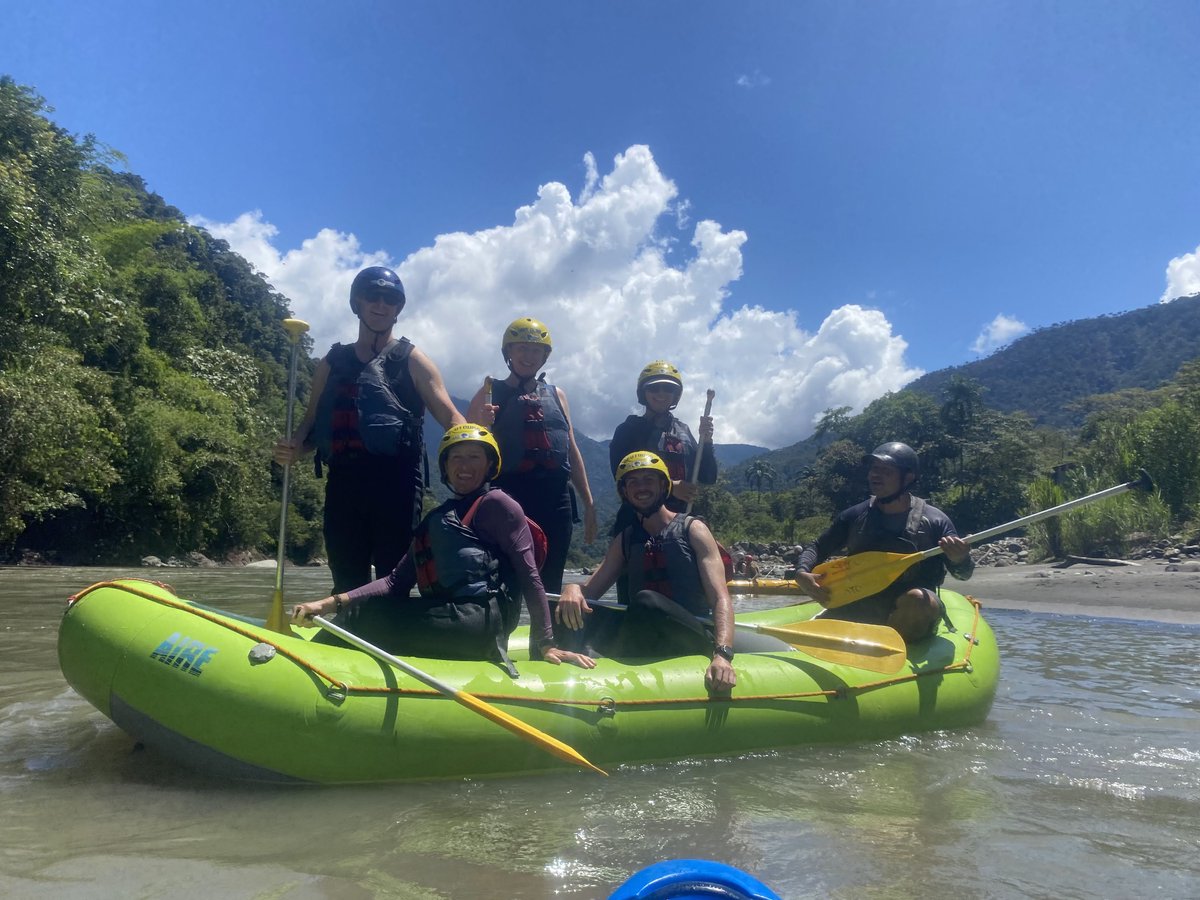
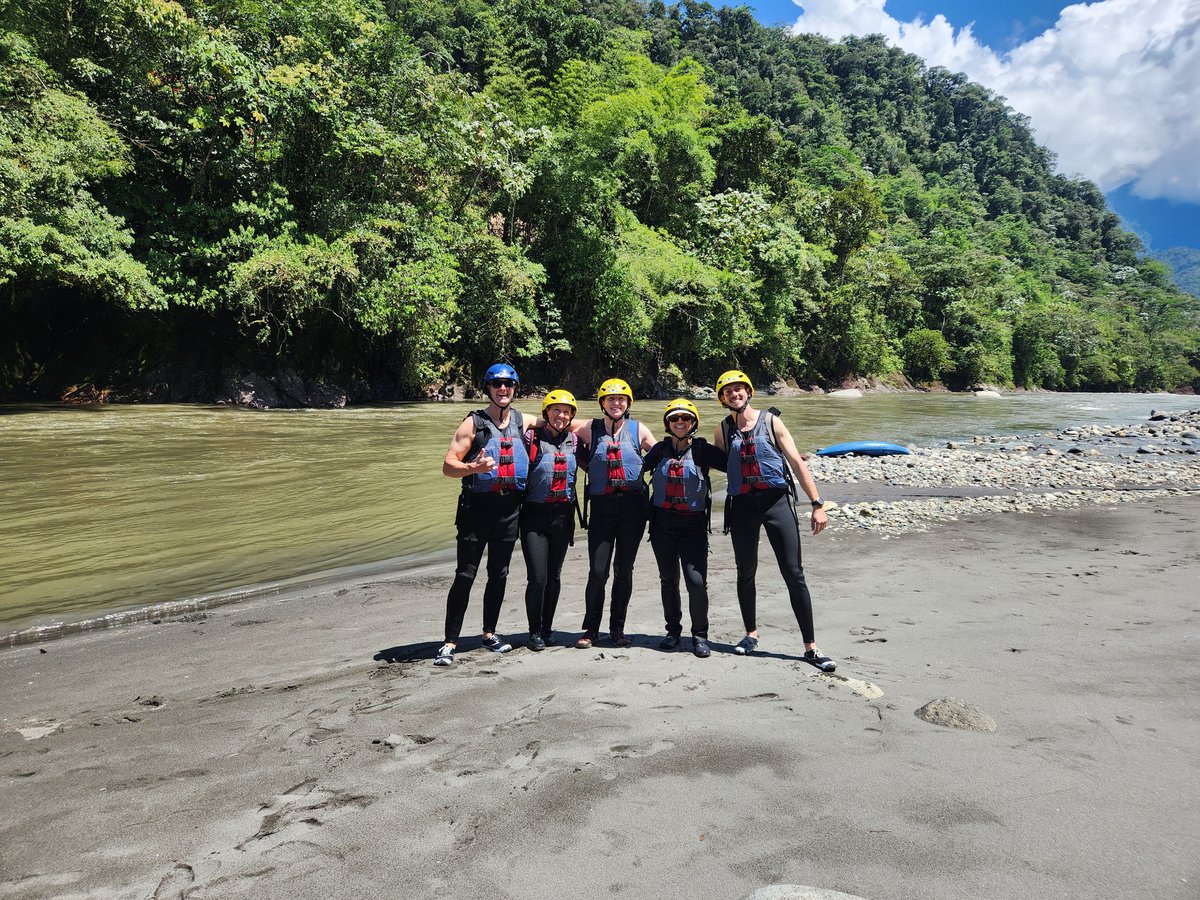
There were five rafters including Scott and I, plus our guide. The other guests were two Australian women and an Israeli man that had just finished up his military requirement a few weeks before. We would also have a kayaker alongside us that would serve not only as our safety boater, but our photographer as well. This was a nice touch and not something you usually see on commercial rafting trips in the U.S.
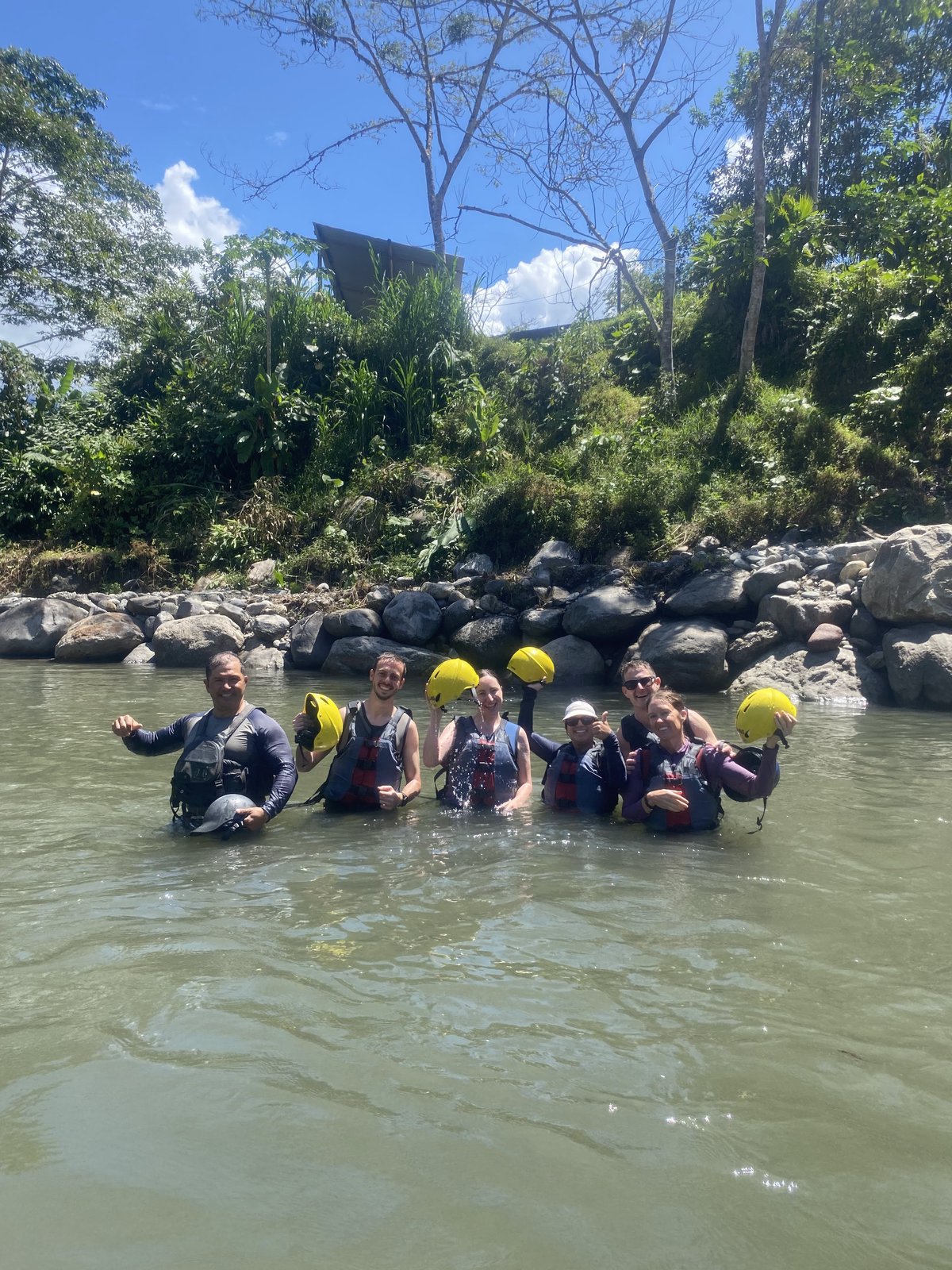
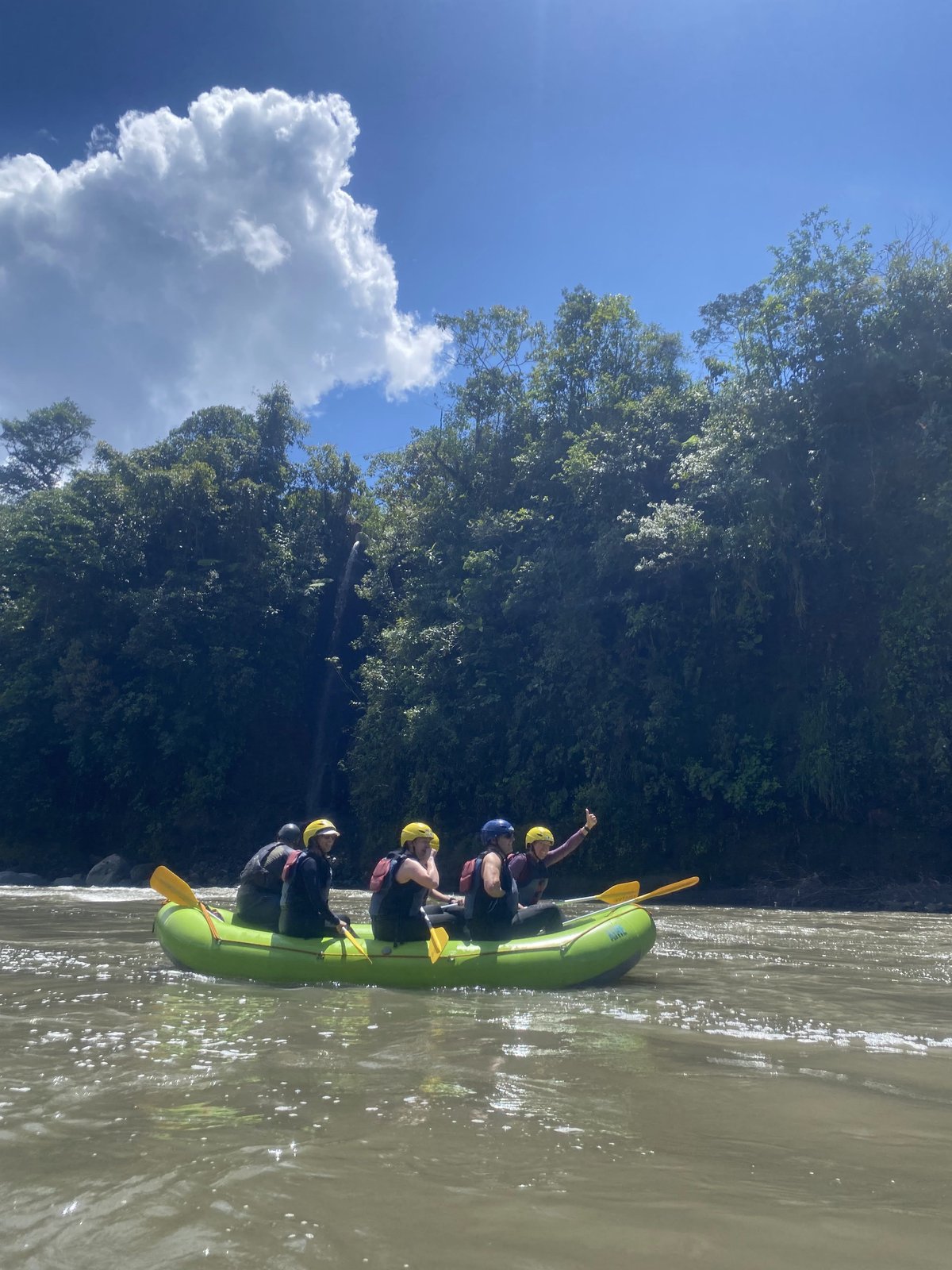
When we arrived at the put-in, we got the standard safety briefing and then carried our raft to the water. Scott and I were up front across from each other and the other guests were behind us. The guide had us practice paddling and listening to his instructions and then we paddled to an eddy. He then instructed us to put our paddles down on the floor of the raft and on the count of “3” to jump in the river. We diligently followed his instructions and all jumped in. Then he had us practice pulling ourselves back into the raft. I liked what he did there because for some of the folks that had never rafted it quickly got them over the fear of being able to get back in, and getting submerged in the water right off the bat made everyone less squeamish about really digging in when he told us to paddle hard.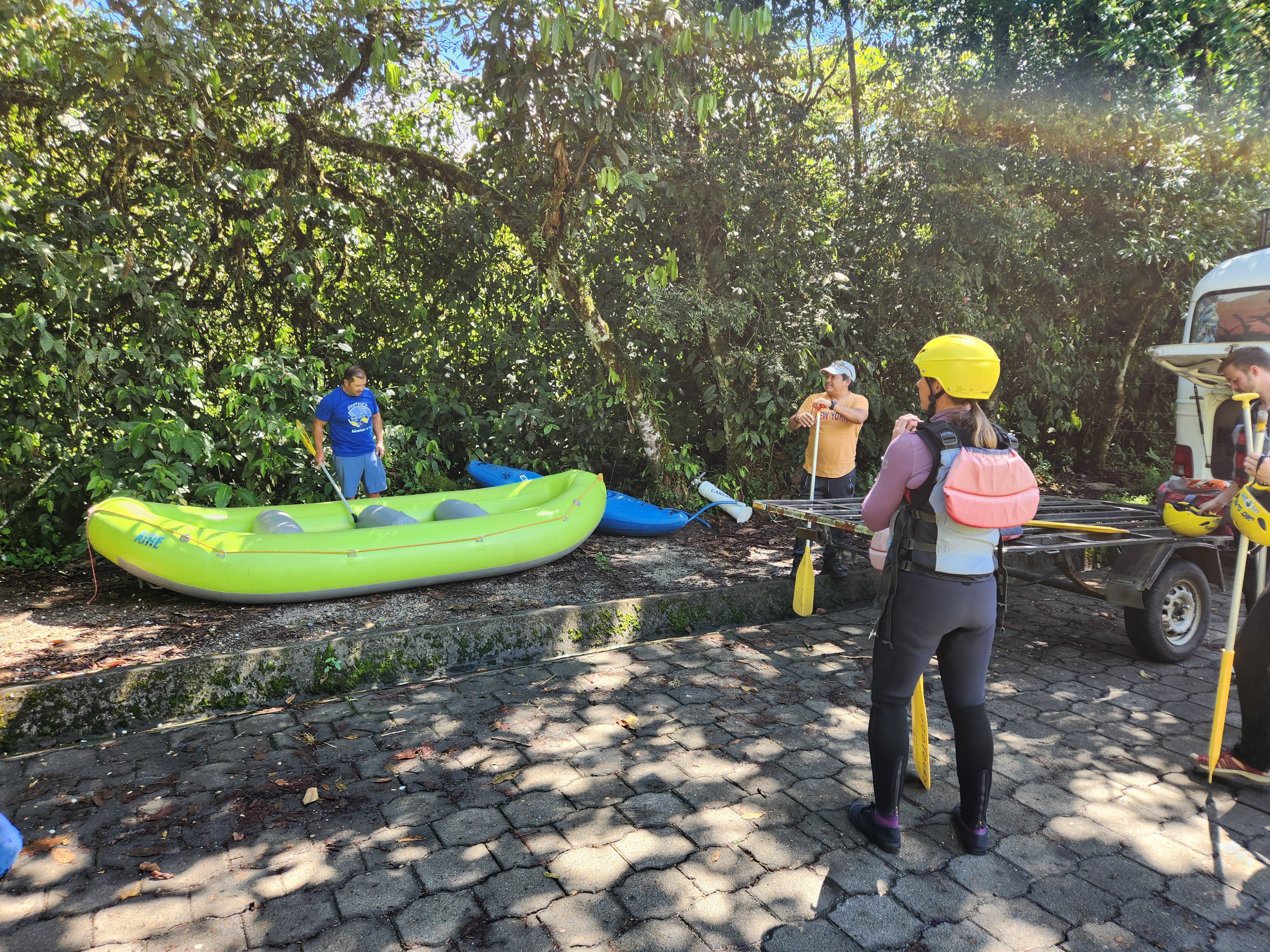
I am turning the keyboard over to Scott, the resident whitewater expert, to give you a rundown on our river trip:
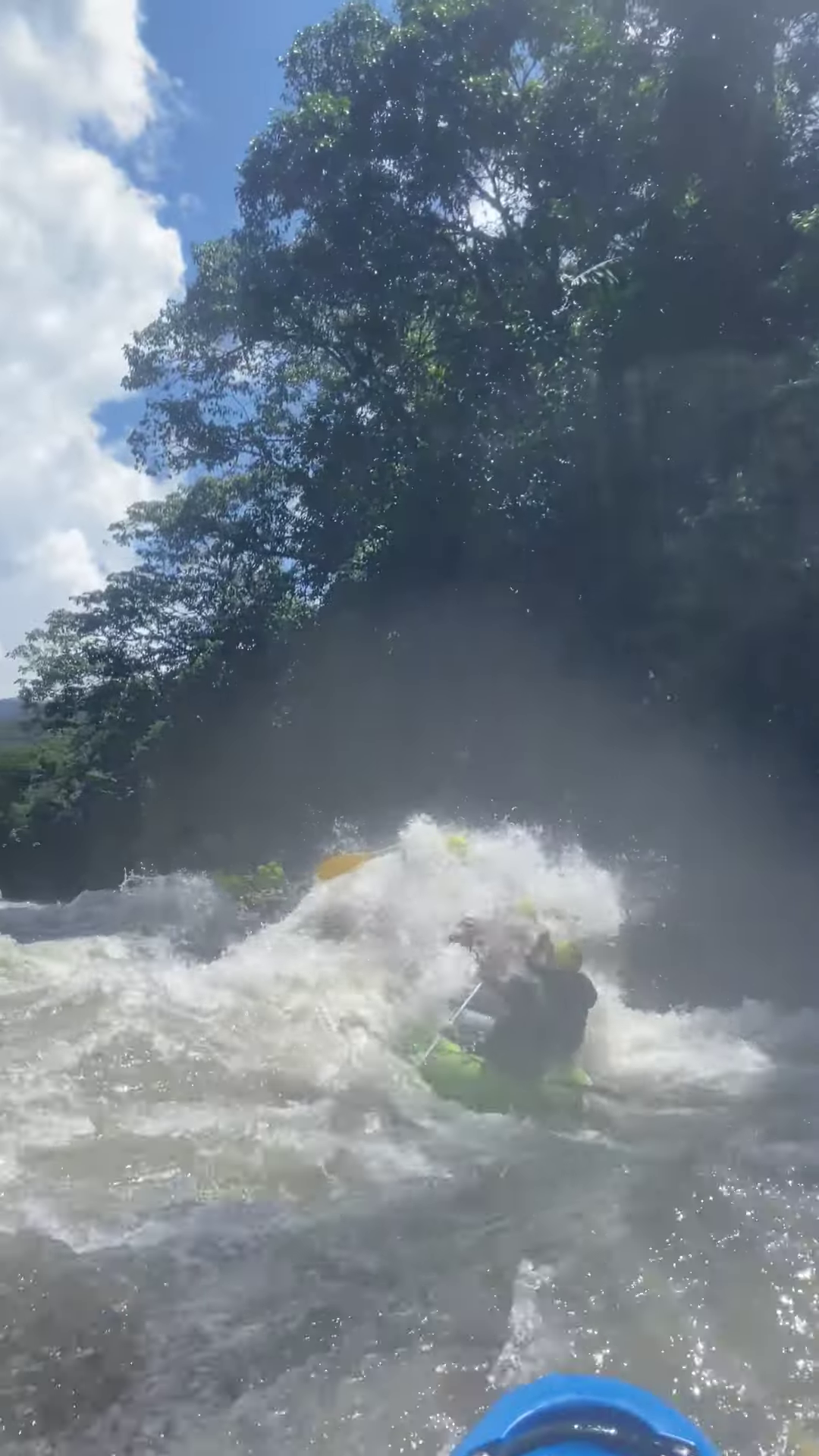
“After the safety swim, we pulled out of the large eddy to hit the main flow. The boat was small and maneuverable, and we had the perfect number of paddlers, who also followed instructions well, which let us navigate the boulder gardens with ease. It was almost a downer that we were able to hit all of our lines perfectly, because otherwise it might have been more wild2. We easily skirted many of the large holes and were able to perfectly hit huge wave trains that reminded us of the Table Saw rapid on the Middle Ocoee in Tennessee.”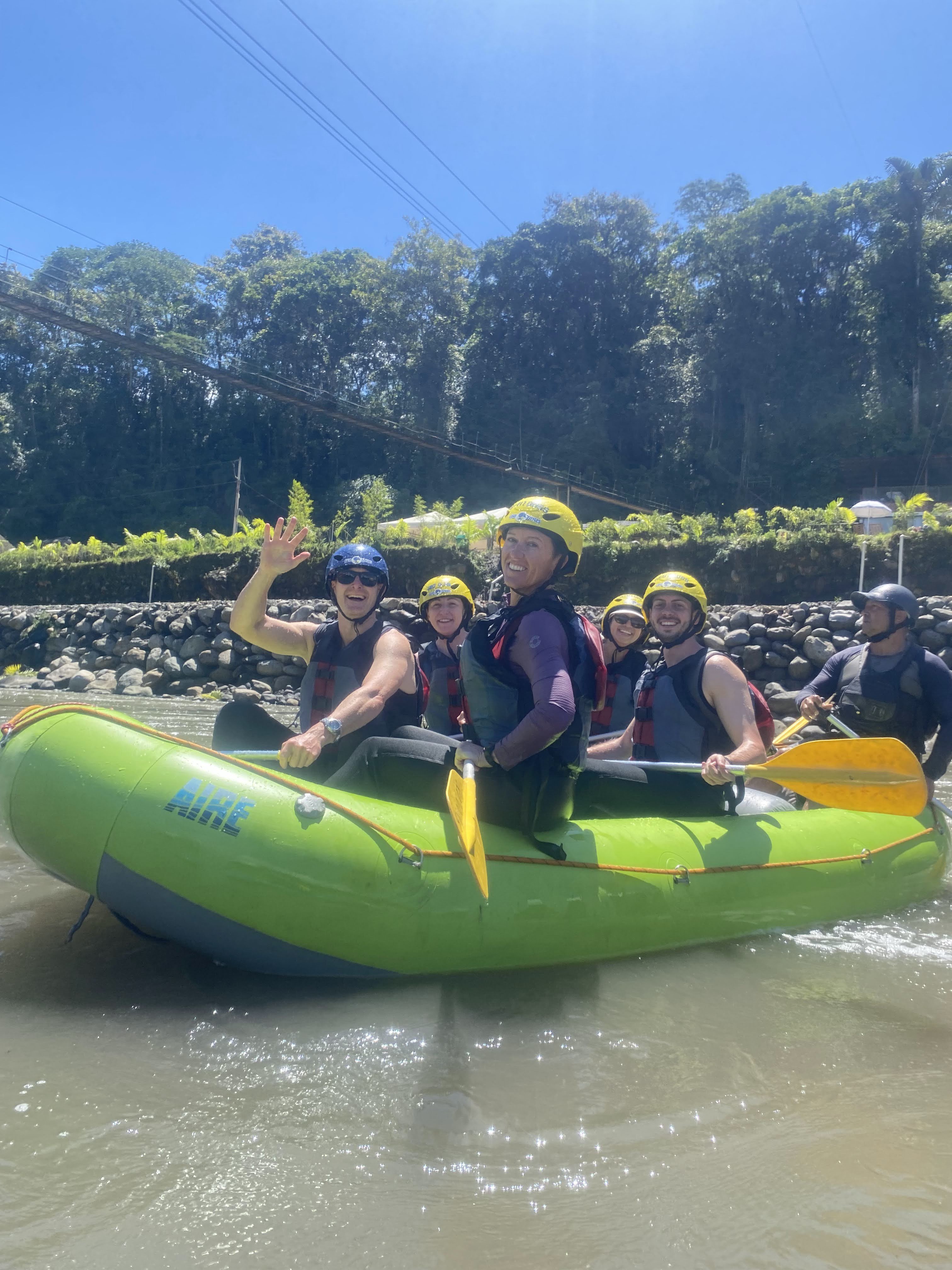
A little ways past the halfway point we beached the raft and got out onto the shore. We walked a short distance to a creek that fed into the Pastaza and were able to jump in and float down it a bit. The creek banks had been prepared with rocks and anti-erosion engineering to make a swimming hole of sorts for the upcoming Carnival season (mid February).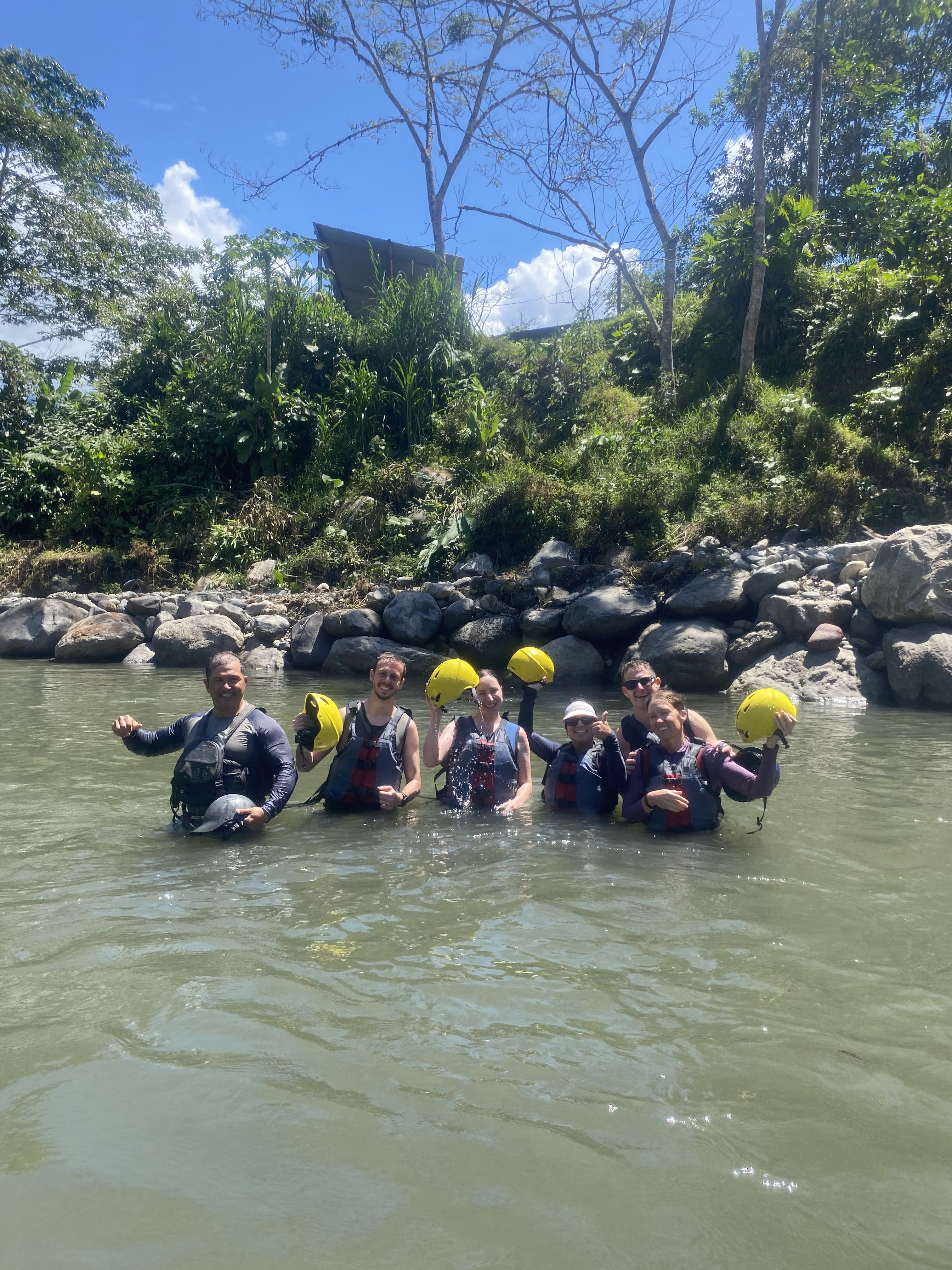
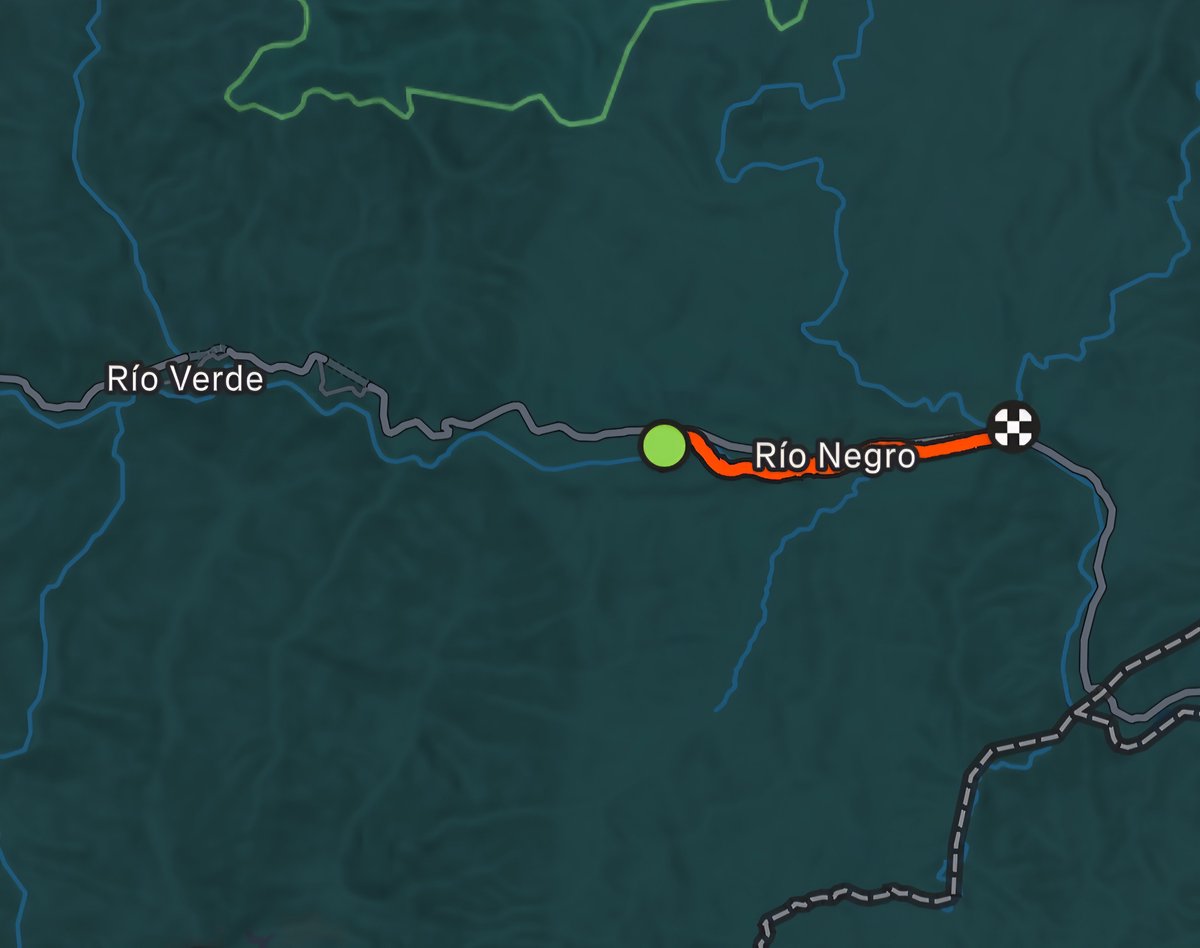
After the swimming hole we launched the raft and embarked on the final leg of the trip. We had a few more long rapids with those giant wave trains and hit them perfectly. In the blink of an eye we reached the takeout. The whole trip took about an hour and a half and covered 4.25 river miles.
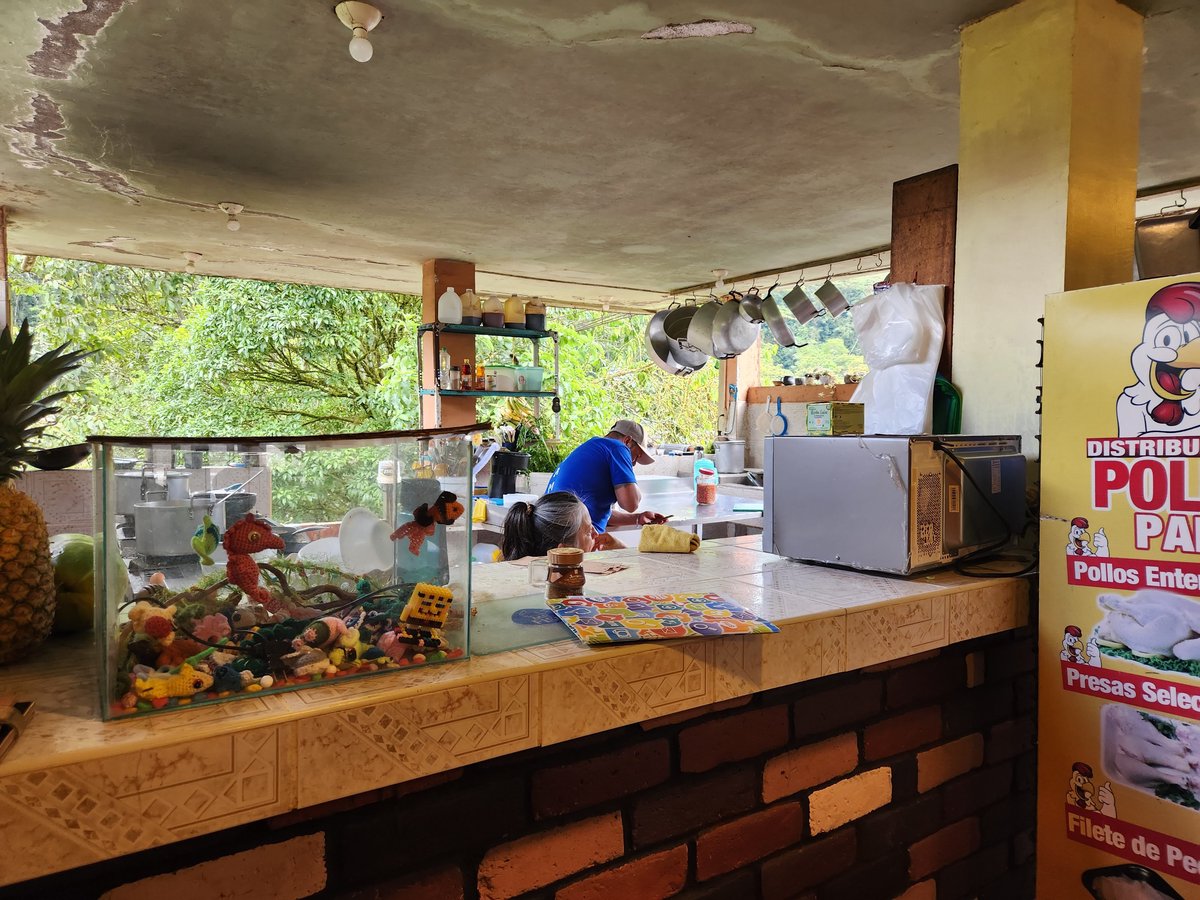
We changed on the riverbank, helped load the raft, and all got back into the bus to be taken to lunch. We went to a small restaurant in the village of Rio Negro. We relived the highlights of the raft trip with our fellow paddlers and enjoyed getting to chat with them about their adventures. We told them all that if they ever found themselves in the Carolinas, to give us a shout, and we would show them some Appalachian whitewater.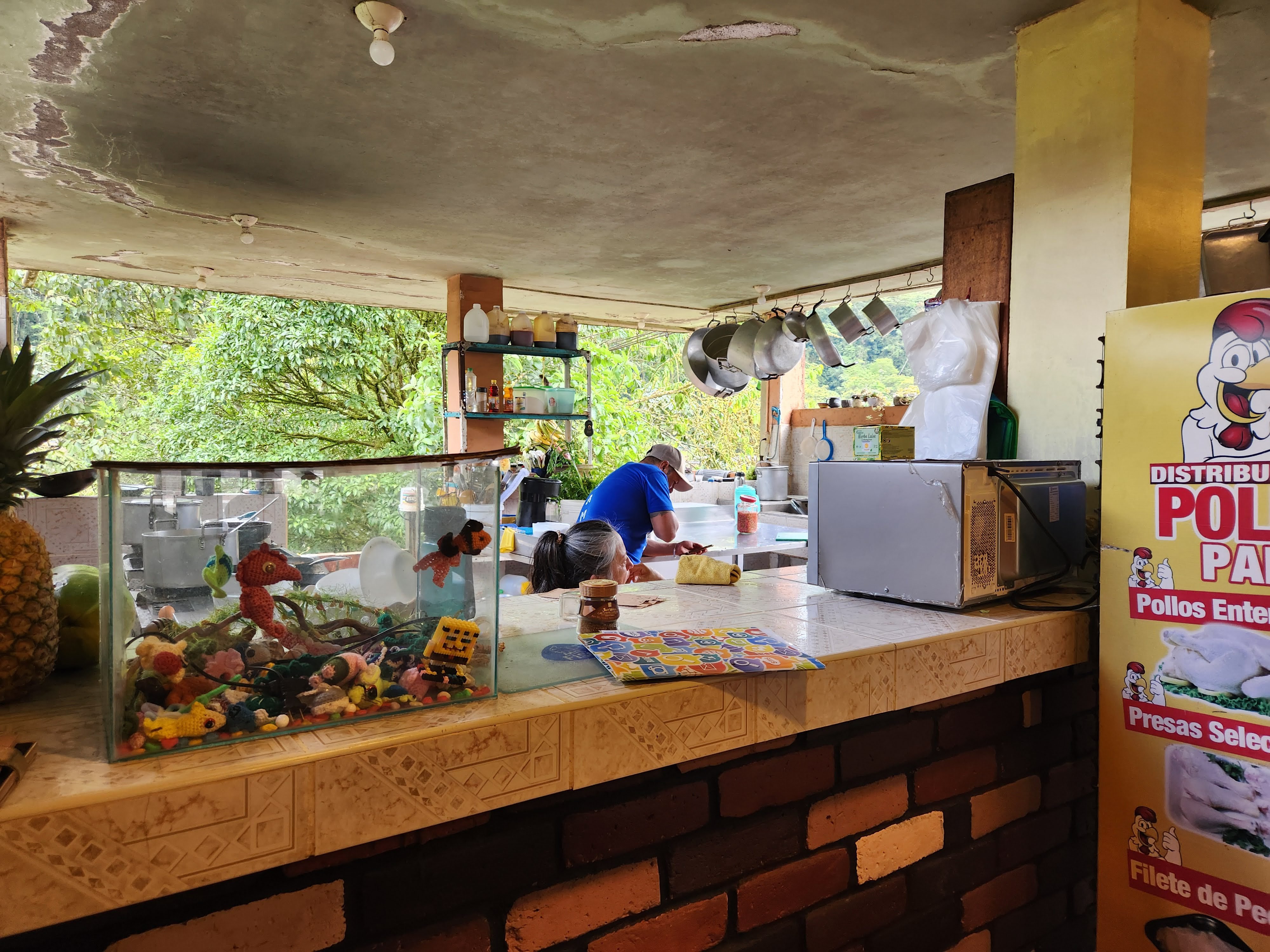
After lunch we got dropped off back in Baños. Scott and I made our way over to the bus station to inquire about getting tickets to the next town on our trip- Cuenca. Unfortunately we discovered that the booth to the bus line that serviced Cuenca was unmanned so we weren’t able to get them and made a note to venture back over later that evening.
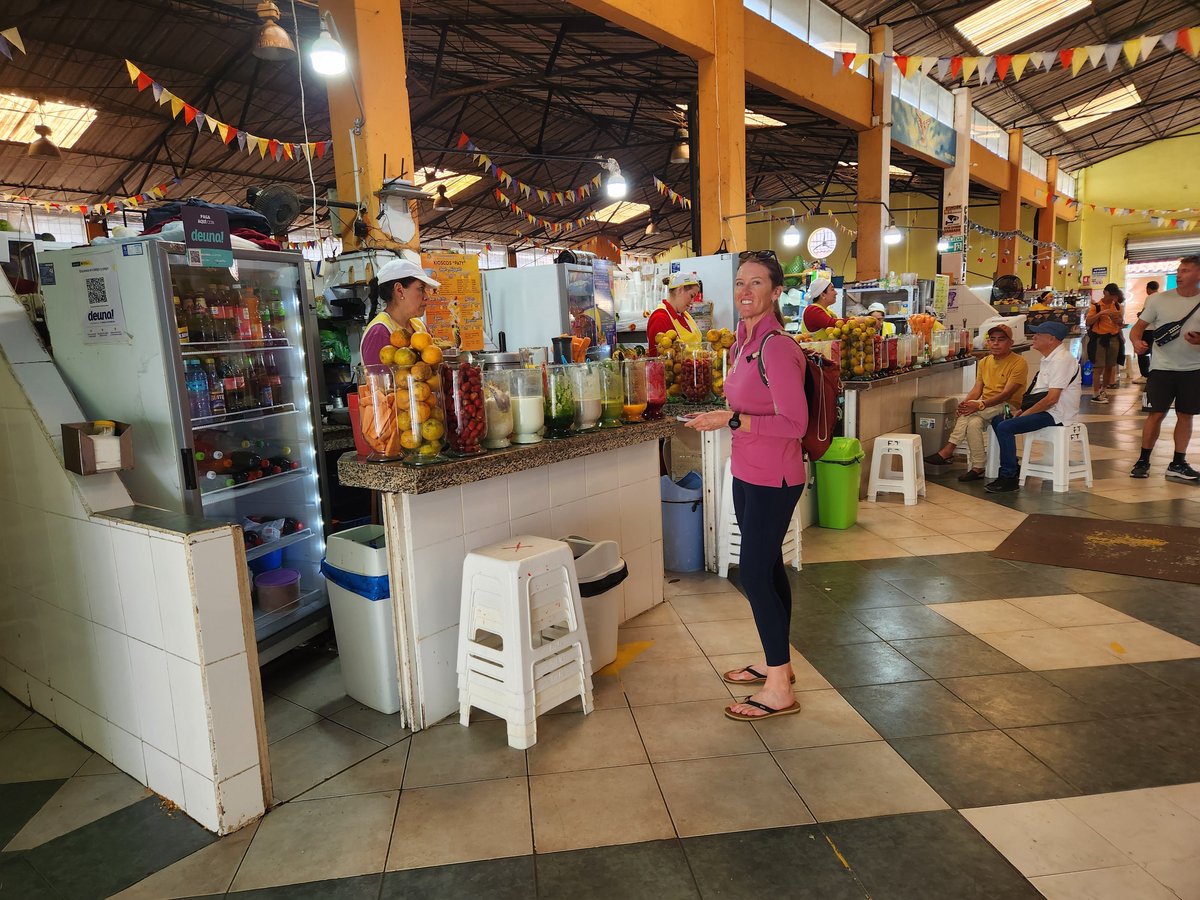
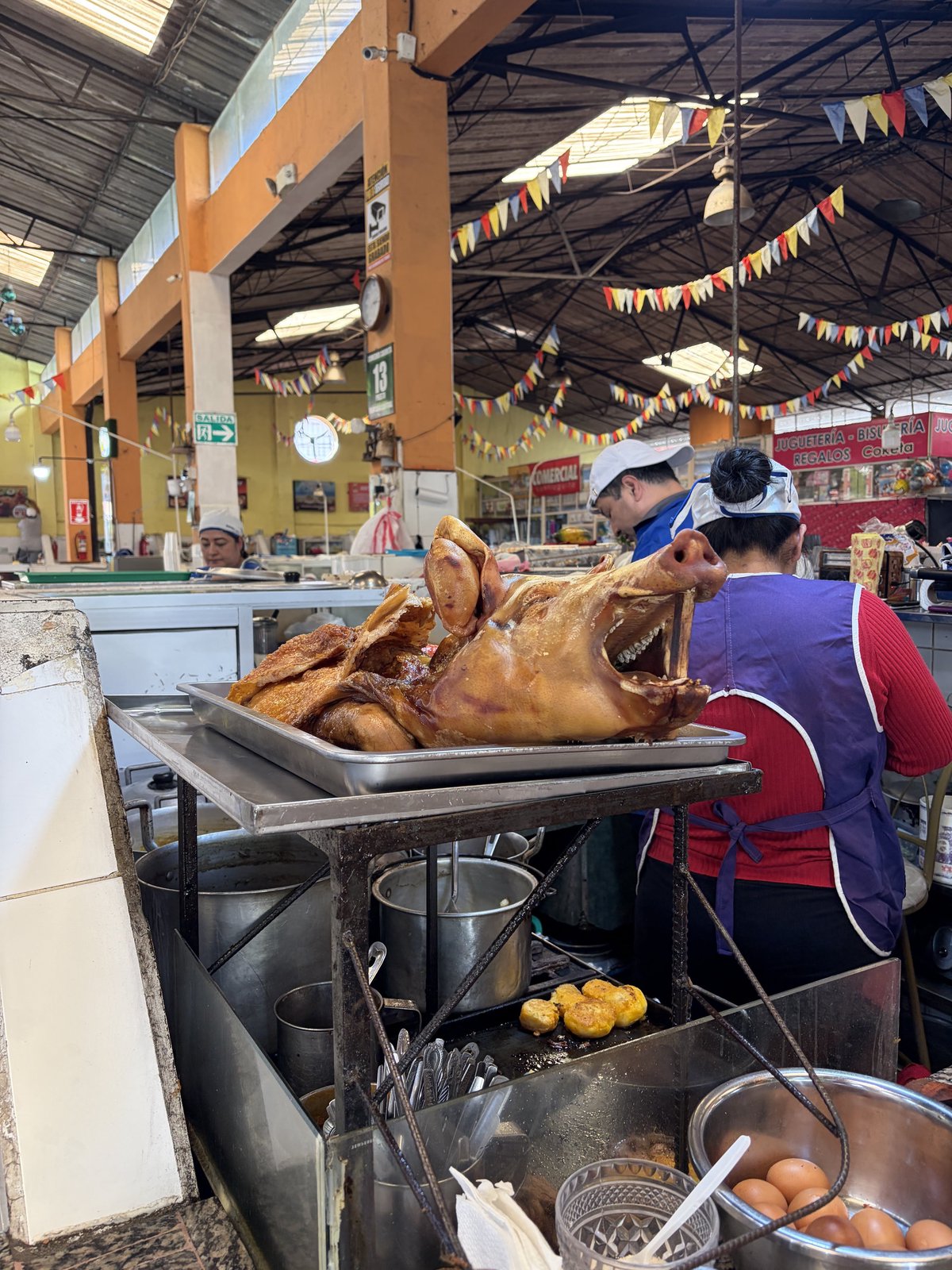
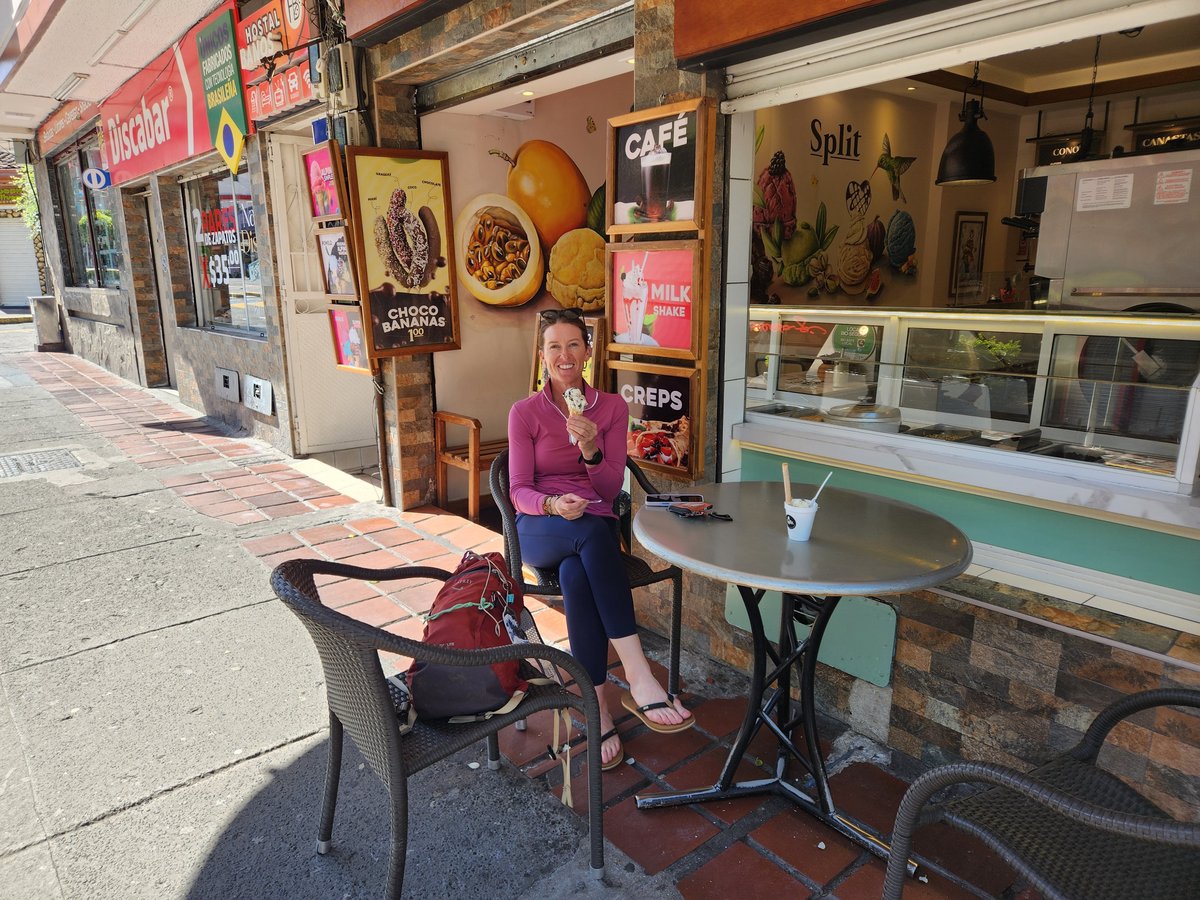
On the way back to the hotel we stopped at the Mercado Central to take a peek. It looked like most markets with produce, flowers, and food. Scott got a juice/smoothie and I was dead set on ice cream, so we went in search of that… and were pretty disappointed with the shop that we chose.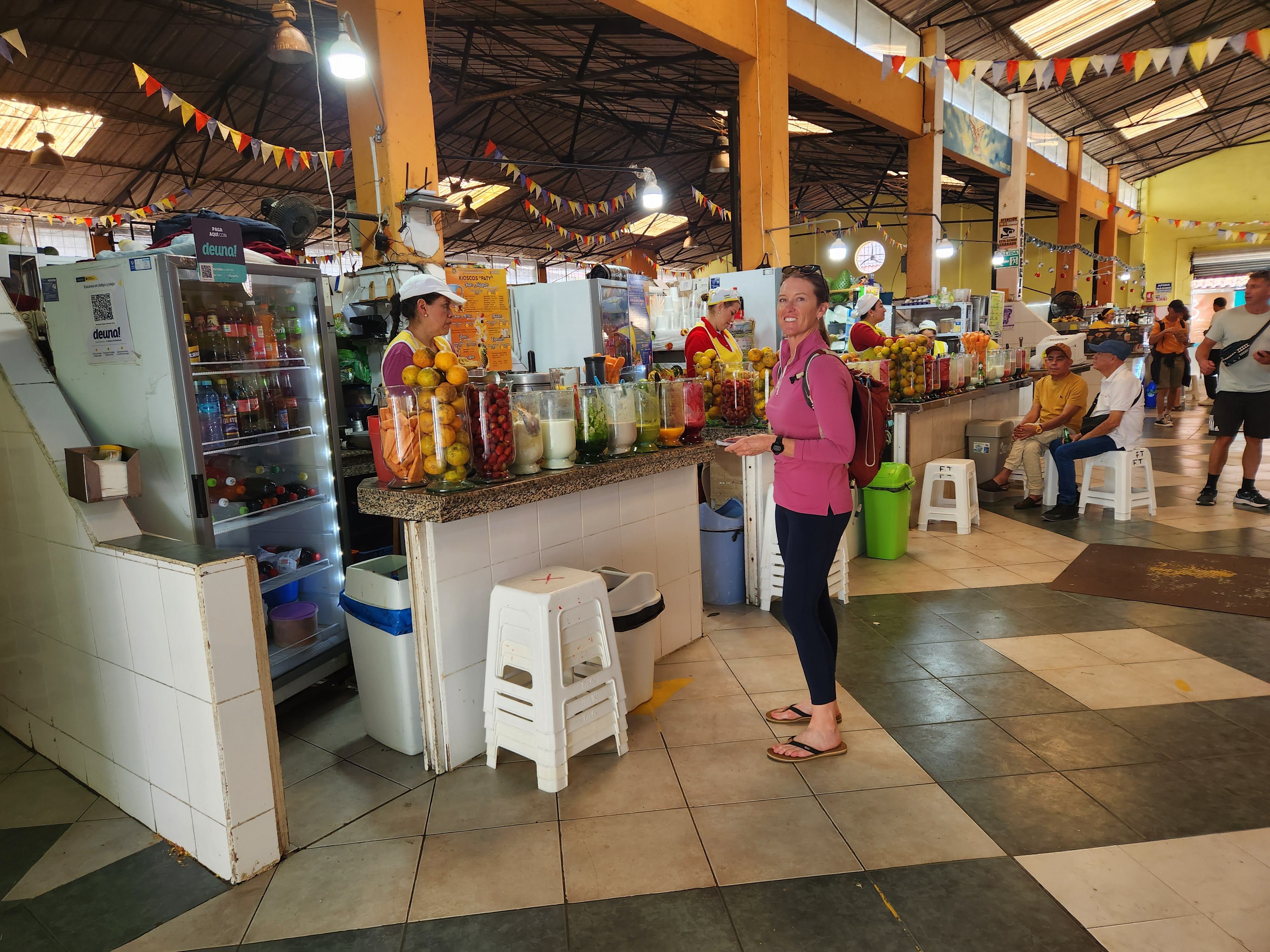
When we got back to the hotel we took a quick shower- Fast Fred had joked the day before that the cleanliness of the Pastaza rivaled that of the French Broad… in other words… not that clean.
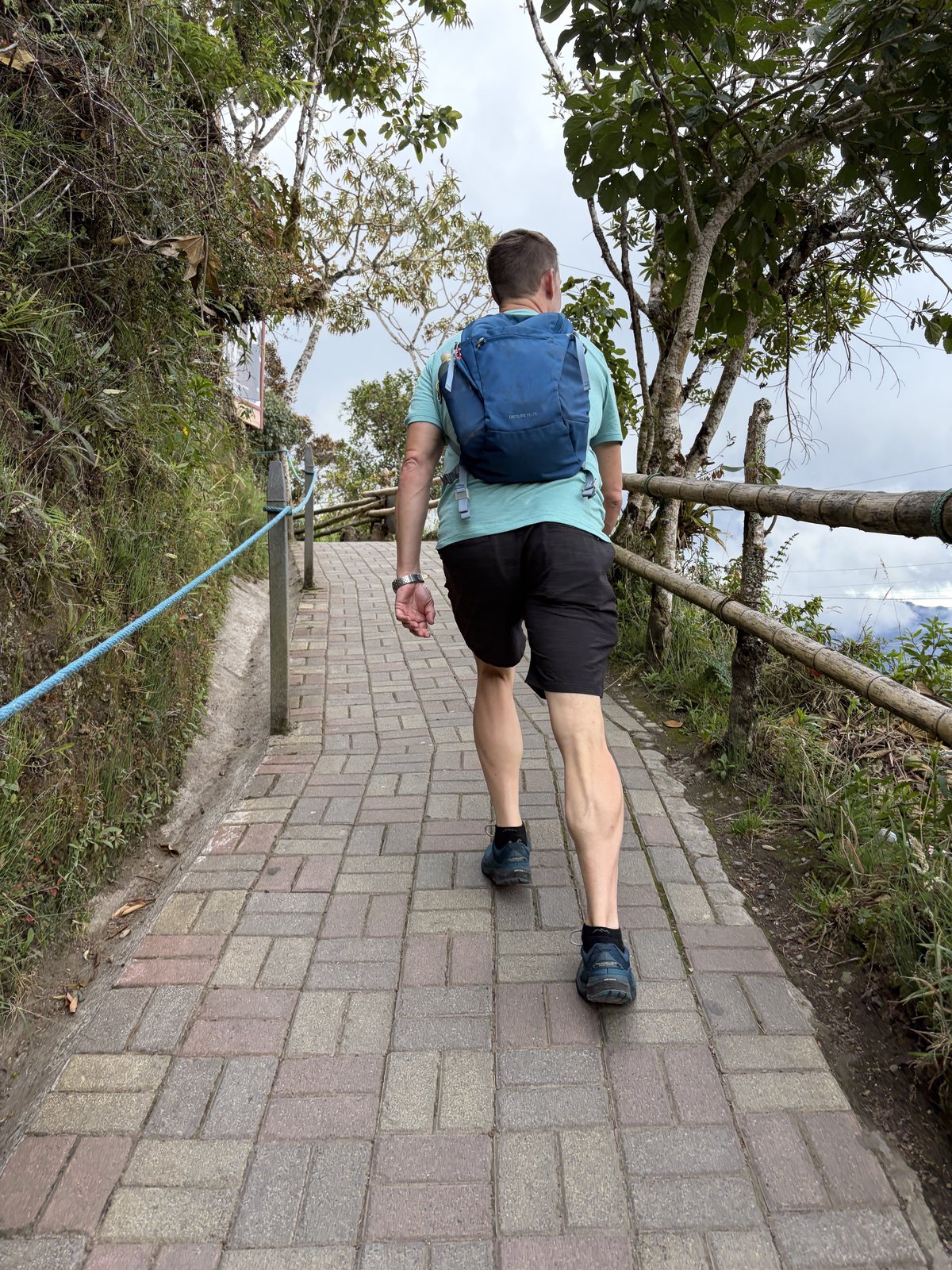
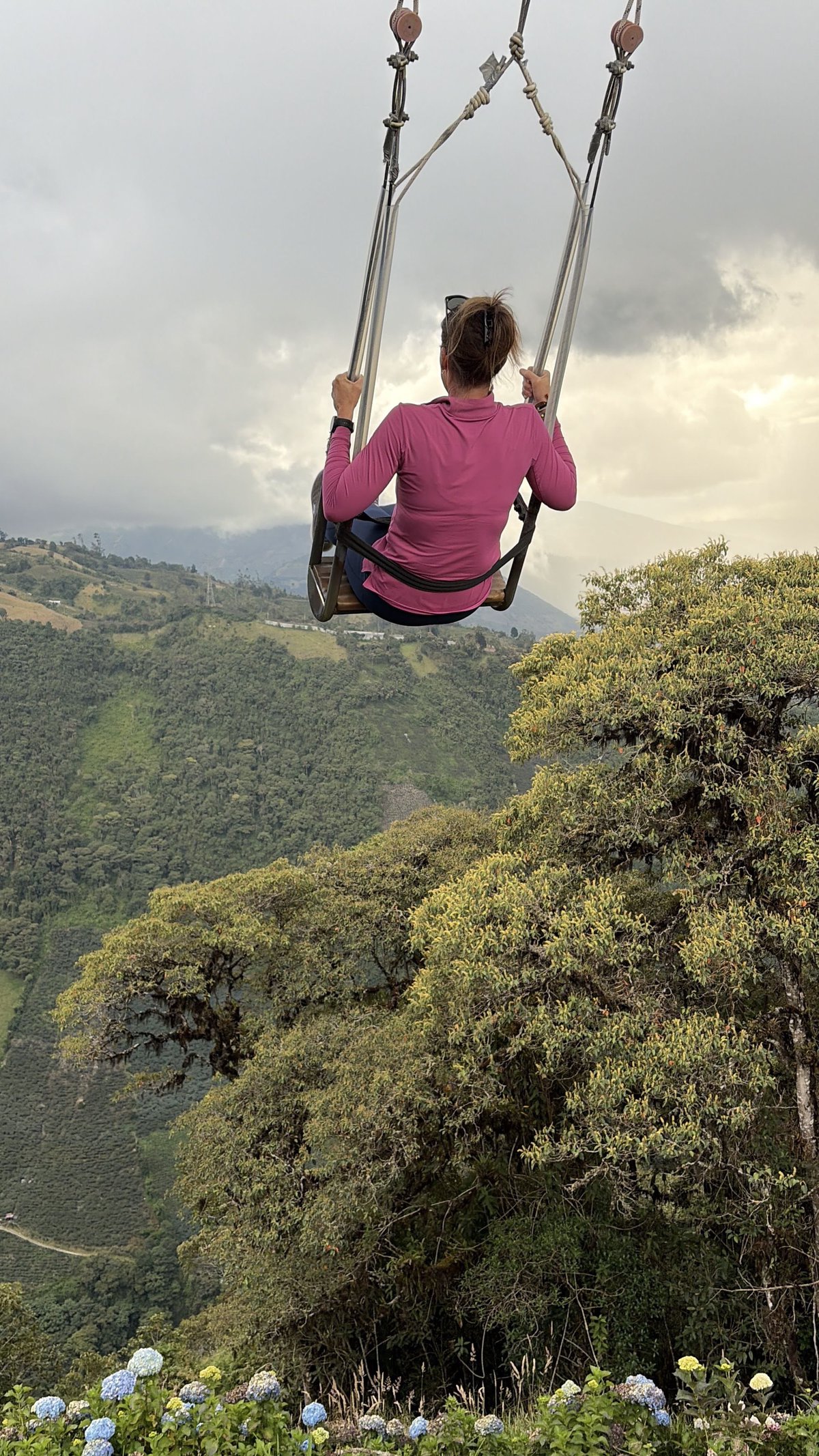
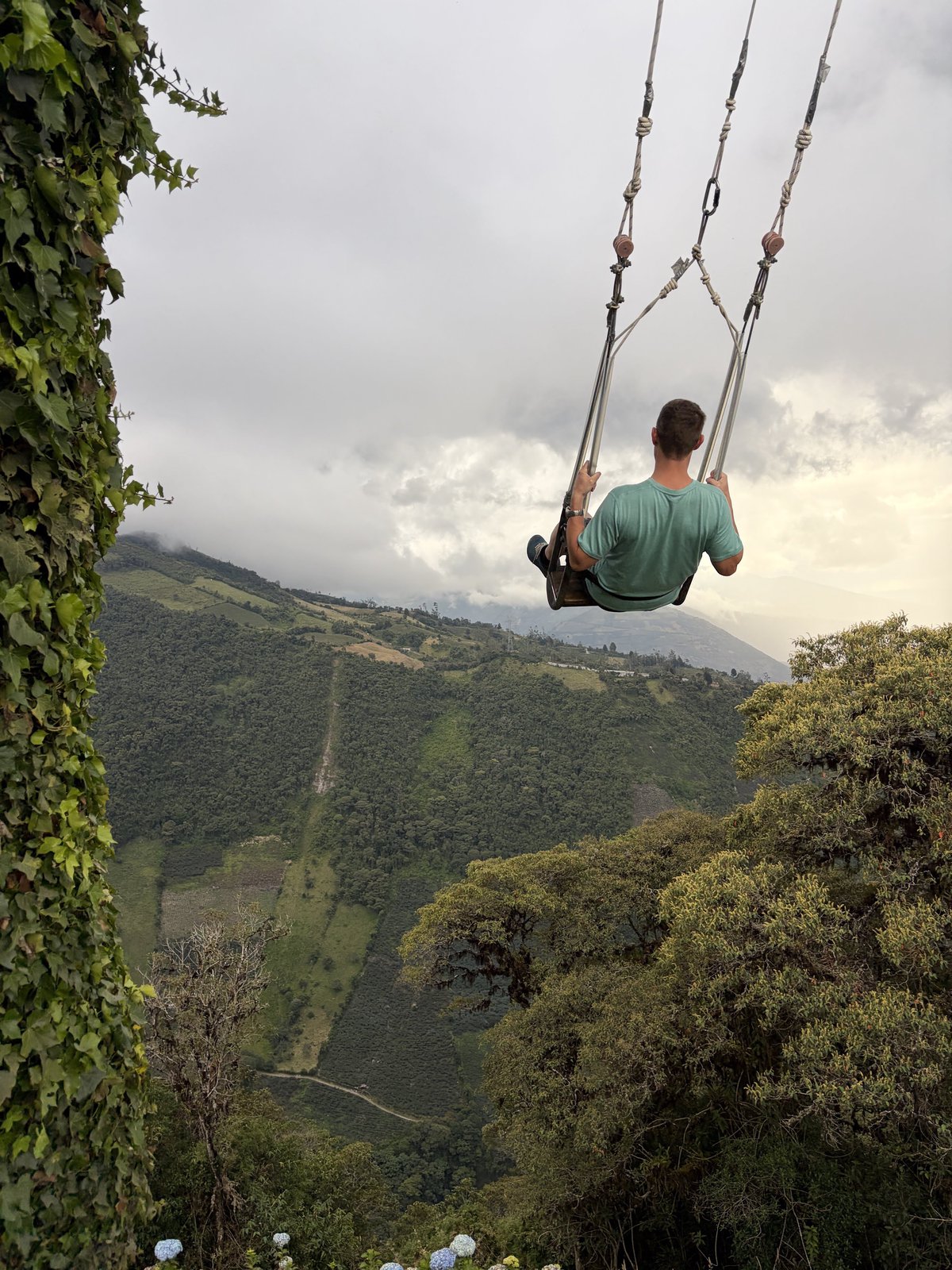
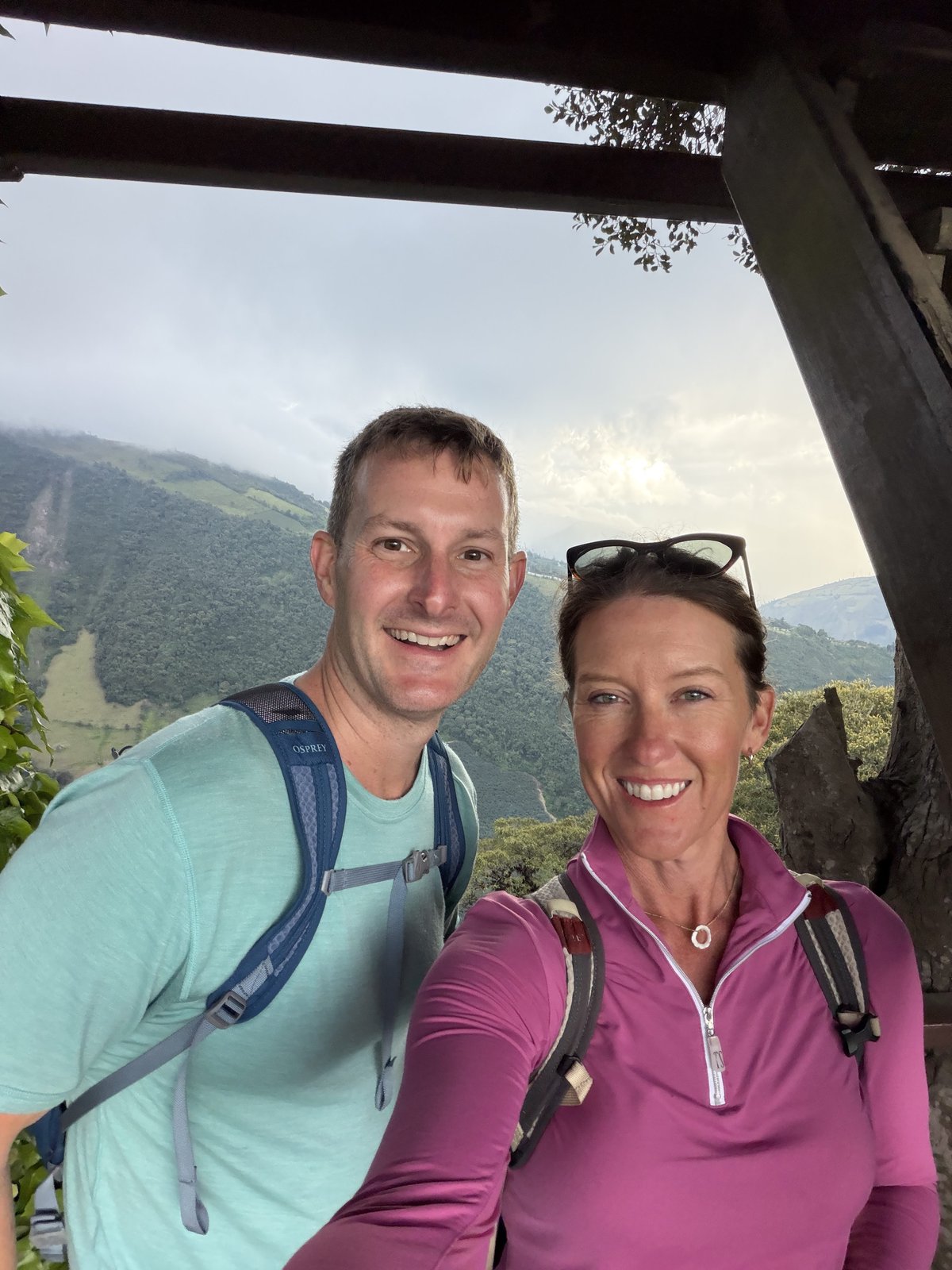
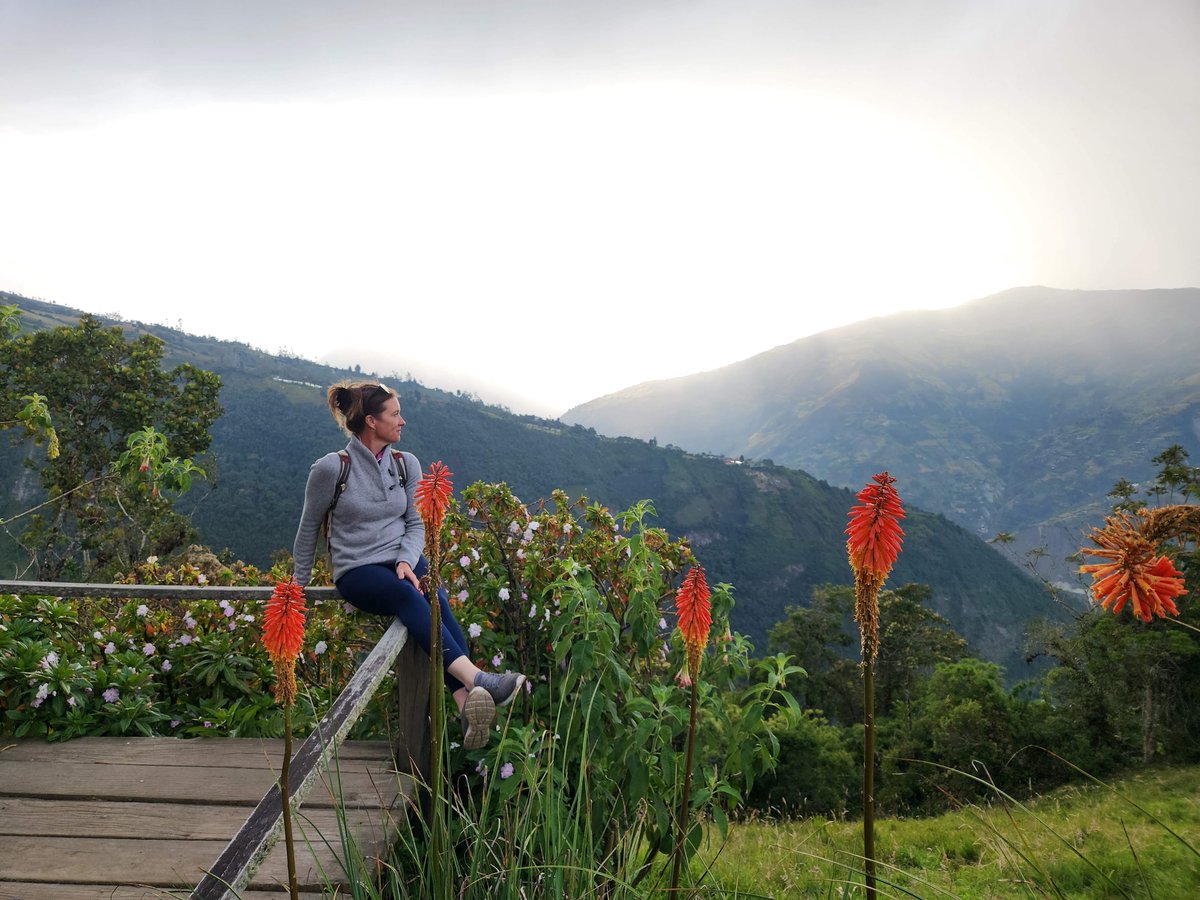
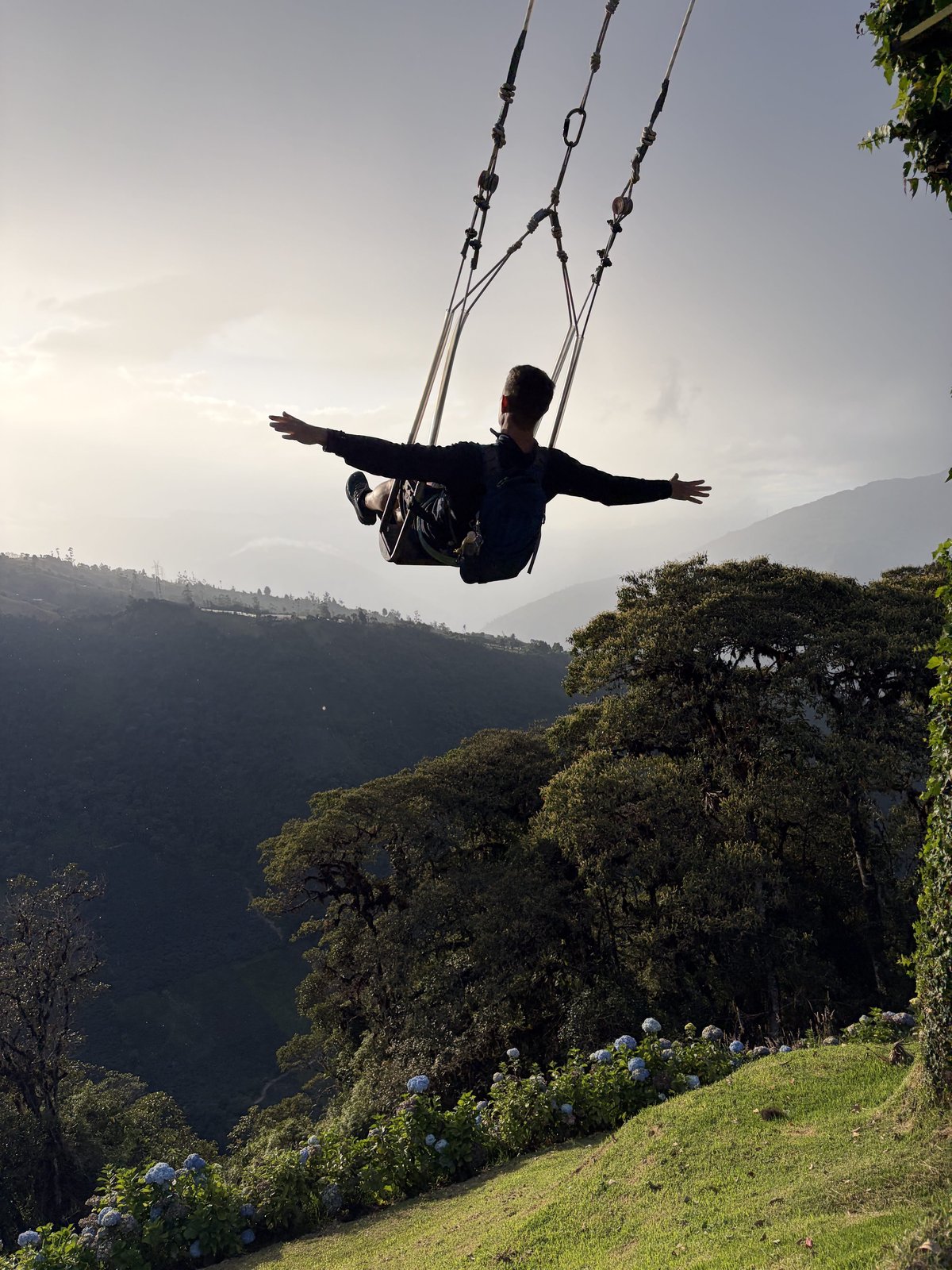
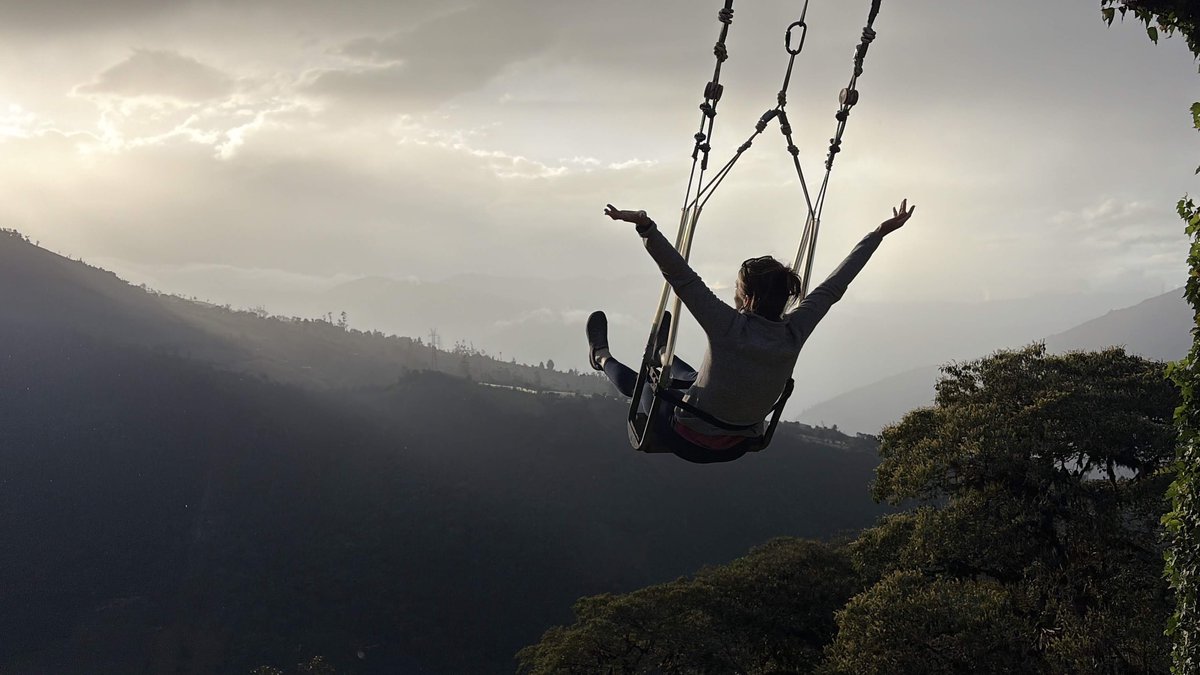
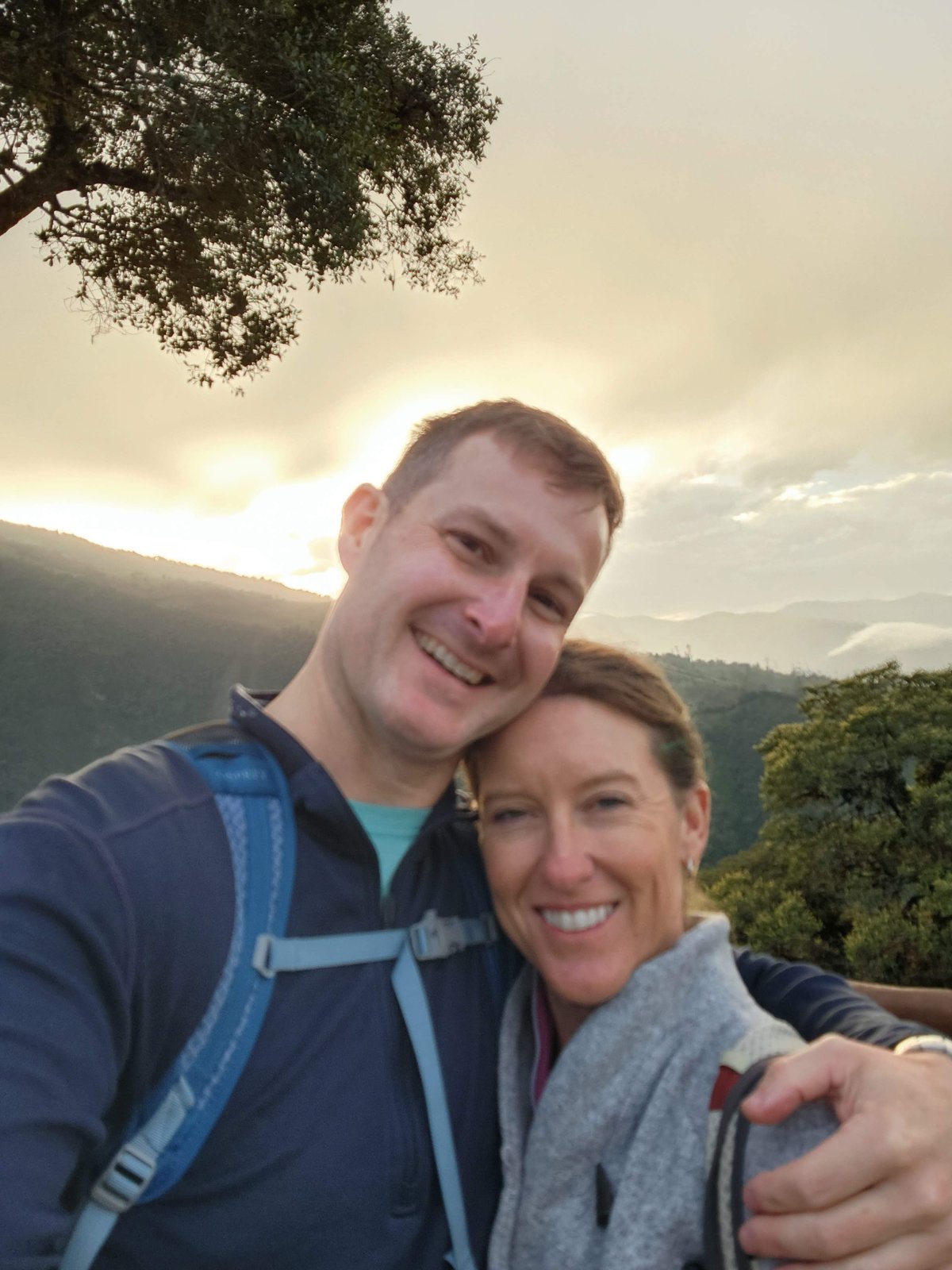
Our last adventure that we needed to accomplish while in Baños was to head up the mountain to Casa del Arbor to take a spin on the “Swing at the End of the World.” We took a taxi and on the half an hour ride up the grade had a fun time practicing Spanish with our taxi driver. We got dropped off and paid the $1/each entry fee and went to see what it was all about.
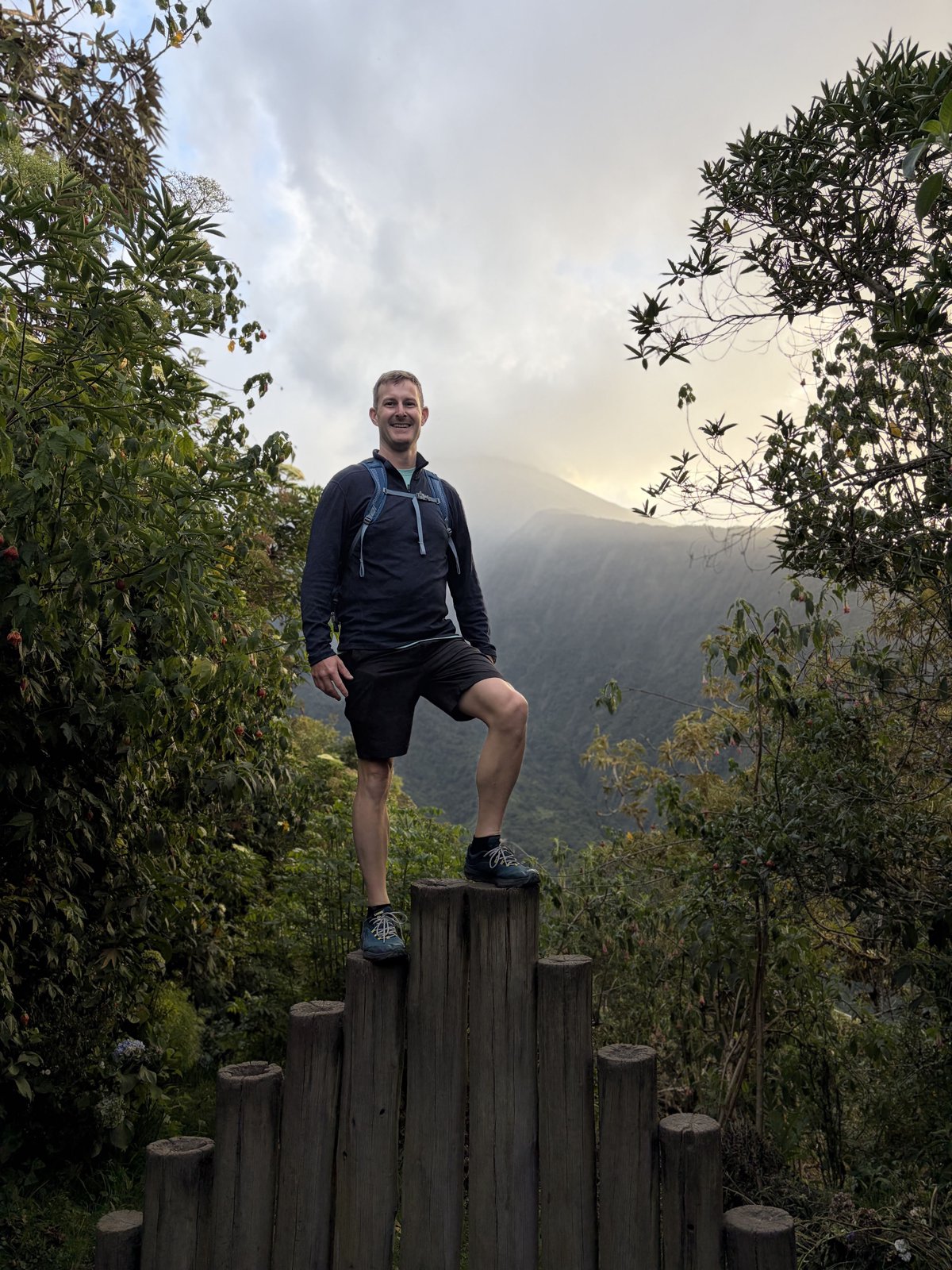
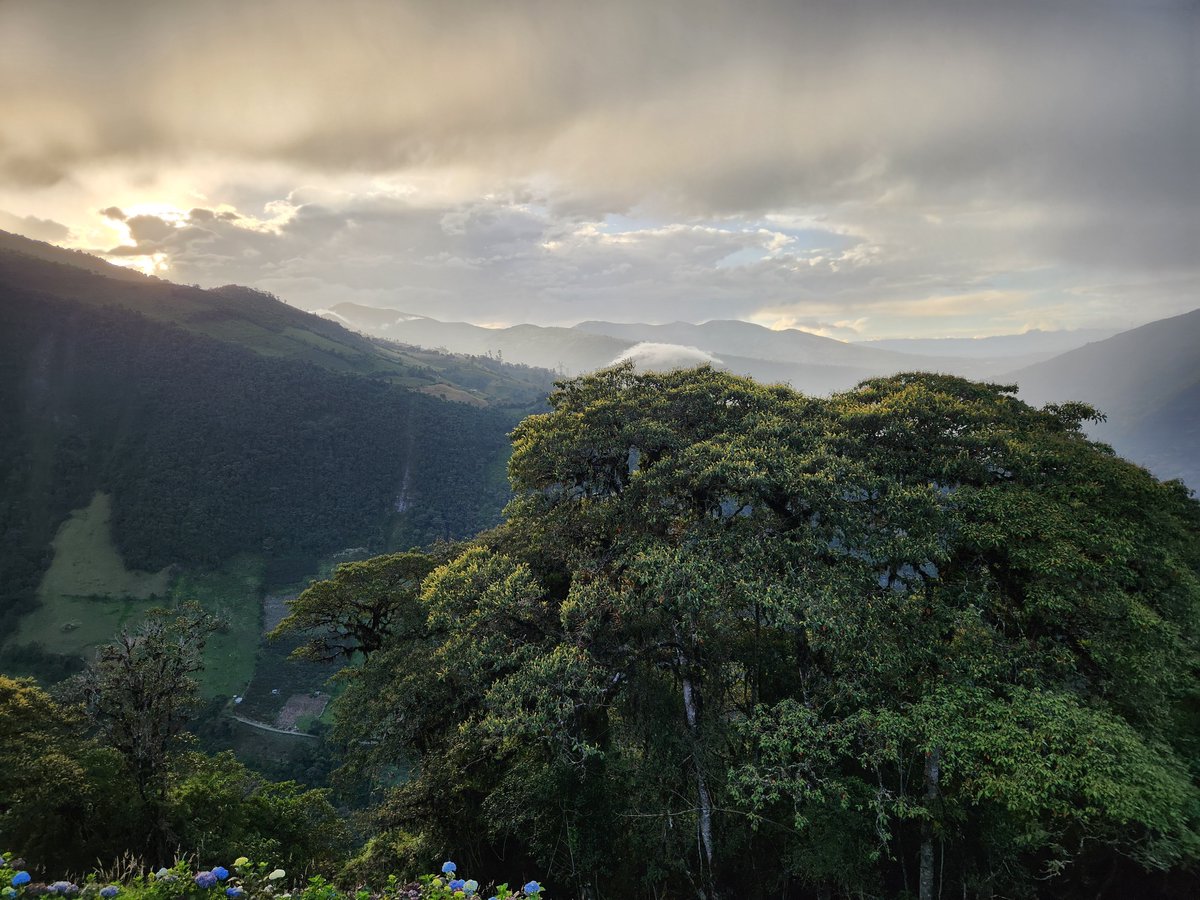
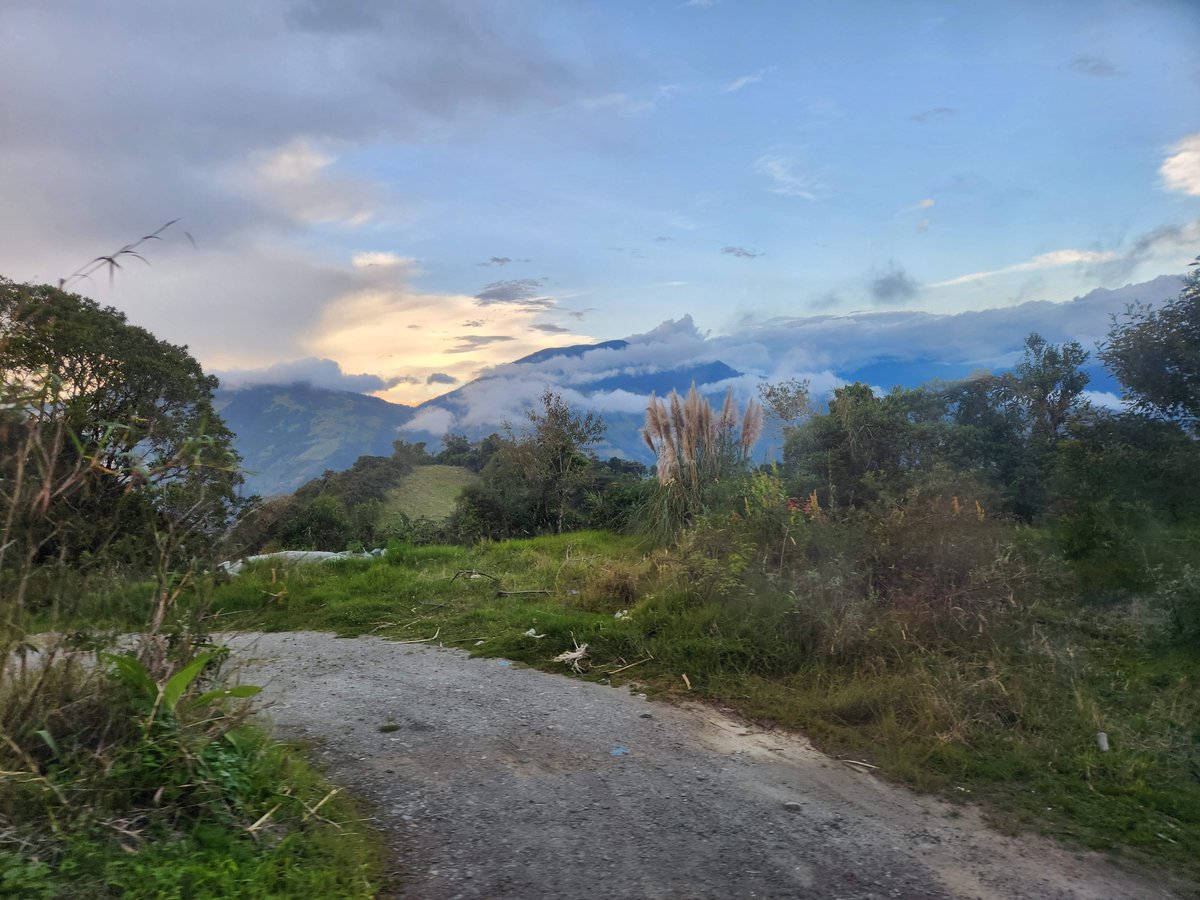
It is a park on top of the mountain with views that were incredible. It was threatening to rain when we arrived and we could hear thunder in the distance and saw moody clouds obstructing the view of the nearby Tungurahua volcano. Eventually the sun peaked through though and it made for some fantastic photos. We took turns swinging off “the end of the world,” and I will leave it up to you kind reader, to guess who swung higher, Scott or me. Similar to the Mirador Miramera it almost felt like a location designed with Instagram in mind. We enjoyed wandering around taking in the views and posing for pictures before needing to head back down to the main road to catch the city bus back into town.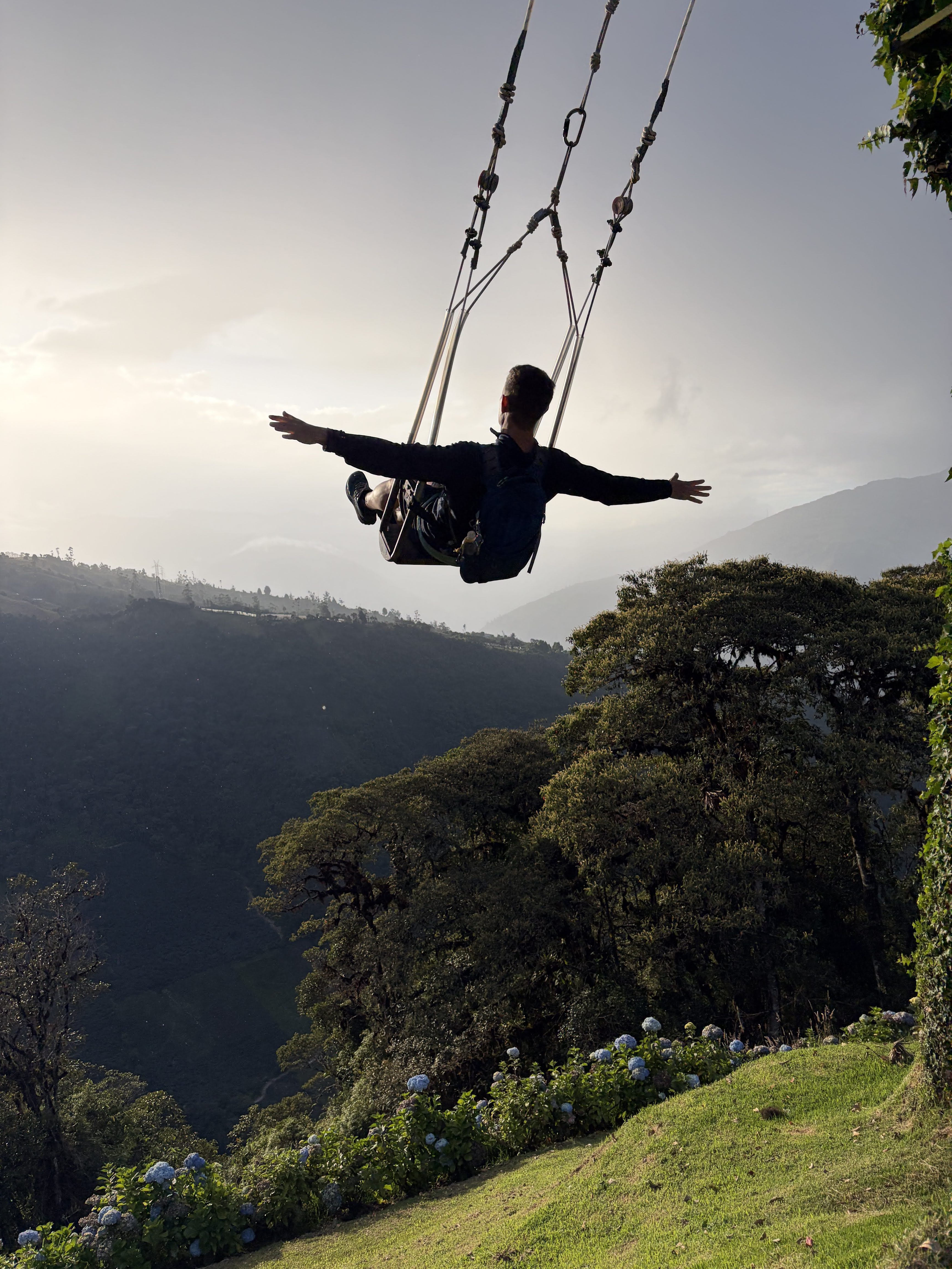
The drive down took a little longer and we noticed a lot of tourist attractions that seemed like their heyday might have been in the 80’s and 90’s and now looked in various states of disrepair. (Later that night I Google’d about this- evidently Baños’ tourism took a hit during the late 90’s and early 00’s when Tungurahua erupted and the town had to be evacuated for about three months.) Eventually we hopped off when we were near our hotel.
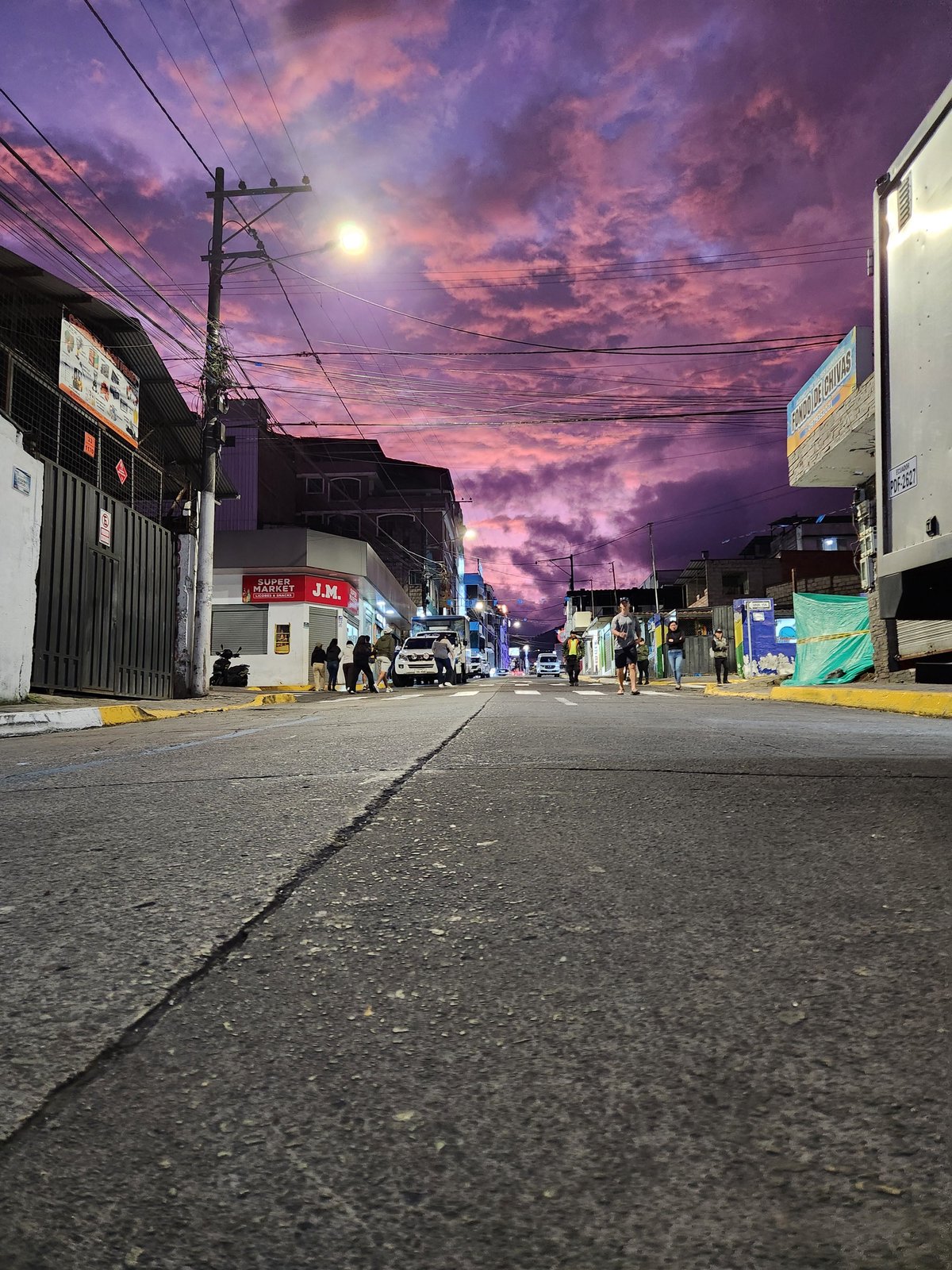
Our raft guide had plugged his bar earlier in the day and we wanted to go check it out. Unfortunately we are boomers though and were too early. Sadly we discovered that it didn’t open until 8 PM. So we settled for dinner at a random pizza joint we came across. While waiting on our pizza Scott noticed the most dramatic sunset that was unfolding outside and went to get some pictures- I can’t remember ever seeing such intense pink and purple clouds in the sky.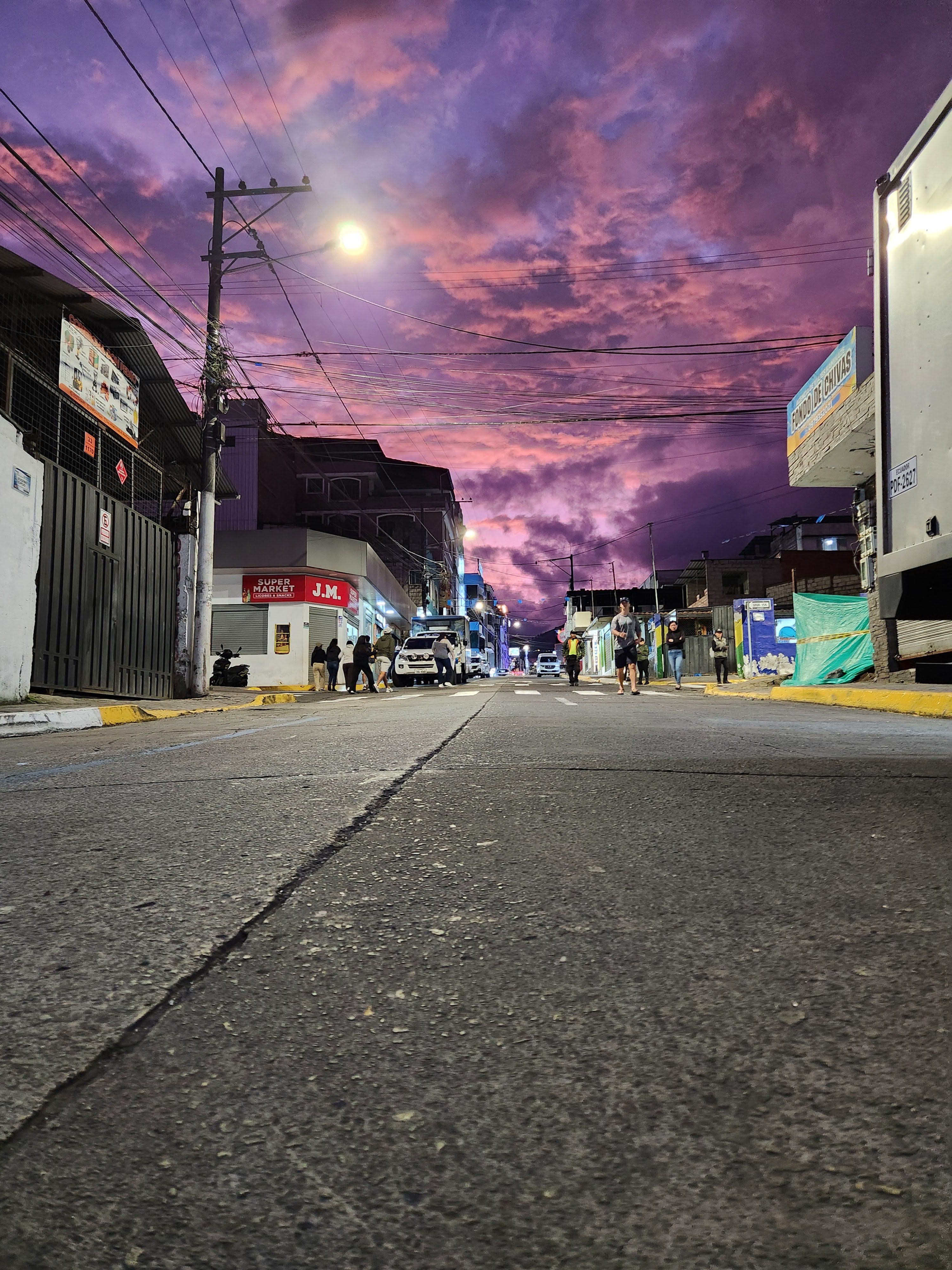
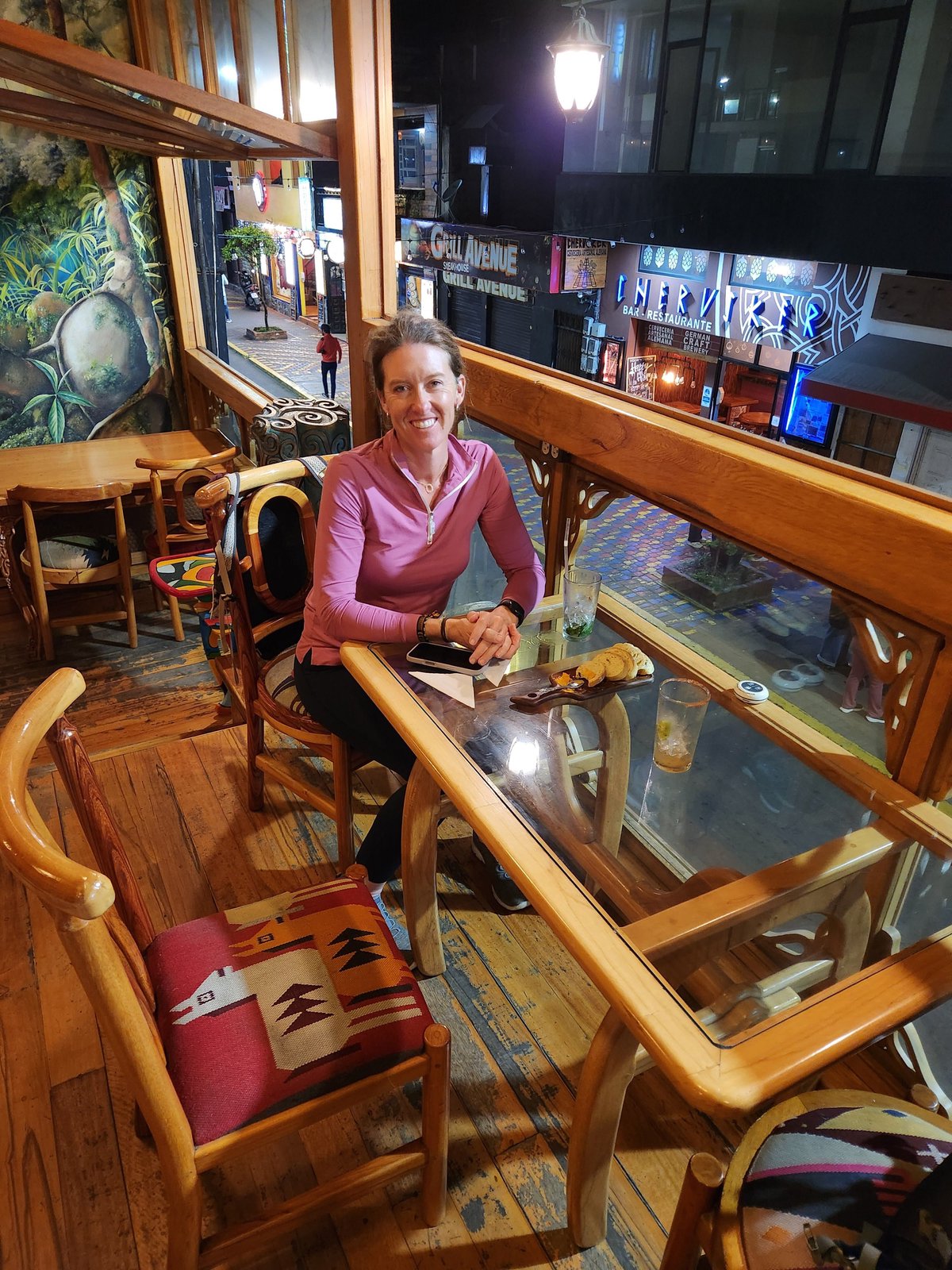
After our dinner we checked out another bar instead and had a quick drink. We sat at the second story patio and were able to look down onto the streets and people watch and ended up chatting with some other Americans, gaining travel advice for the next time we are in Ecuador. We were spent, so we headed back to the hotel so we could pack up as we were heading on to the town of Cuenca the next morning.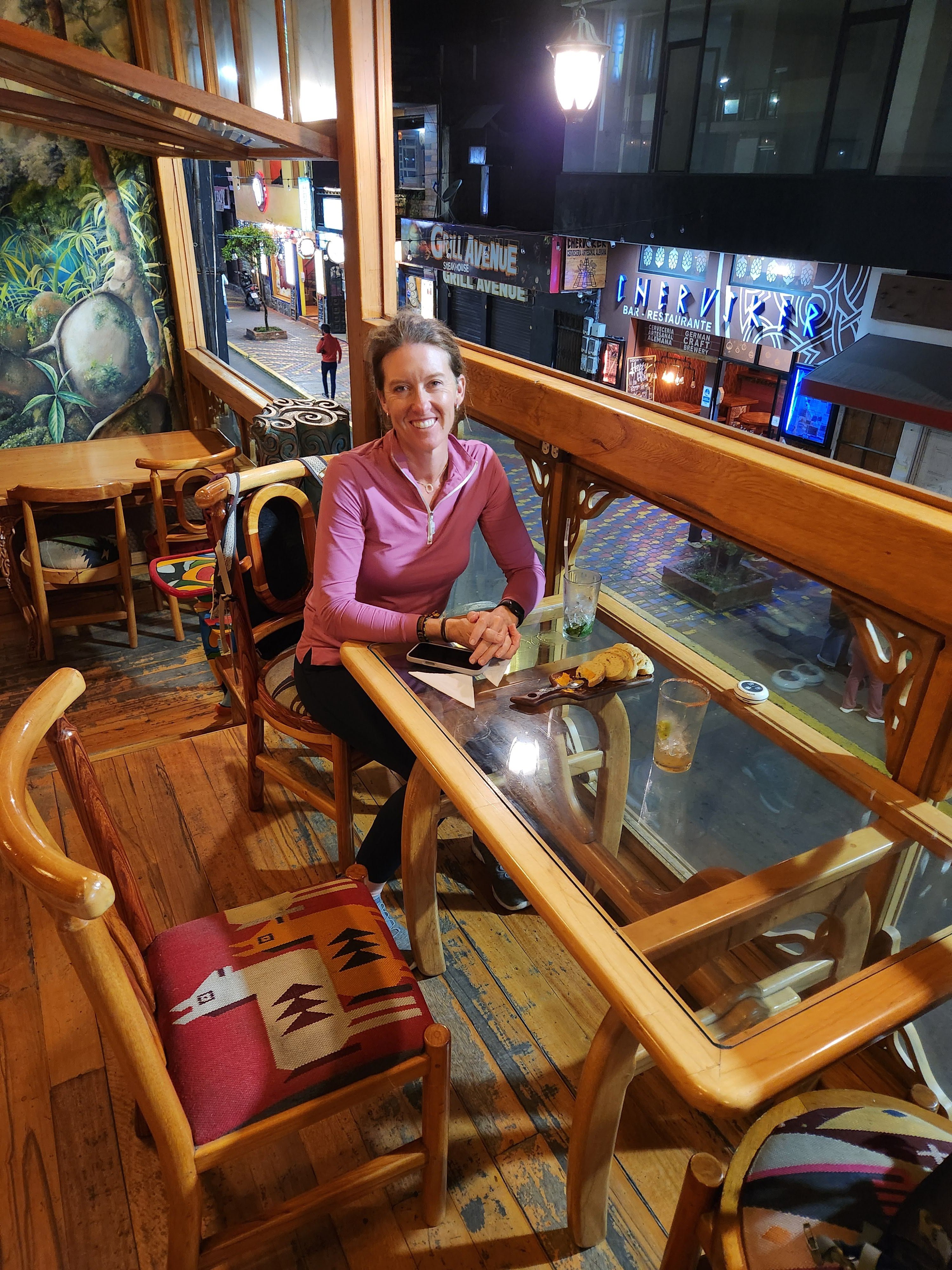
On our Amazon trip, while at lunch on the first day, Scott met a safety boater for a commercial company, and they were chatting it up. The kayaker shared a video taken earlier that day of a raft trip where one of the rafts got stuck in a hole and everyone in it ended up swimming when the raft flipped. ↩︎
