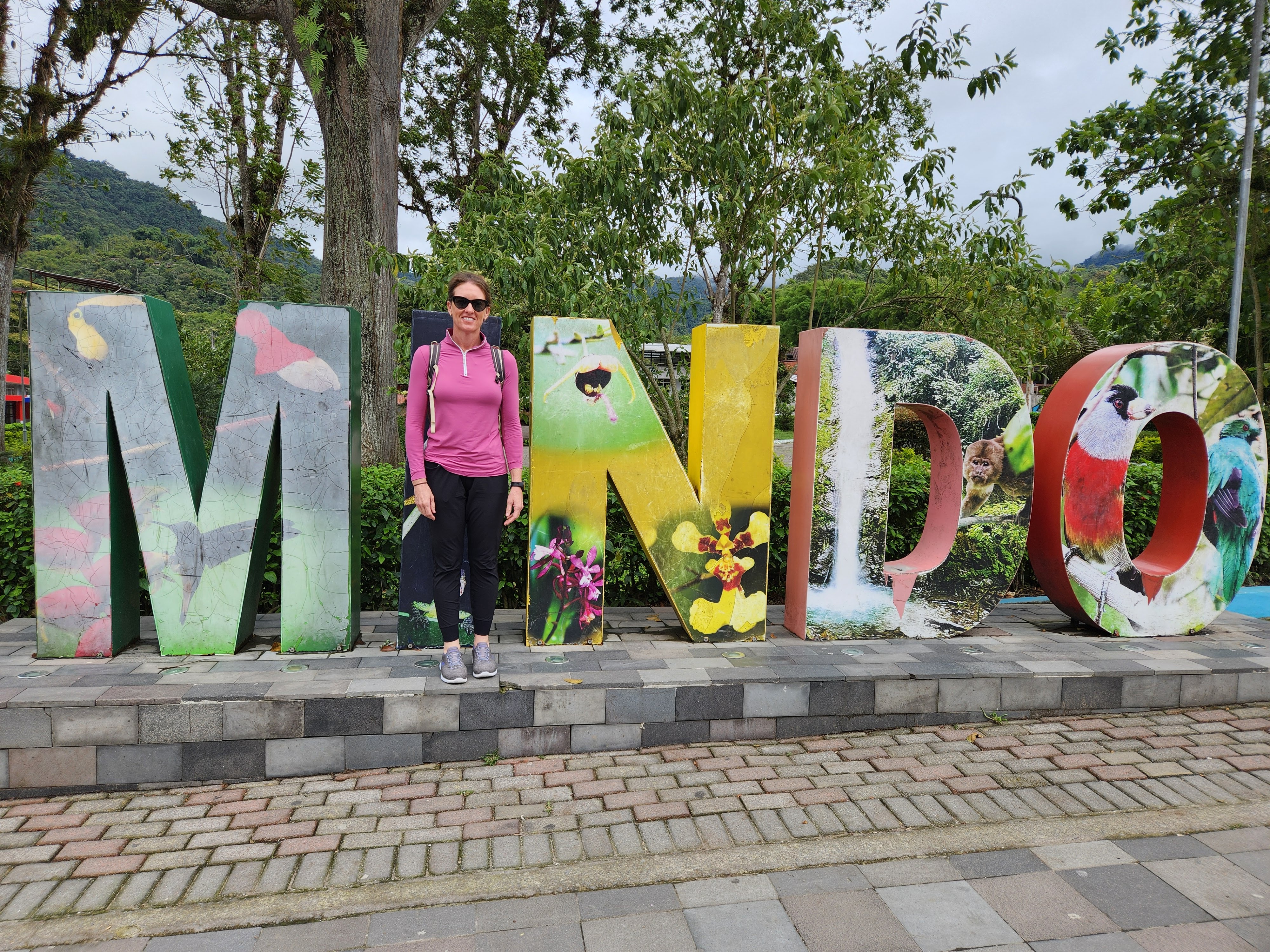
Up until this point on our trip I was naively under the impression that Ecuadorian taxi drivers were a more dignified and refined breed of taxi driver- safer, more sophisticated, and less risk-taking than their Thai taxi driving brethren. Today I discovered how wrong that thinking was.
We were taking a taxi from Quito to Mindo, a roughly 100 km trip that would take about two hours, and our taxi driver decided to treat the ride as if he was personally auditioning to take over Vin Diesel’s role in the Fast and Furious movie franchise. I was petrified and tried not to look as he passed trucks and buses despite the existence of double yellow lines and in blind curves, and at one point nearly buried his sedan underneath a large bus that was in front of us, and kept chanting to myself in my mind helpful and soothing mantras like “he is a professional driver” and “he probably doesn’t want to die today.” Meanwhile, Scott slept.
We somehow arrived unscathed in Mindo a little while later. Mindo’s climate is considered a “cloud forest” which is defined as a “high-altitude tropical or subtropical evergreen forest characterized by persistent, low-level cloud cover, usually at the canopy level.” This type of ecosystem is somewhat rare and sets itself up to be incredibly biodiverse and often hosts flora and fauna that can only live in that specific type of environment. Mindo in particular is known for some of the best bird watching on the planet and attracts serious “birders” and ornithologists.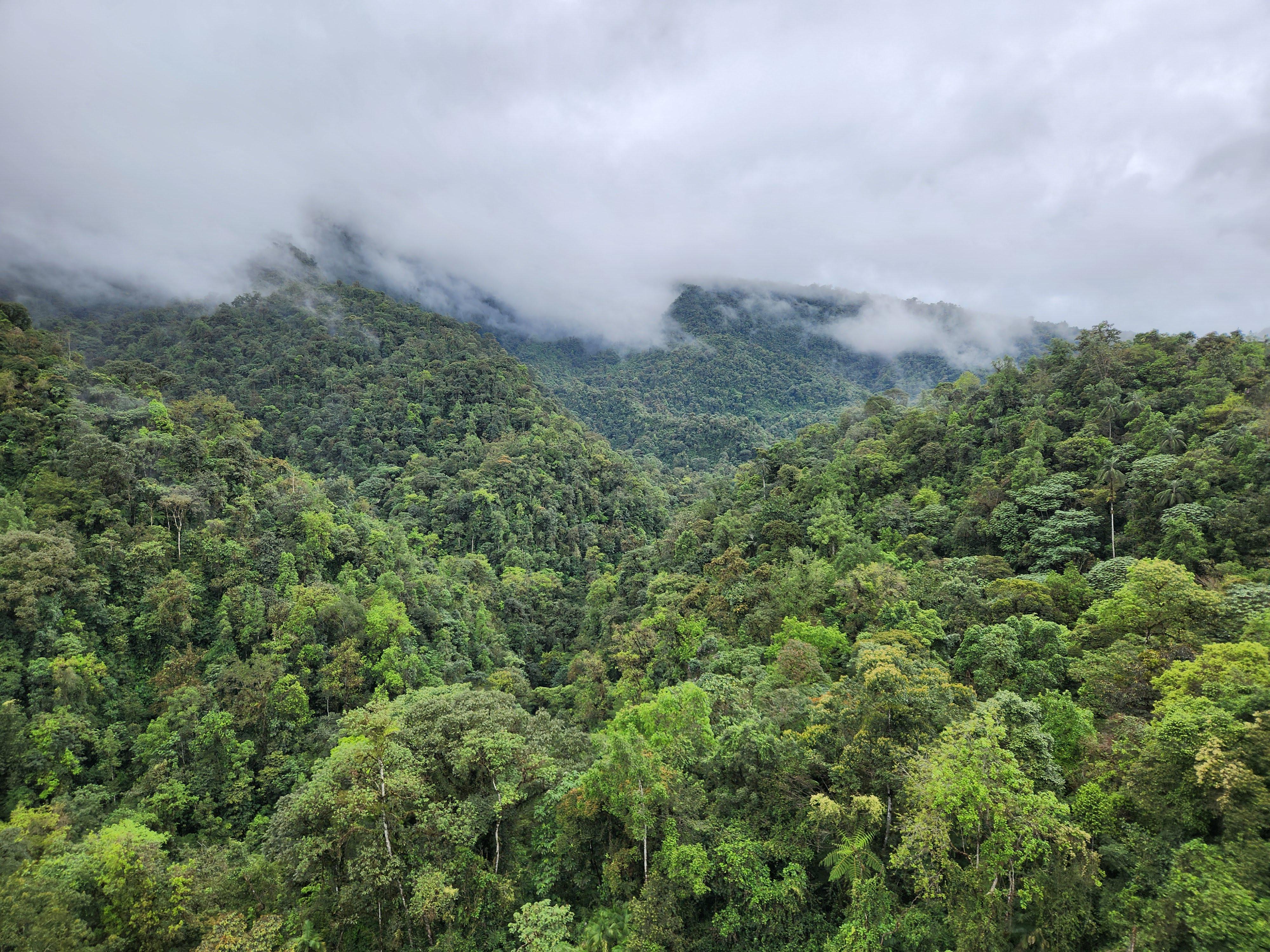
While we didn’t have time to participate in an actual bird watching tour (first thing in the morning is ideal for that), we were going to be able to go to the Nathaly Butterfly Garden, or Mariposario Nathaly Mindo. We got our tickets and seemed to be the only visitors there that morning so we got our own personal tour and discussion (en espanol) about the life cycle of butterflies. We were shown exhibits of each stage of the life cycle before being invited inside the butterfly habitat.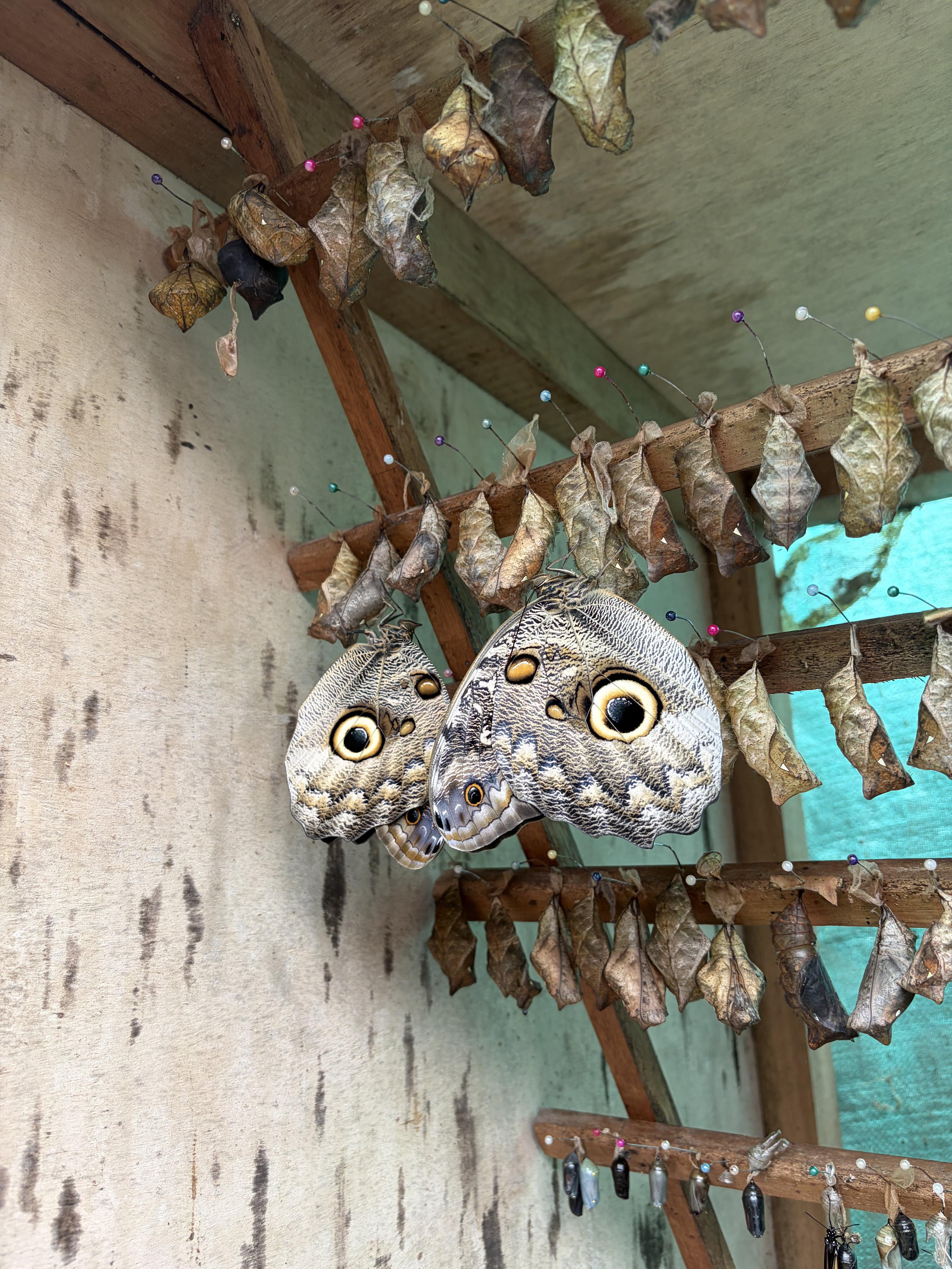
It was incredible! The room was essentially a 30x50 foot screened in area that was teeming with butterflies and moths. They were everywhere. You had to be careful as you walked so that you didn’t accidentally step on any that had landed on the ground. At first we just stood and watched them as they flew and flitted from food station to flower, all busy and in the pursuit of nectar or sugar. We eventually sat down on a bench and watched them and tried to decide which species were our favorite. I was obsessed with the Daring Owl butterfly which can resemble either an owl as its name implies, or a snake/lizard when viewed from a slightly different angle, both as a way of preventing becoming food for other birds. Scott’s favorite was a blue winged butterfly that proved rather hard to photograph.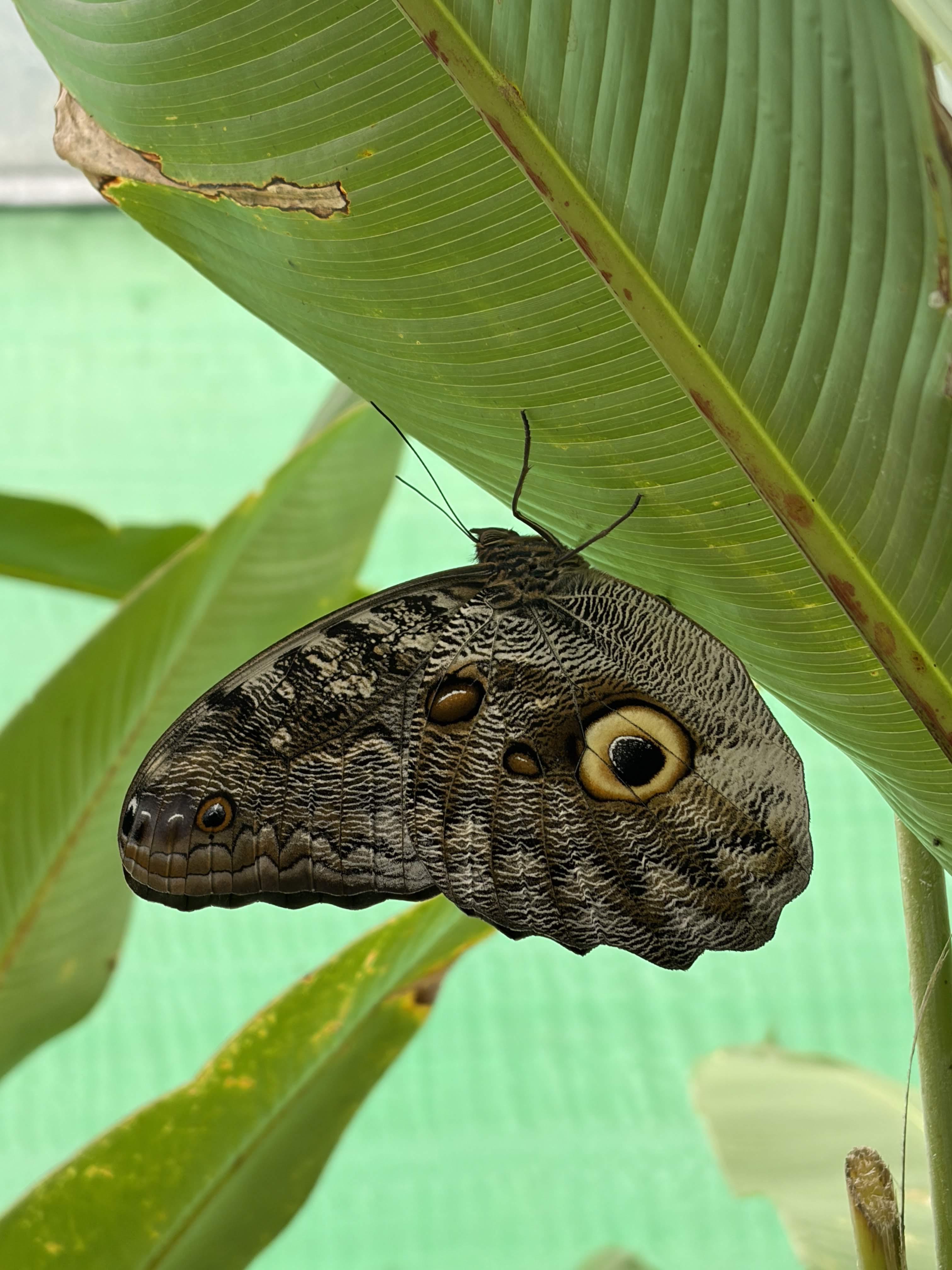
When we had reached peak butterfly fulfillment we decided to go see what else was at the Mariposario. We found hammocks in a pavilion that were near several hummingbird feeder stations and we enjoyed watching the hummingbirds jet around frenetically from feeder to feeder for a while.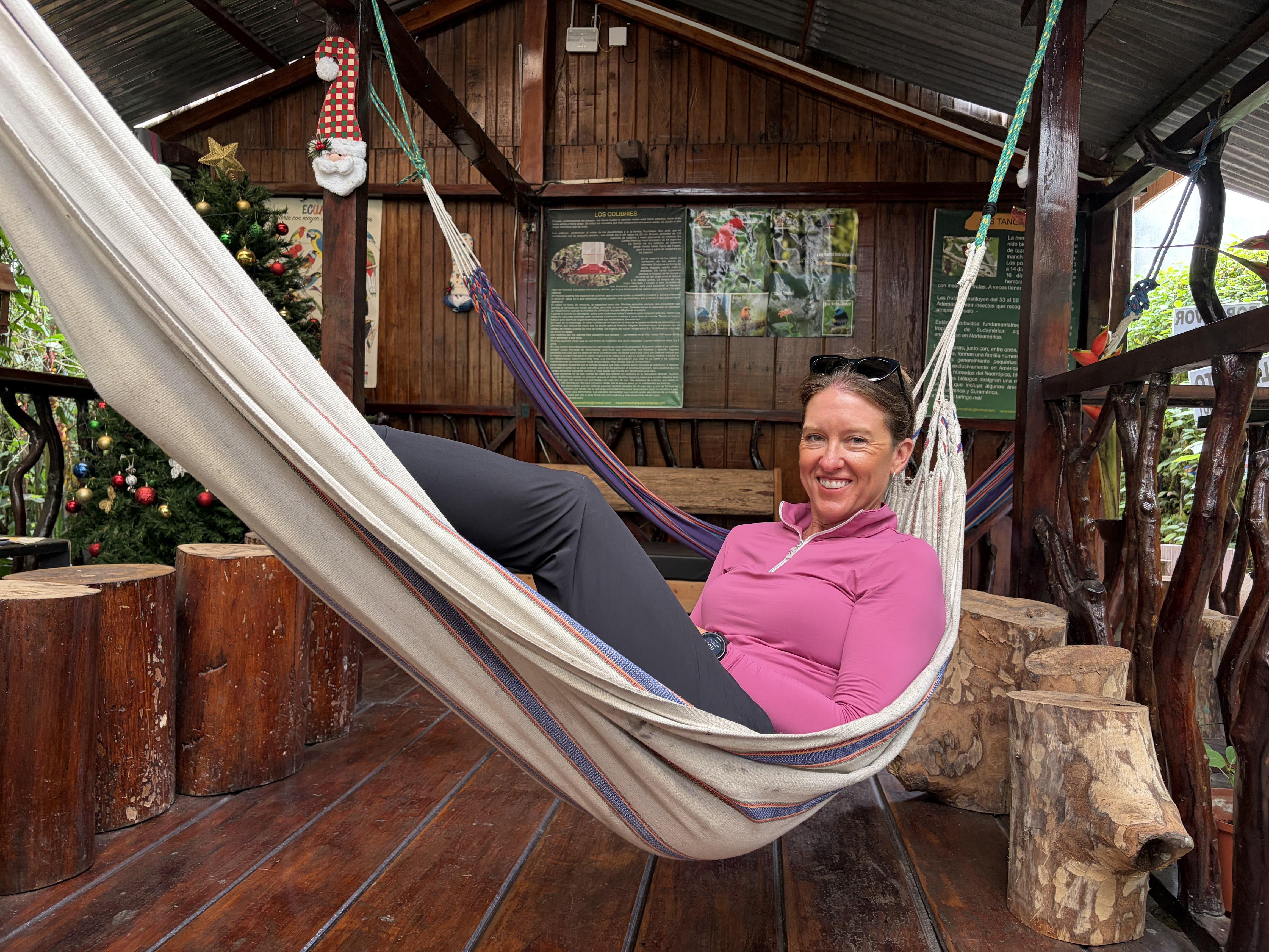
We decided it was lunchtime and headed to the center of town. We found a place where the food was decent but probably overpriced and while we ate decided on what to do next. We wanted to go to the Tarabita y Santuario de Cascadas Mindo to do the highly recommended six waterfall hike and needed to figure out how to get there, and Scott also wanted to figure out getting bus tickets for our ride back to Quito. While we were at the bus station we chatted with some Americans that we ran into and they shared a taxi driver’s WhatsApp number with us to take us up the mountain to the tarabita. We reached out to him and he picked us up and shook-rattled-and rolled us up the extremely rough road to reach the waterfall hike. Scott remarked that these Ecuadorian backroads must be hell on the suspension and steering of these poor cars1.
The tarabita ride was exhilarating! It was an open air cable car high above the canopy that took you 500+ meters across the gorge to the trailhead and it is strung about 150 meters above the jungle floor. Looking down onto the canopy below us was wild and I tried to stay calm and take it all in and not think too hard about the structural health and status of the machine that was carrying us across.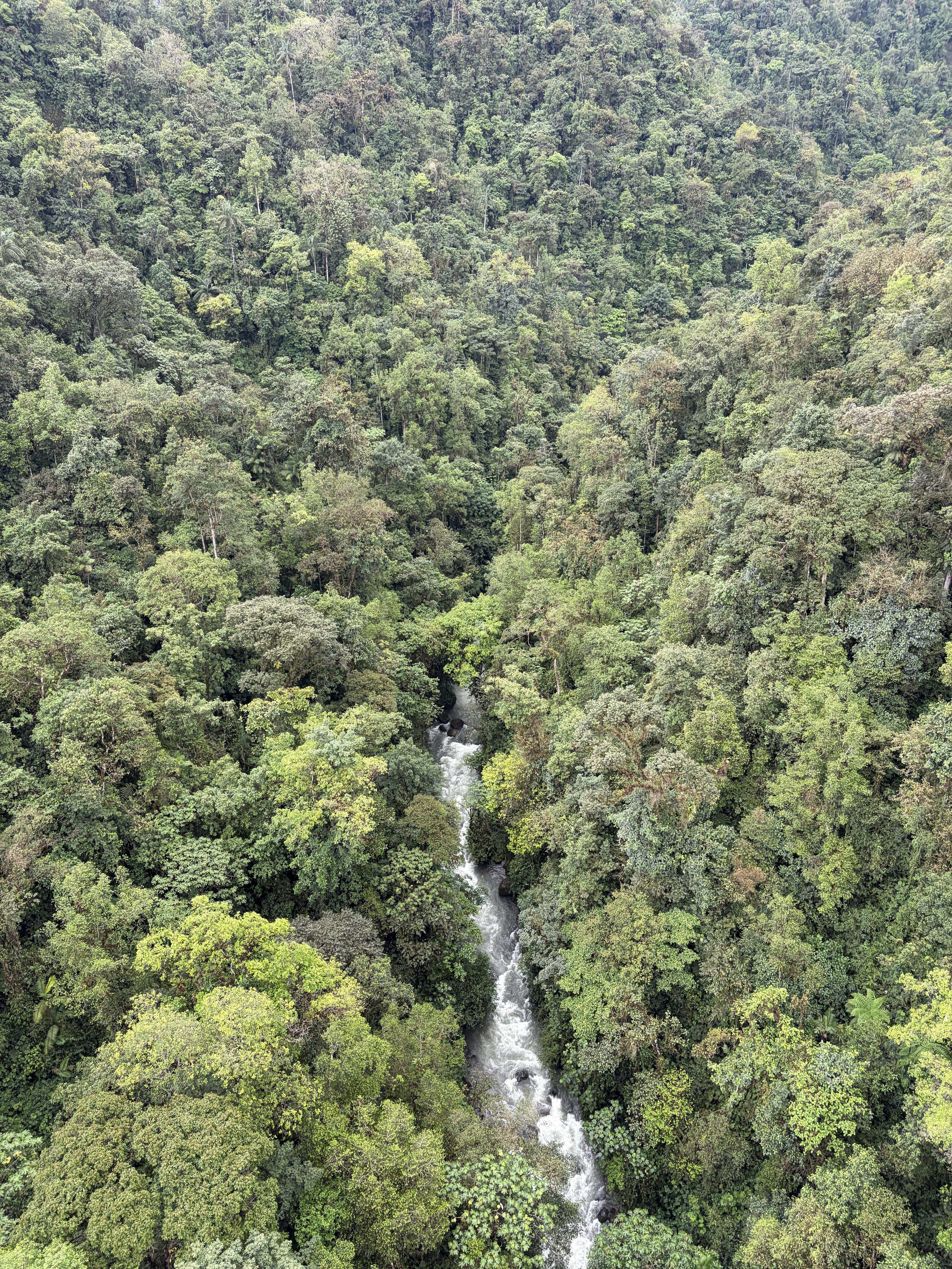
When we were delivered safely to the other side of the gorge we got a quick lay of the land from the guy running the tarabita, took a picture of the trail map, and struck out on our walk. It would take about 35 minutes to reach the first waterfall called Cascada Ondinas, then about 5-10 minutes for each subsequent one: Cascada Guarumos, Cascada Colibries, Cascada Madre, and Cascada de los Maderos. At the second or third one we came to, Scott felt compelled to take a swim and shucked off his clothes and jumped into the icy river. I did not feel similarly compelled and just observed his shenanigans from the comfort of the shore. When he’d had enough river time, he climbed out, put his clothes and shoes back on, and we carried on.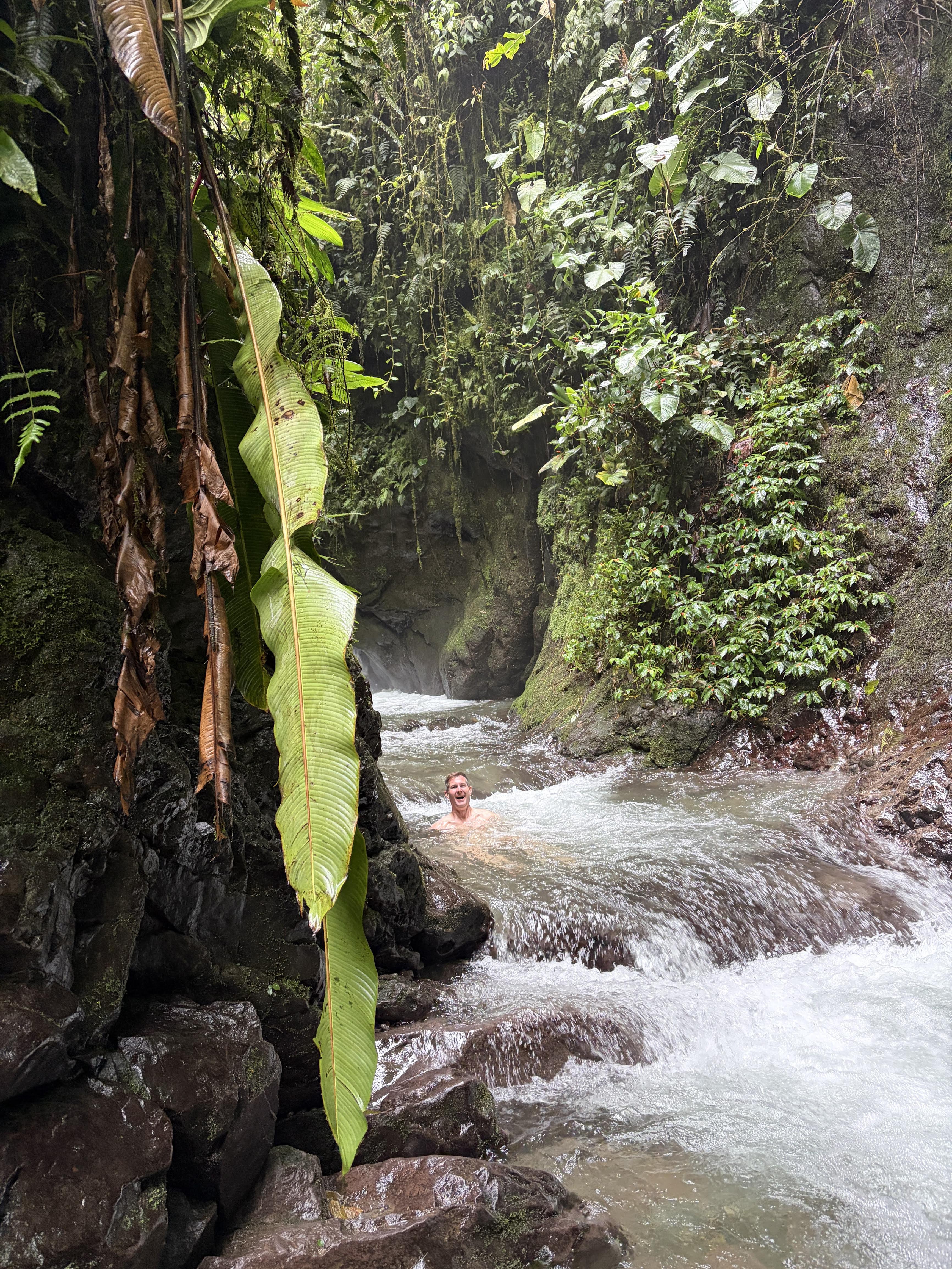
One of the characteristics of a cloud forest ecosystem is the presence of epiphytes which are plants that grow on another plant but are not parasitic, and seemingly all of the trees we saw were covered in layers of epiphytic ferns, bromeliads, orchids, and other air plants. It was stunning to see how much life was packed into a single square meter of space and I enjoyed seeing that as much as I enjoyed seeing the waterfalls themselves.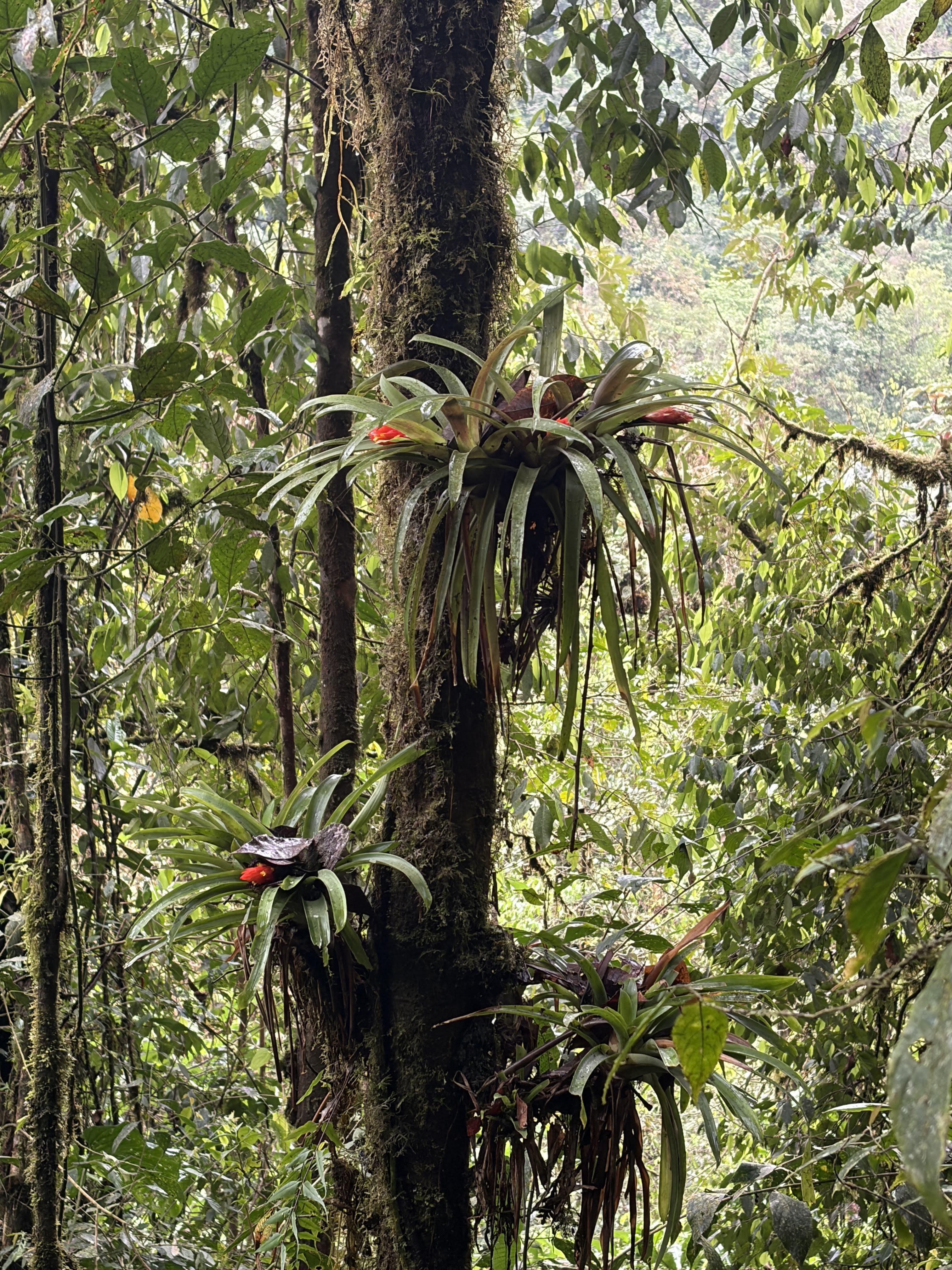
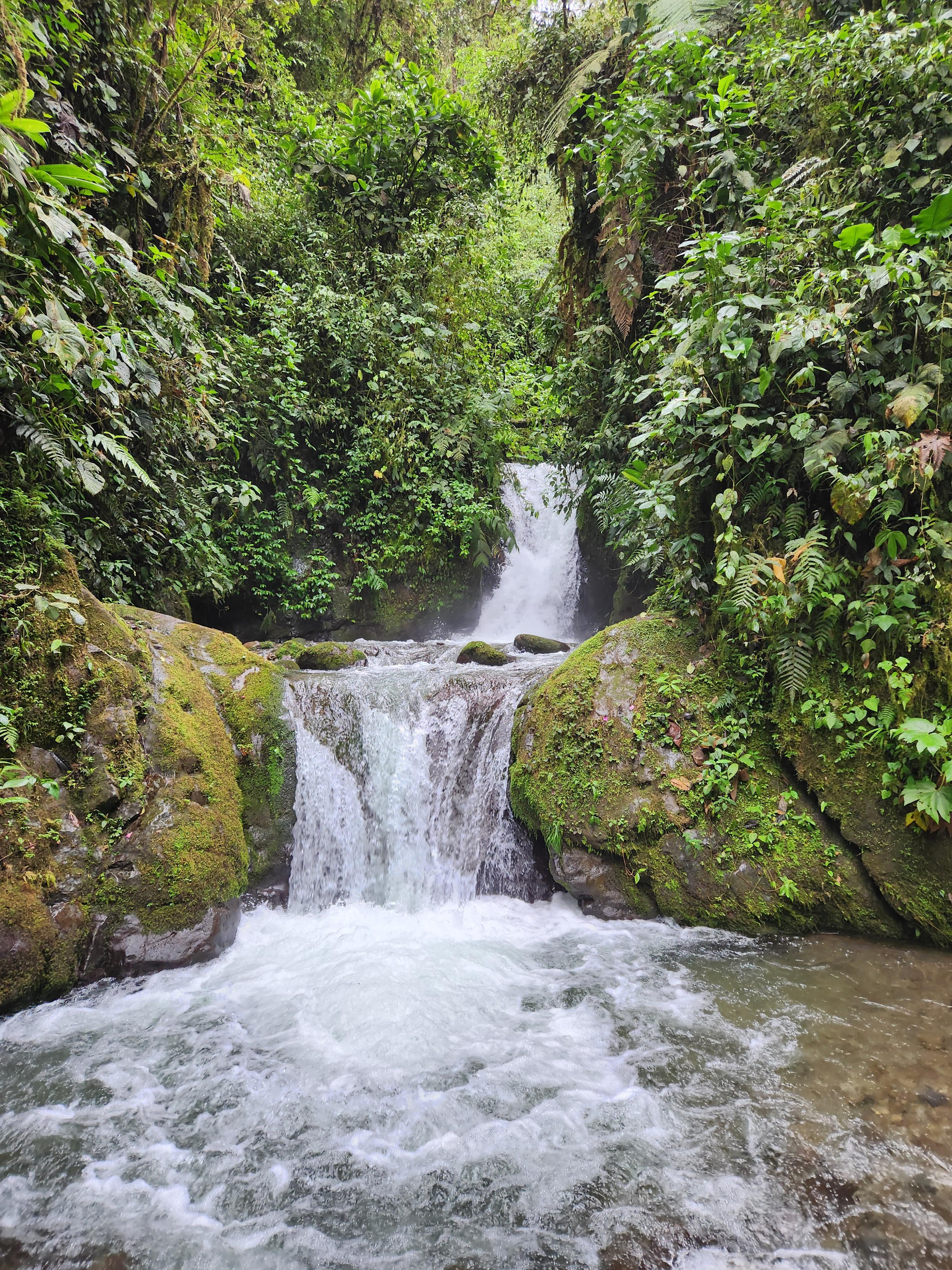
We were pressed for time because we needed to catch a taxi back to town and the bus back to Quito, so we had to skip out on seeing the final waterfall. The hike back up out of the gorge was rather strenuous and felt like an intense stairmaster session. The tarabita ride across the gorge was equally as thrilling heading home as it was the first time- imagine riding across the Green River gorge like you do on Interstate 26 but in a small and swaying open-air cage suspended from a thin cable…!
We had another bone-rattling taxi ride that took us back to town. We had some time to kill before the bus departed back to Quito, and as we were walking around the small town we were tempted inside a small chocolate shop by not only the tempting smells wafting out from it, but from the kind and friendly proprietor who waved us in. Once she had ushered us inside, she proceeded to give us a little lecture that was one part Spanish lesson and one part chocolate lesson on every variety that was then accompanied by a sample. Domestication of the cacao plant, from which chocolate is derived, originated in Ecuador, so chocolate and chocolate “tours” feature heavily here. We ended up buying a few bars of our favorites and thanked her for taking the time with us. She was one of many kind “abuelas” that we would encounter on our trip that went out of their way to enrich our experience.
Sweet tooth activated by the chocolate, we decided we needed some ice cream and went in search of a “heladeria.” We found one and treated ourselves. We wandered around the town a bit more before heading to the bus station.
It had been easy enough (and cheap) to buy the bus tickets. We had opted to take the bus back for two reasons. The first was that we weren’t quite certain that it would be easy to find a taxi or rideshare app driver to want to make the two hour drive to Quito later in the day (usually going big city to small town is easier to find a driver than the reverse), and secondly, we were treating this bus ride as a fact finding mission for future bus rides later in our trip when we would need to go from city to city. We found our seats and settled in. The drive was uneventful and only stopped a handful of times right at the start of the ride2 and then it seemed like we made fairly good time getting into Quito.
We had originally planned to get off at the Mitad del Mundo, or “the middle of the world” monument located on the equator, on the way back into Quito, but sadly, it turns out that the equator has regular business hours that did not coincide with our travel plans, so that was out.
The bus dropped us off at the bus terminal and we now needed to fetch a cab back to our hotel. This added nearly another hour to the trip because we somehow found the only slow driving taxi driver on the planet. Initially I was mentally praising him for his seeming lack of any sense of urgency but then this praise soon turned to irritation when I noticed that we were getting honked at at every single traffic light. Neither of us understood why he was in tortoise mode but we started to get suspicious as the ride went on.
This came to a head when we made one of the final turns to get into the historic center where our hotel was located and he couldn’t get up enough steam to make it up the admittedly steep, but not unconquerable, hill. He tried and tried… and continued to try. Each attempt only got us about halfway up the hill before he would stall it out and we would start to rolllll back down the hill. At this point I was embarrassed for him and wanted nothing more than to jump ship and just walk home. Scott yelled at me and said “No! We paid for this ride and he is going to get us to our door. Stay put.” So we stayed put.
Finally he was able to back down the hill, but not before nearly mowing down a parked motorcycle, and was able to get enough of a running start to squeal, smoke, and fishtail his way up the hill. Scott hypothesized that first gear had ceased to exist. Blessedly he nursed it to the hotel and we jumped out, relieved to be done with that experience. I am still unsure if the language barrier made it more or less awkward.