We started referring to our Amazon jungle tour as “Amazon Lite” for a few reasons. Puyo was located fairly close to Baños relative to some of the other towns that offered Amazon tours which required 6+ hours of bus rides and extensive water taxi transportation. Baños is often referred to as the “gateway to the Amazon.” Most of the tours offered roughly the same experience: some hiking, some chocolate tourism, some sort of zoo experience, a canoe ride of varying lengths, local cuisine, lodging, a “night hike,” and a visit to an indigenous tribe. Based on this, we decided that we did not want to devote multiple days and multiple nights, and found the two day-one night itinerary the most appealing option for us. Another contributing factor to this moniker was that the whole thing, though it definitely qualified as “do the thing you are supposed to do in the place you are supposed to do it,” felt a little canned/staged/contrived; in that tourists got marched up and down this one road on the outskirts of Puyo, stopping for visits to each of the aforementioned activities.
Remember how the high elevation had been affecting our sleep and that we were desperate for a good night’s rest? Well, it didn’t happen this night either because during the middle of the night I awoke because of some sort of stomach bug.
I nursed myself along for the first bit of the morning, silently praying that this was nothing, and sent a mental thank you note to my doctor who had sent me to Ecuador with Zofran just in case this exact thing happened.
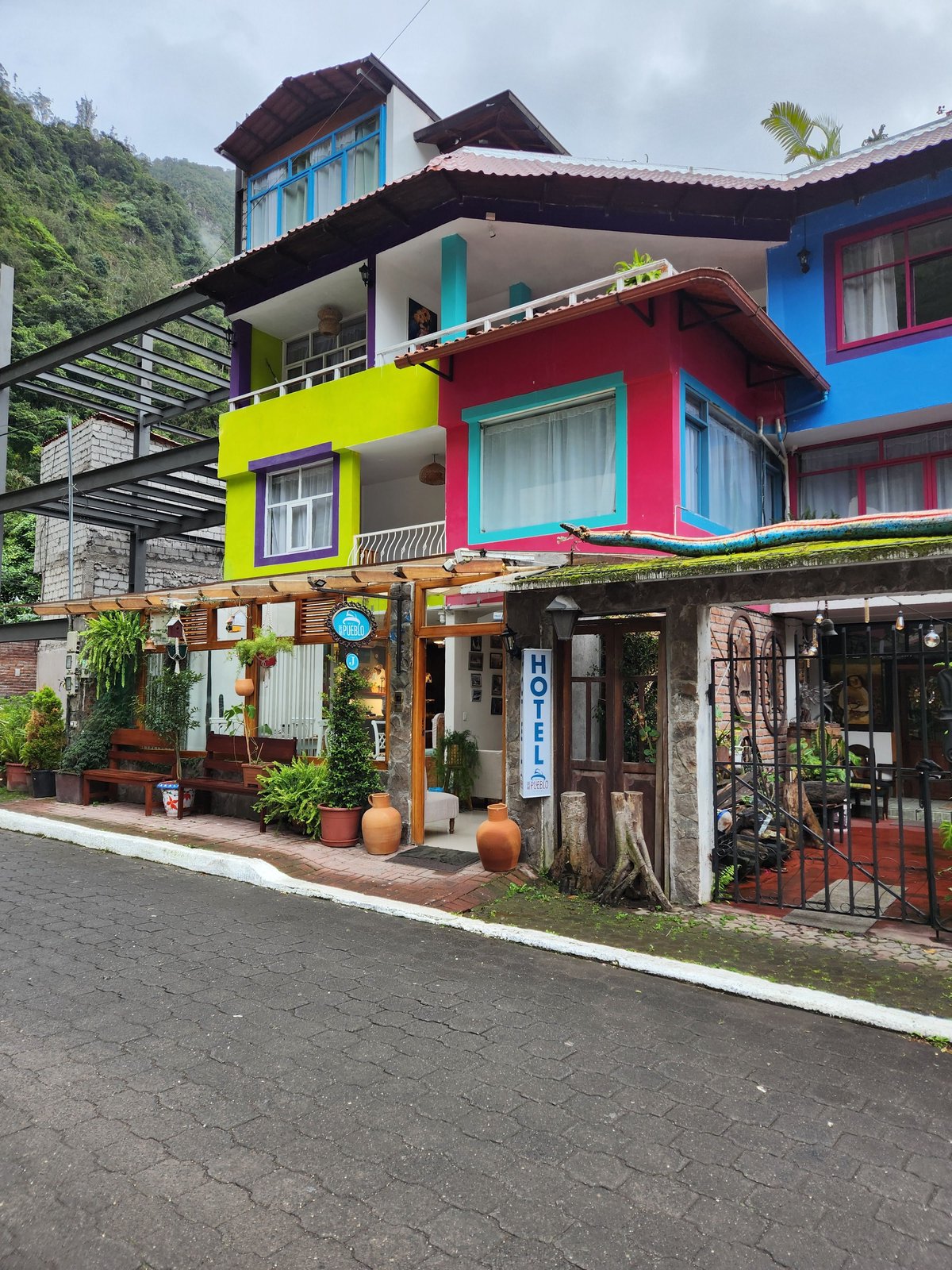
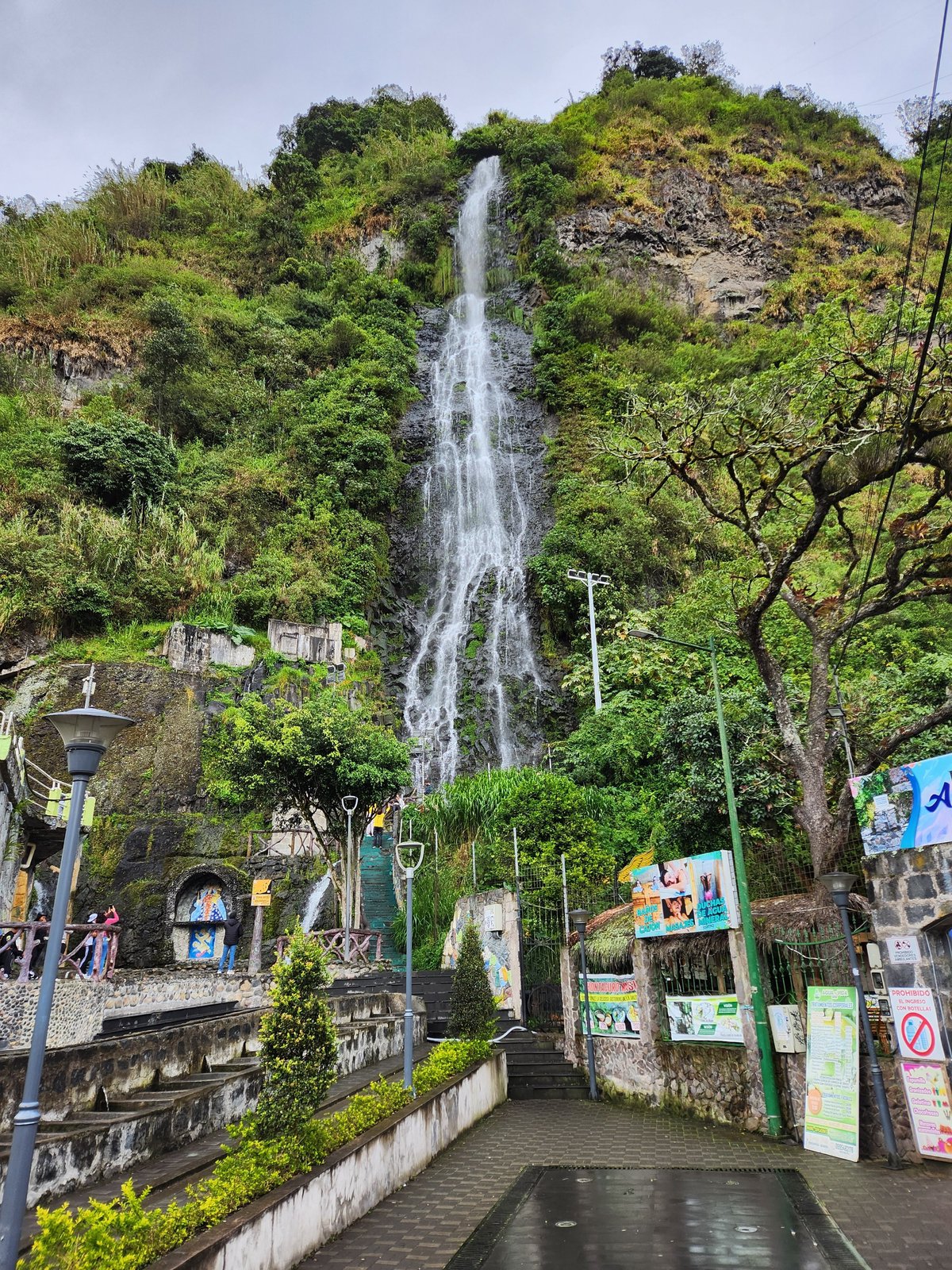
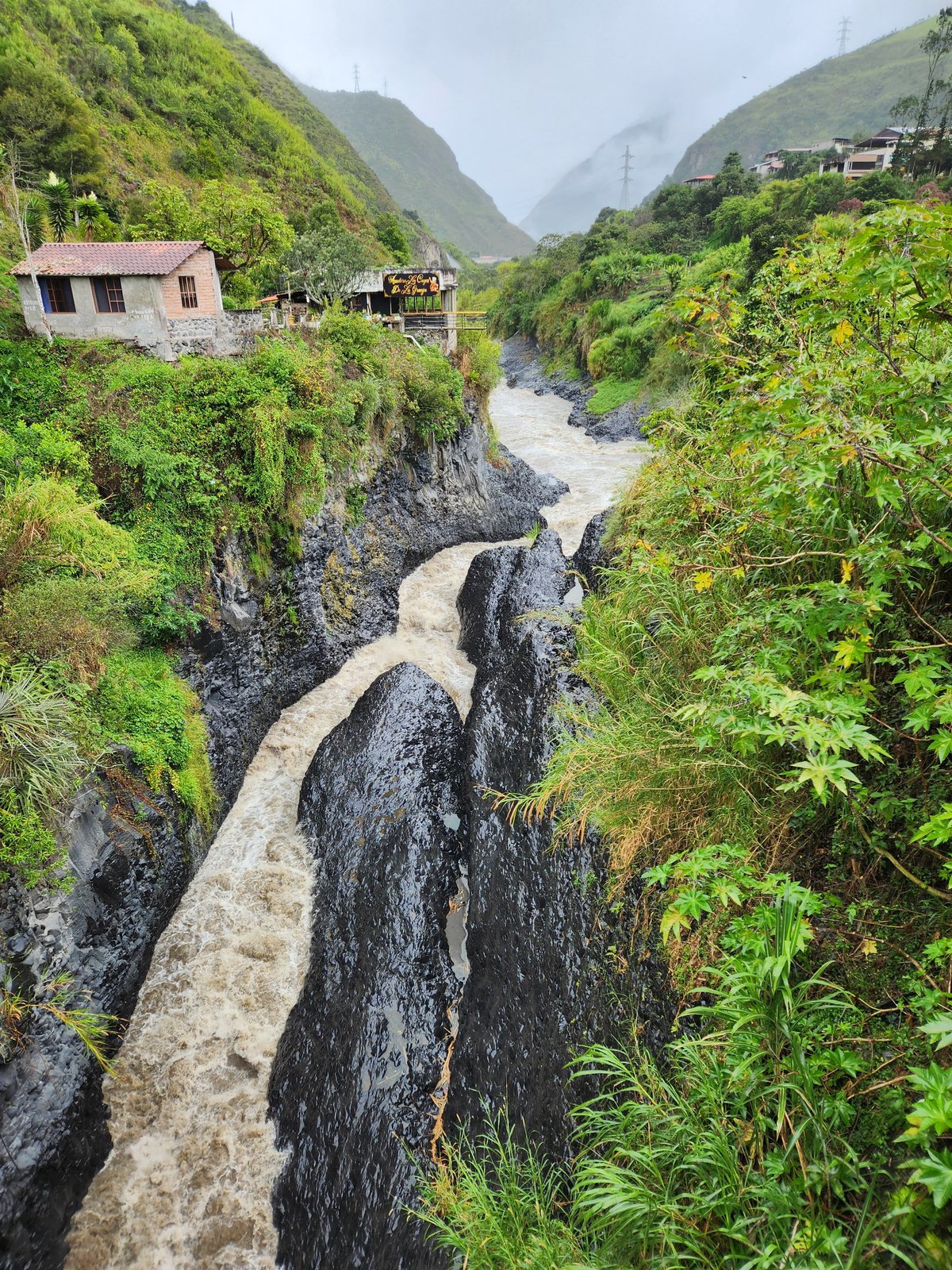
Scott had gotten up early and had gone to walk around and explore the town of Baños. When he got back he reported that he had walked over to the nearby thermal springs and iconic waterfall. We wouldn’t have time today to soak in the thermal baths because we needed to be at the travel agency by 9 AM to embark on our two day-one night Amazon jungle tour adventure, but we planned to visit it when we got back to Baños.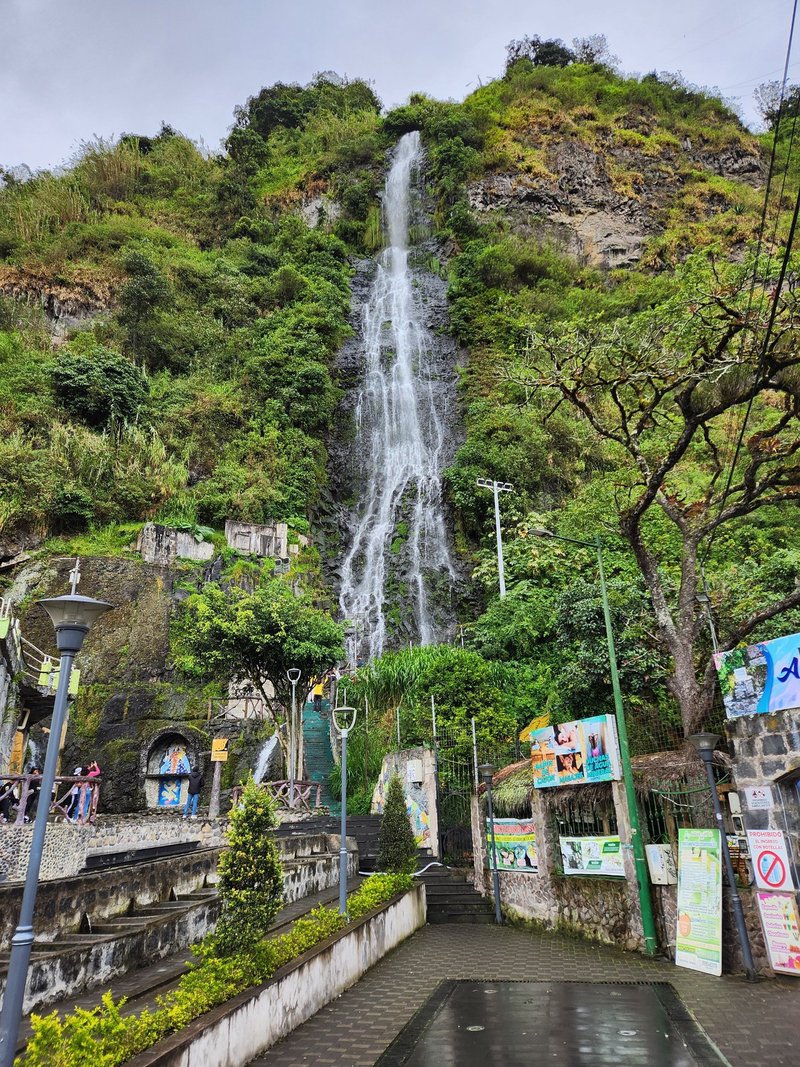
We repacked and walked the few blocks over to the Imagine Ecuador travel agency where we were introduced to Carlos, our personal guide for the trip. We loaded into his truck and headed to Puyo.
Despite having taken an arsenal of meds this morning, I was feeling puny still and was hoping that I would cope ok during the 2.5 hour drive. Blessedly, Carlos was a sane driver because had he driven in the typical Ecuadorian manner, I think that would have sent my delicate stomach over the edge. Speaking of Ecuadorian drivers, it was on this drive that multiple cars, including ours, got PASSED in a poorly lit narrow two-lane TUNNEL by a full-sized city-to-city BUS! Scott and I looked at each other with astonishment, with looks of “Did that just happen?” on our faces.
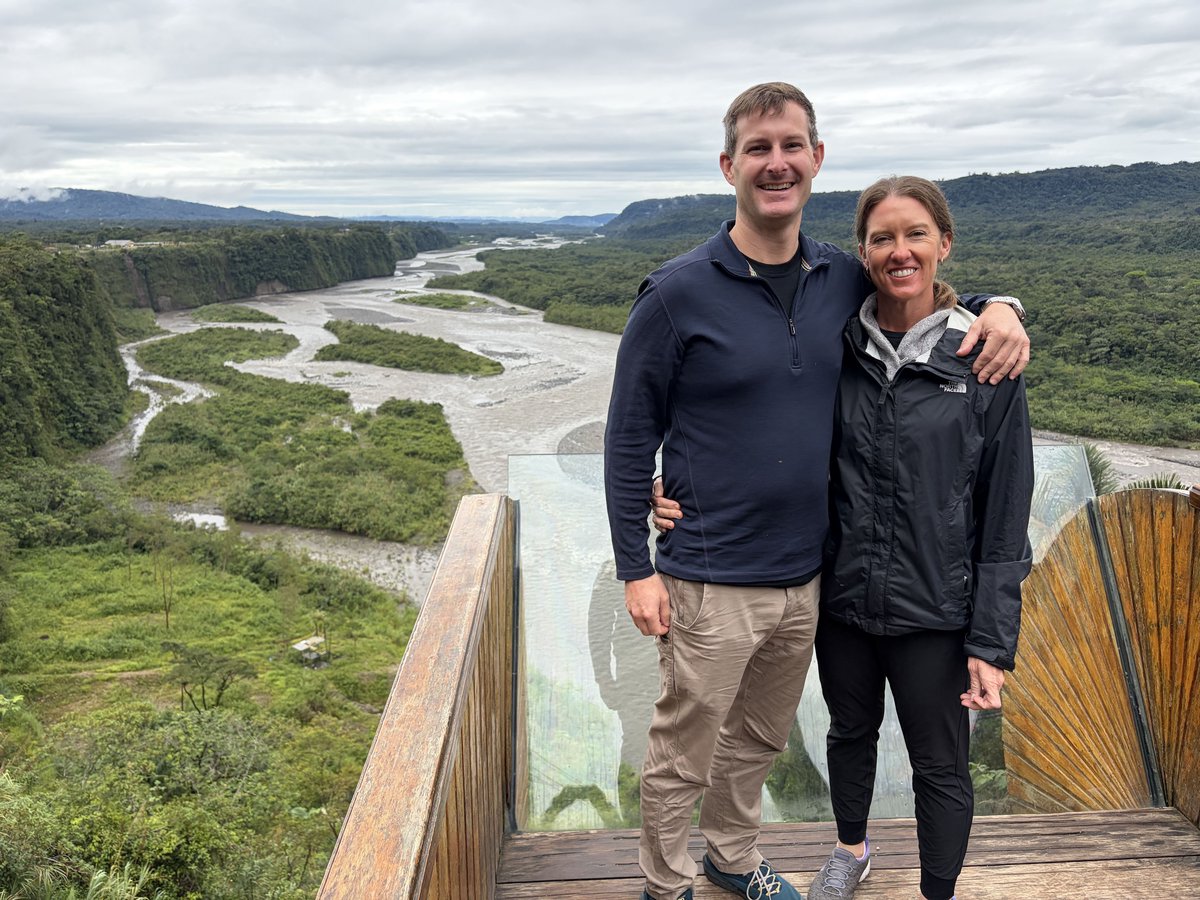
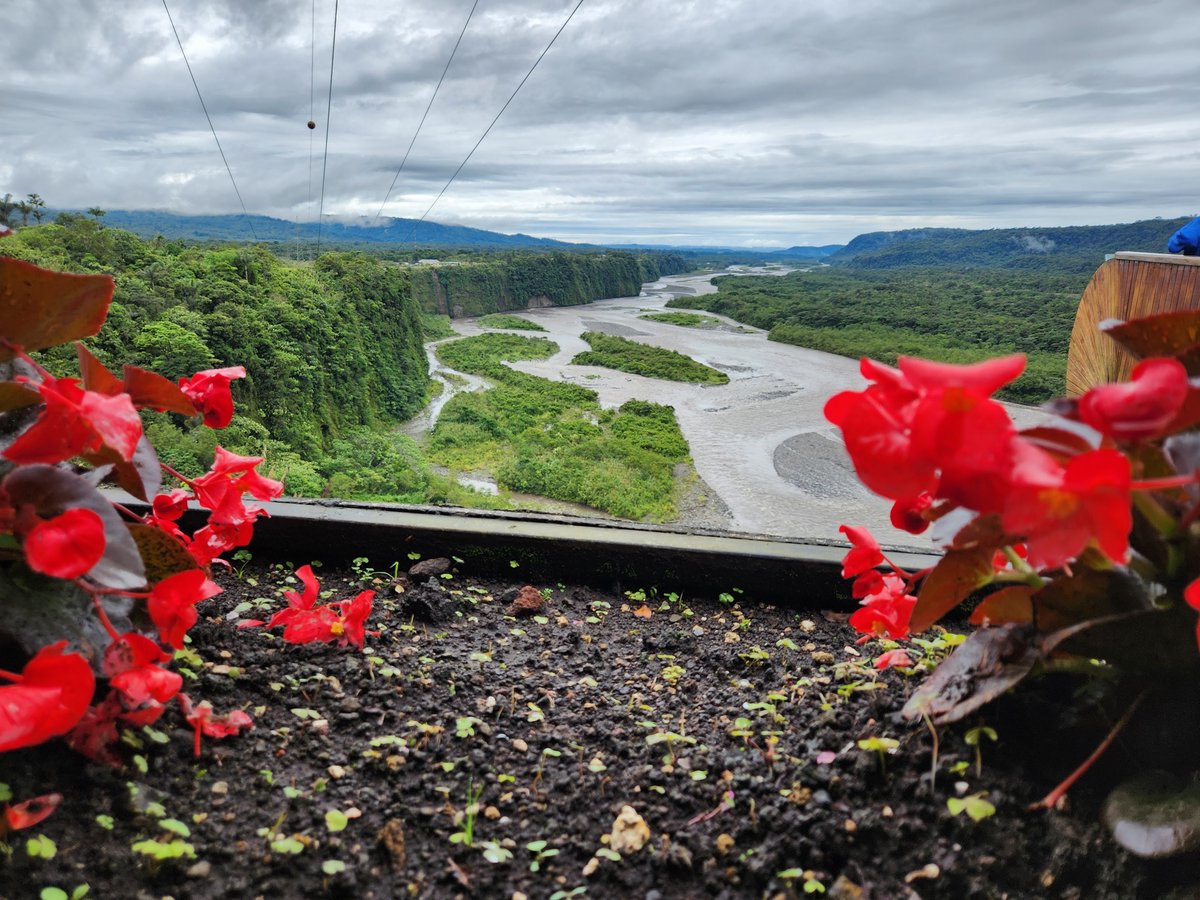
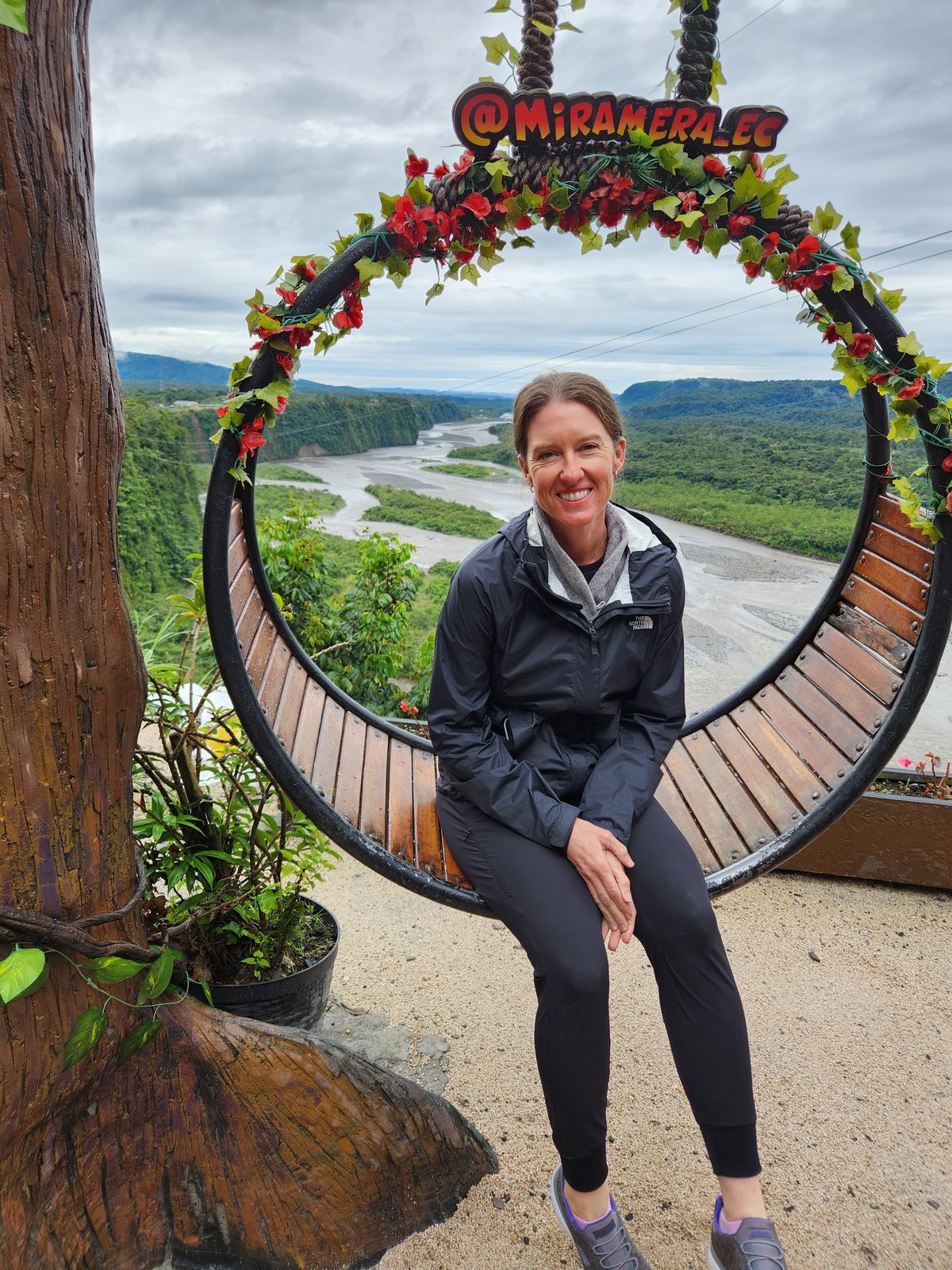
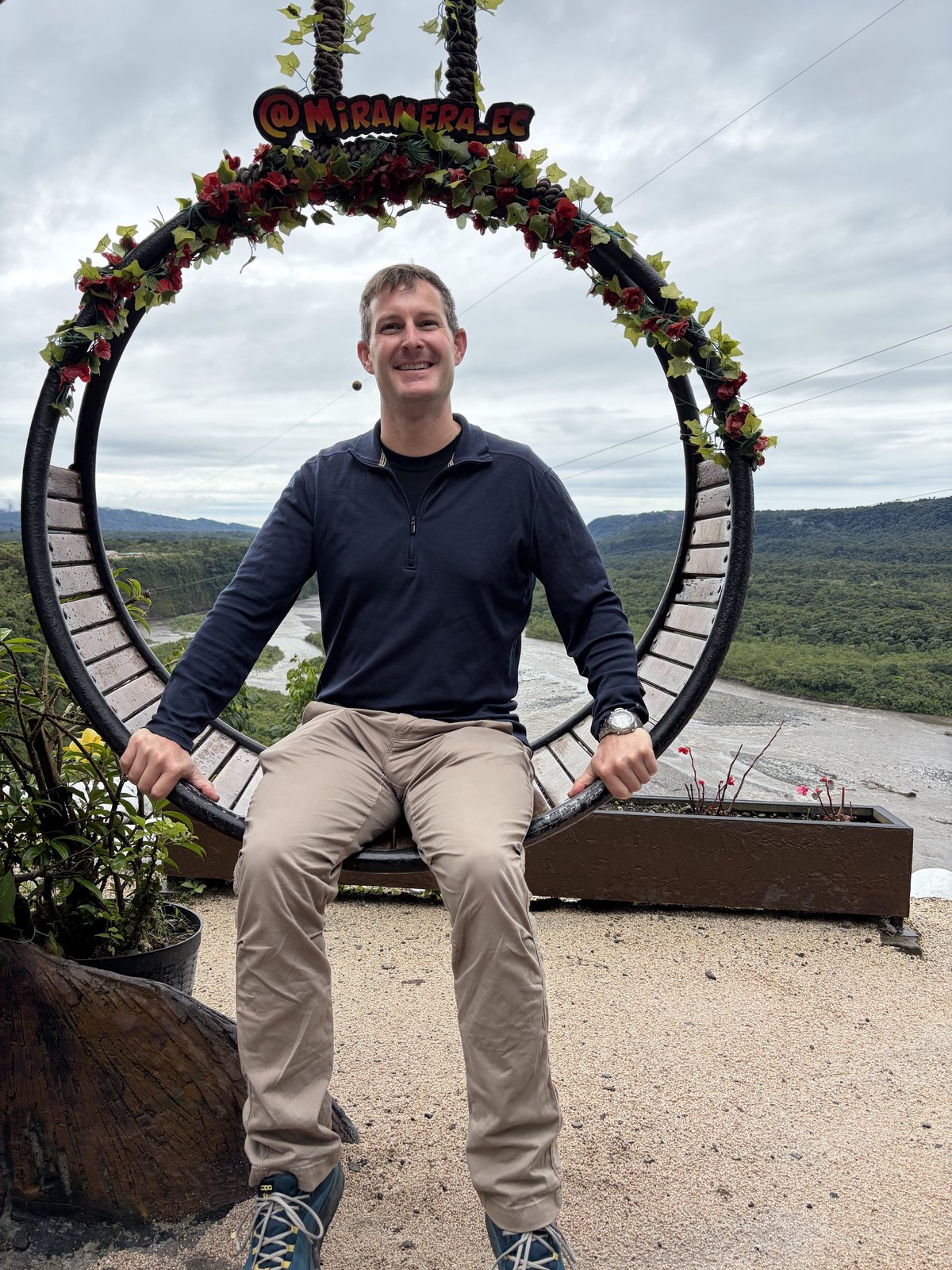
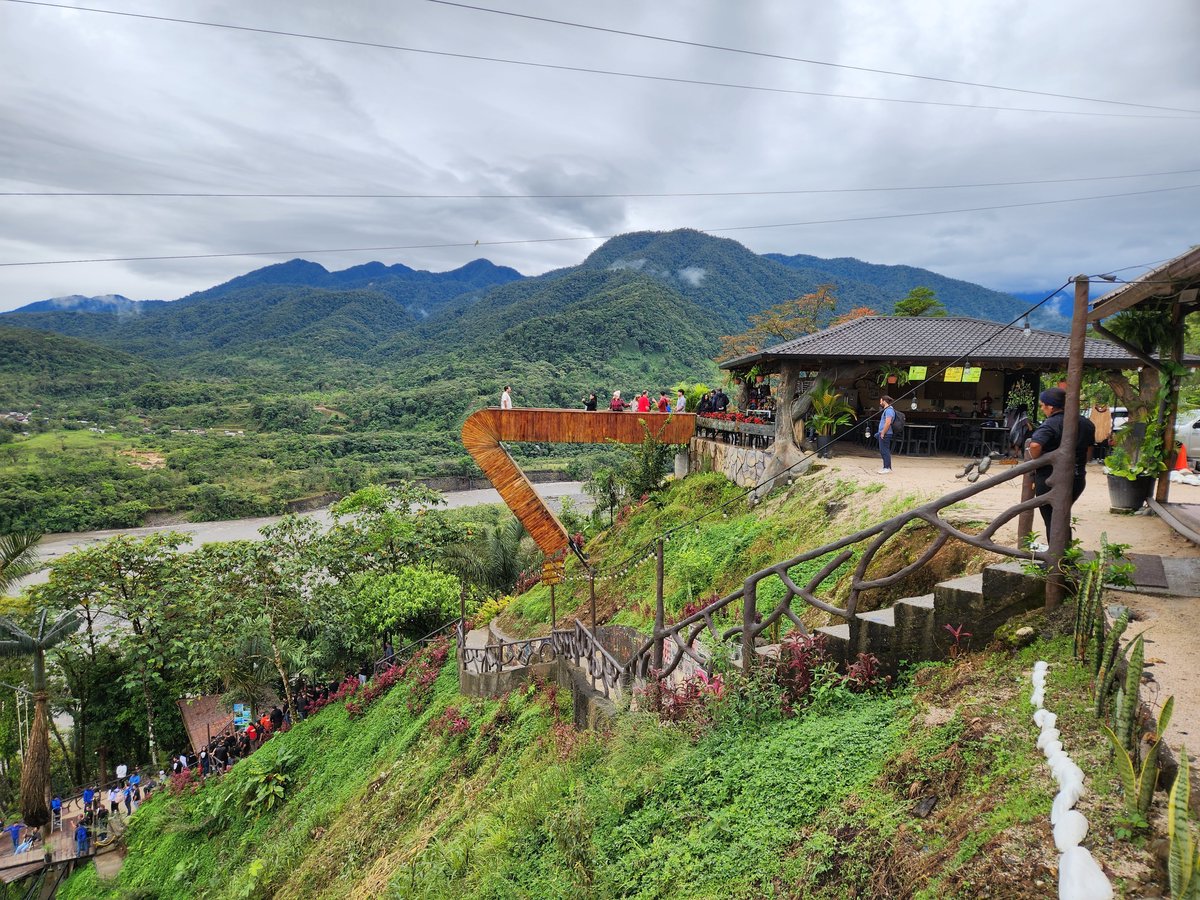
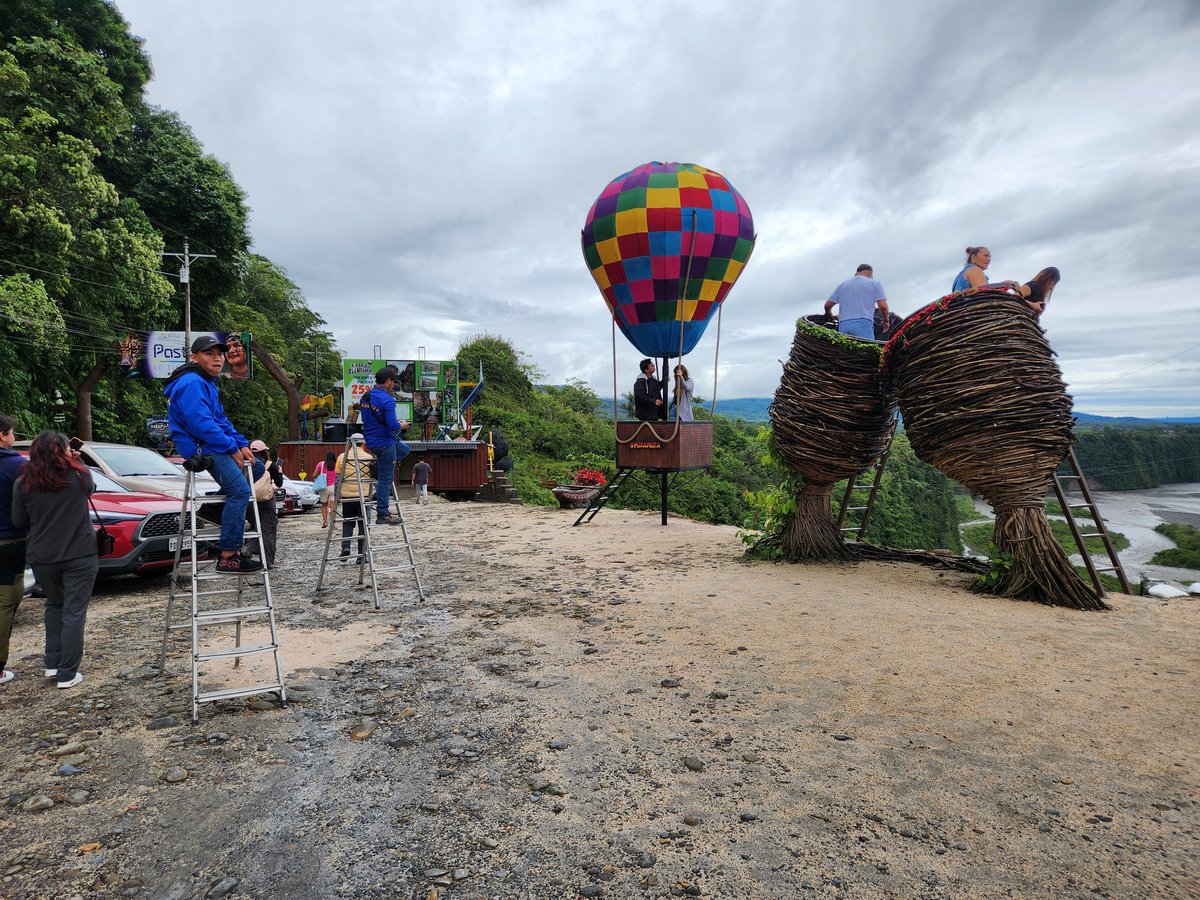
We eventually stopped at Mirador Miramera, which we quickly surmised was a viewpoint overlooking the Pastaza river, and essentially an Instagram park. We were able to gaze out over the wide river and it was interesting to see how much it had changed since its headwaters in Baños. At its origin it was narrow and raging as it sliced its way through the narrow volcanic rock canyon, but as it came out of the mountains and made its way towards the flat Amazon, spread out and slowed down to a lazy and sprawling body of water. We took some pictures at the overlook, and I was able to buy a Sprite to attempt to continue soothing my stomach.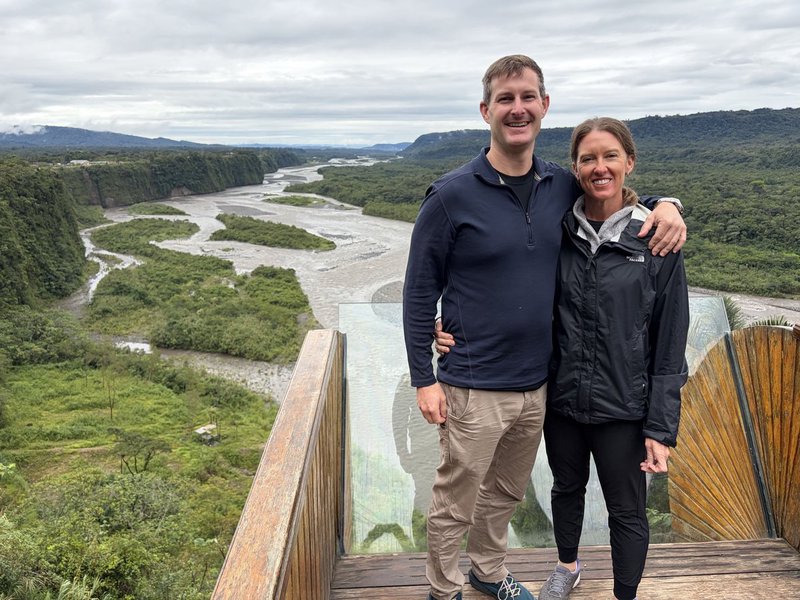
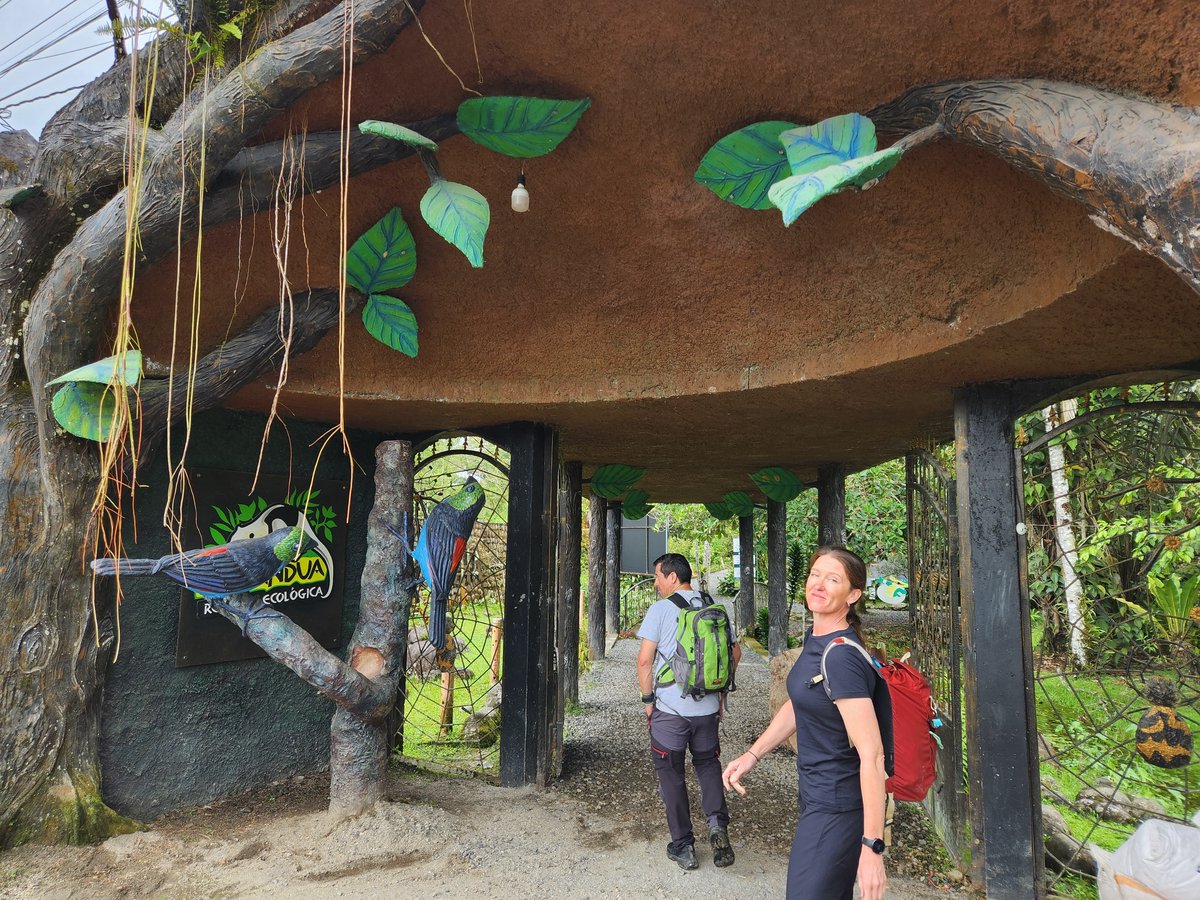
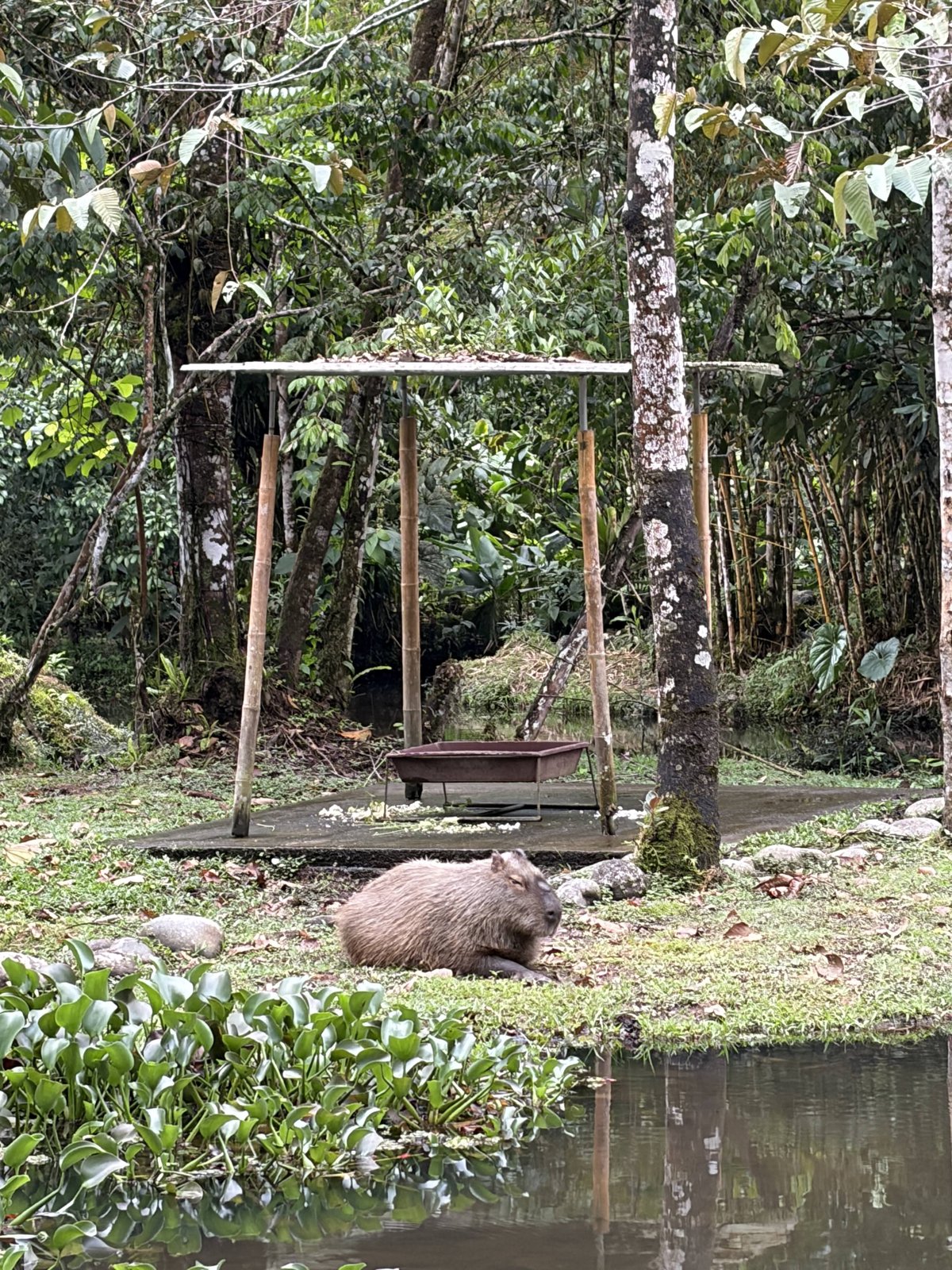
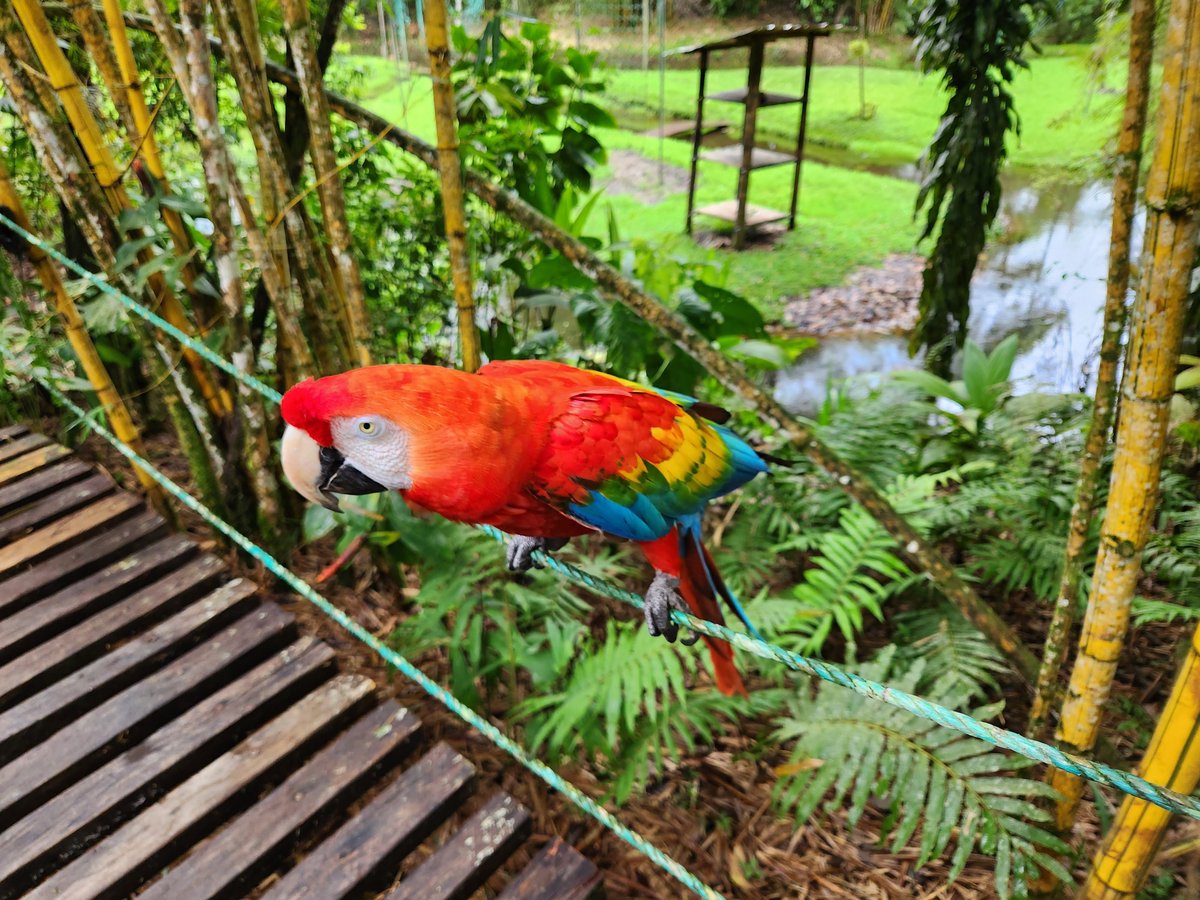
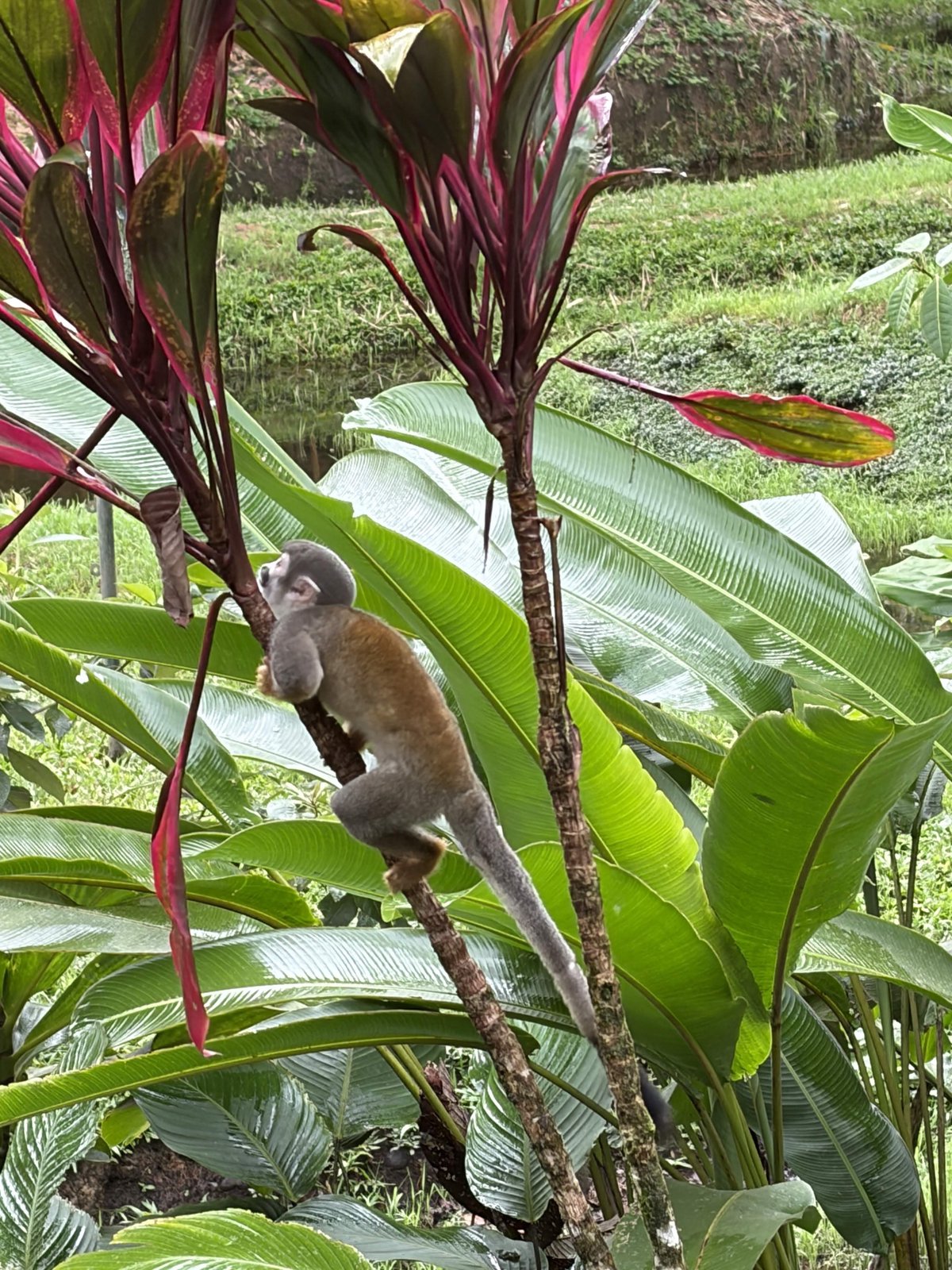
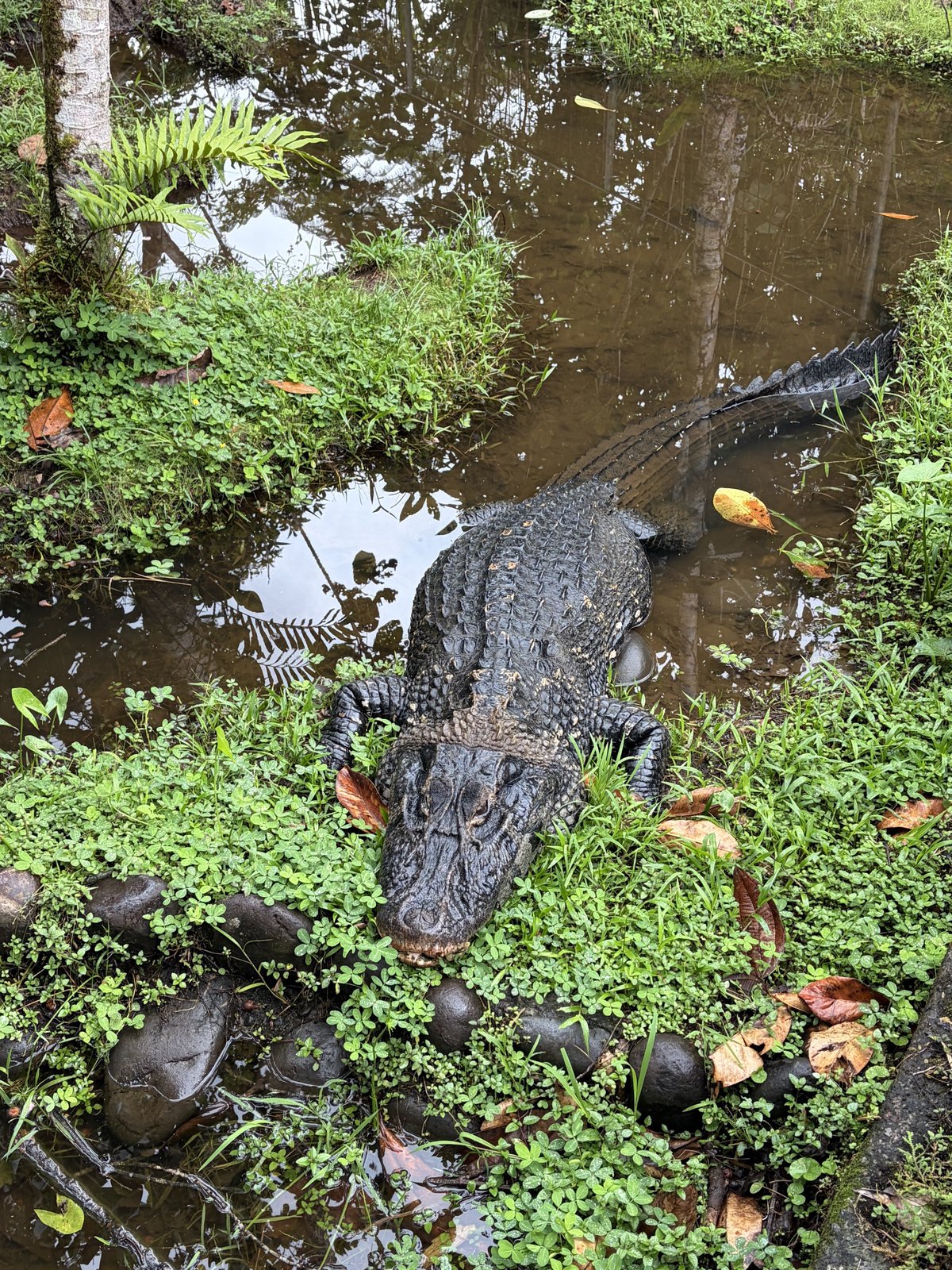
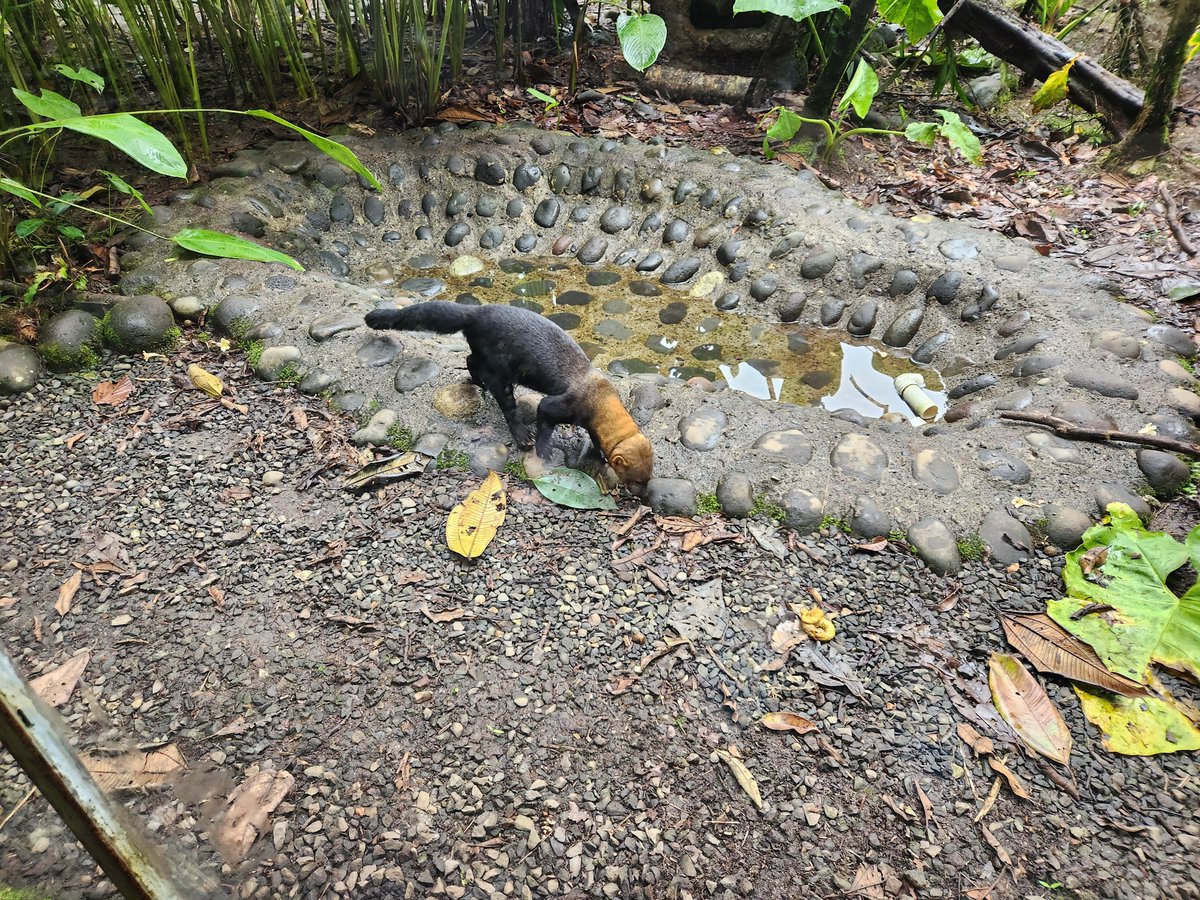
We continued on a bit to our next stop, the YanaCocha Rescue Center, a center “dedicated to the rescue, protection, and conservation of wildlife species that have fallen victim to illegal trafficking in the Ecuadorian Amazon.”
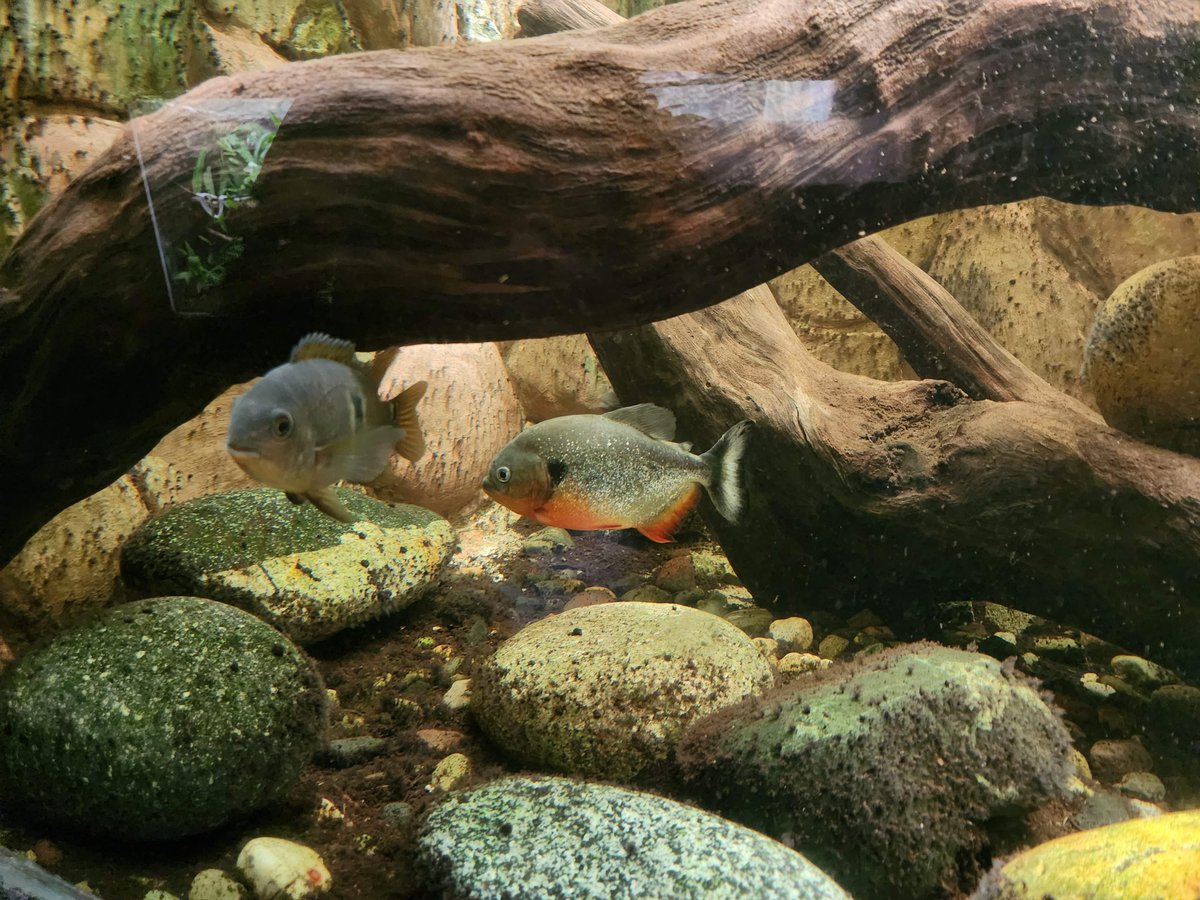
The 20 acre center has 40+ species and we got to see many of the ones that you often think of when you think of the Amazon: caimans (South American reptiles similar to alligators), tucans, capybaras (essentially giant guinea pigs), macaws, anacondas, piranhas, several types of monkeys, coatis (related to the raccoon), poison dart frogs, and boa constrictors. The capybara was my favorite and Scott’s was the red macaw.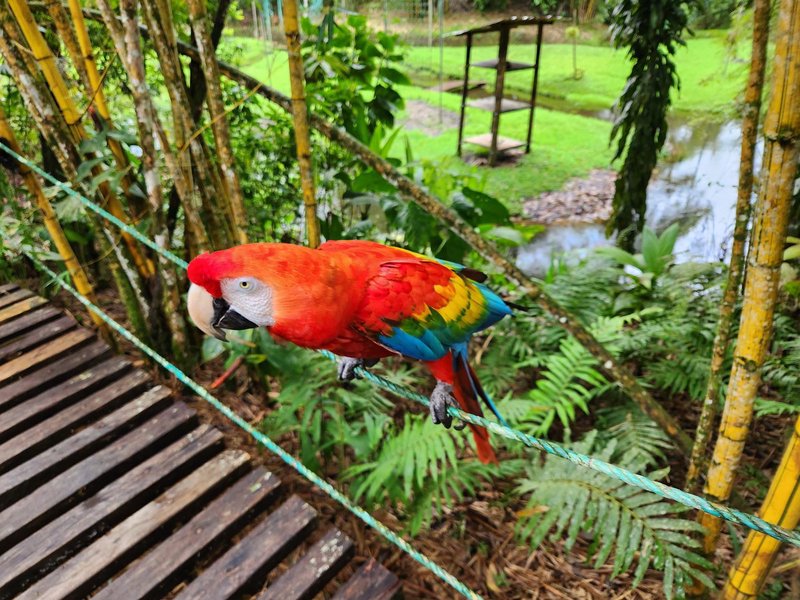
As we were about halfway through our visit to the rescue center I felt my stomach getting progressively more and more unsettled. I asked where the bathroom was and barely had enough time to form the question when it revolted and I had to attempt to get off the path to vomit. Unfortunately there wasn’t really anywhere for me to go and I ended up yakking several times onto the steep embankments on either side of me. I took more Zofran and then messaged one of my clients who is a physician to see how frequently I could take it. She was sweet and responded quickly, and also suggested that if I had a Z-pack, that I could take a single dose of that, as that is the protocol for treating Traveler’s Sickness.
Guess what we actually had?! Our friend and neighbor, who also happens to be Scott’s father’s pain doctor, gloriously had sent us with a Z-pack!
Thankfully I started feeling a little better and we were able to carry on with our zoo visit. On the way out I got another soft drink to see if that would help, and made sure to have some plastic grocery bags that thankfully I always have stashed in my bag handy in case I needed them for the car ride.
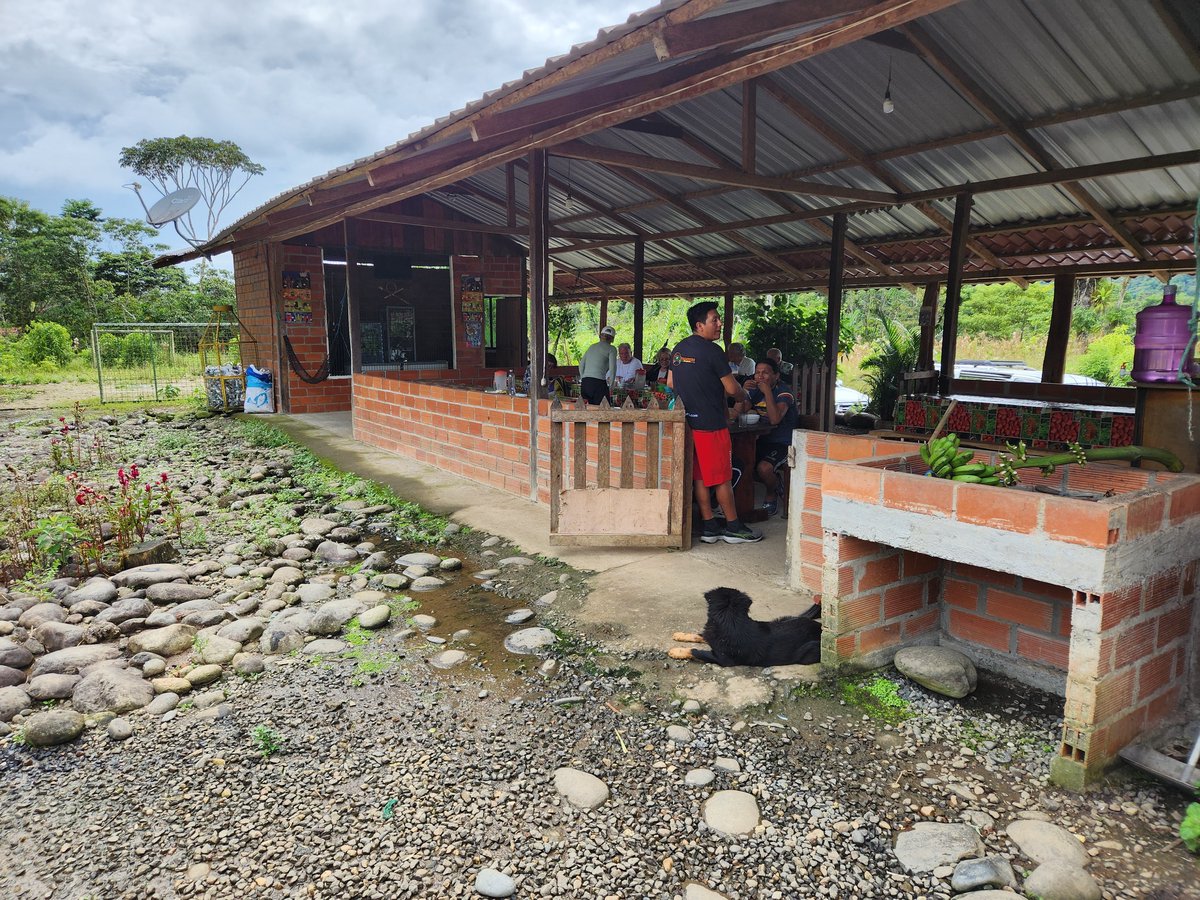
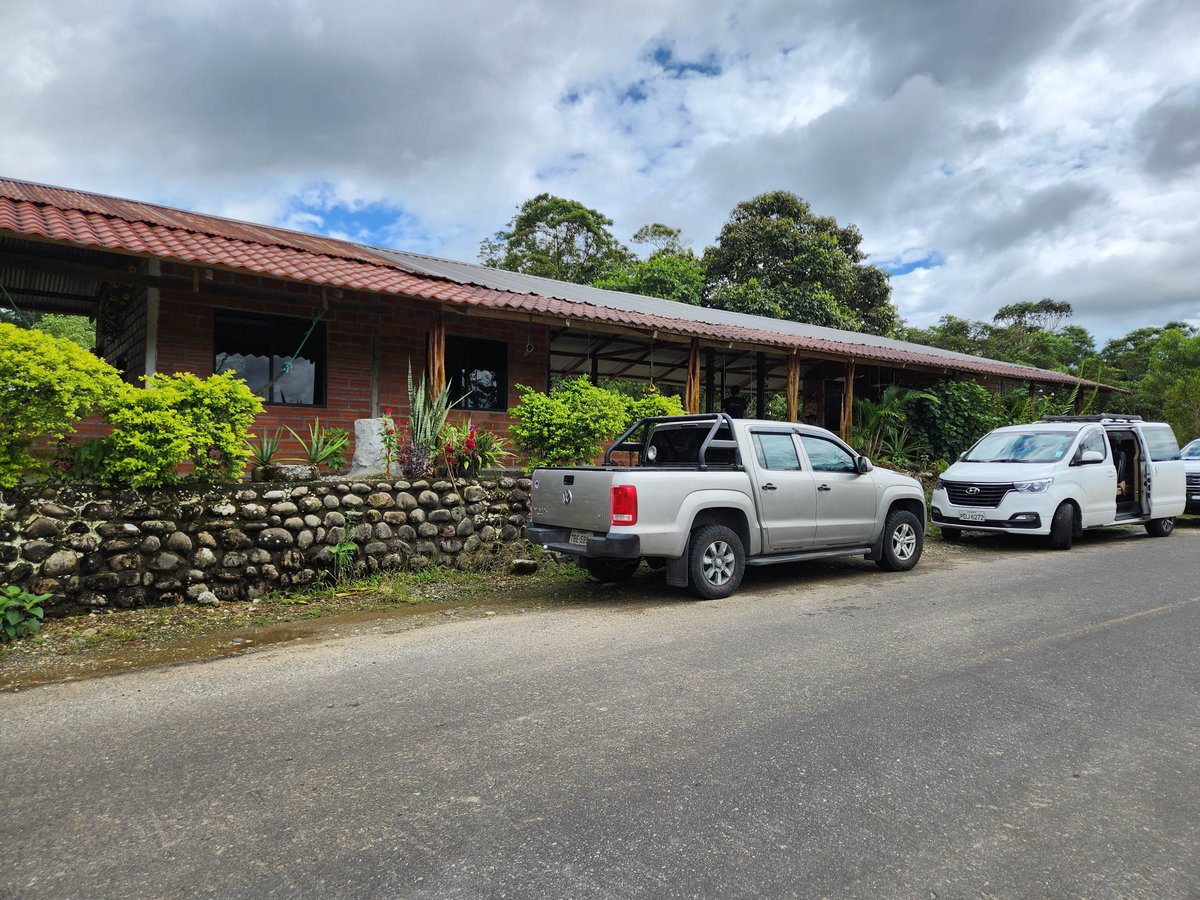
Our next stop was lunch at a small family owned roadside restaurant. Scott had decided to try the tilapia. It was prepared by wrapping it in a banana leaf and then steaming it which is a popular South American dish and Carlos had mentioned several times how flavorful and moist the fish comes out. I had originally told Carlos that I would like chicken for lunch but decided instead to just drink the broth from the chicken soup that was our first course and then ate some of the savory plantain and rice that had come as sides. I was hoping this would help me feel better.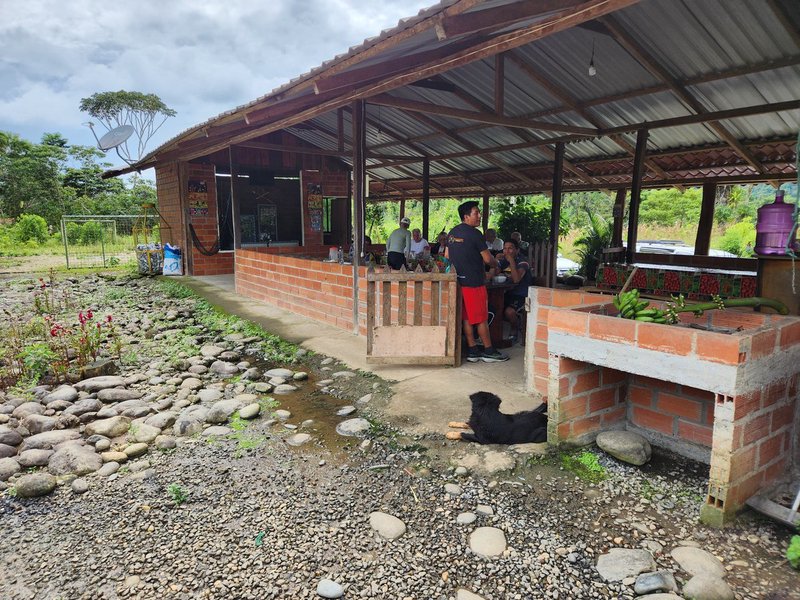
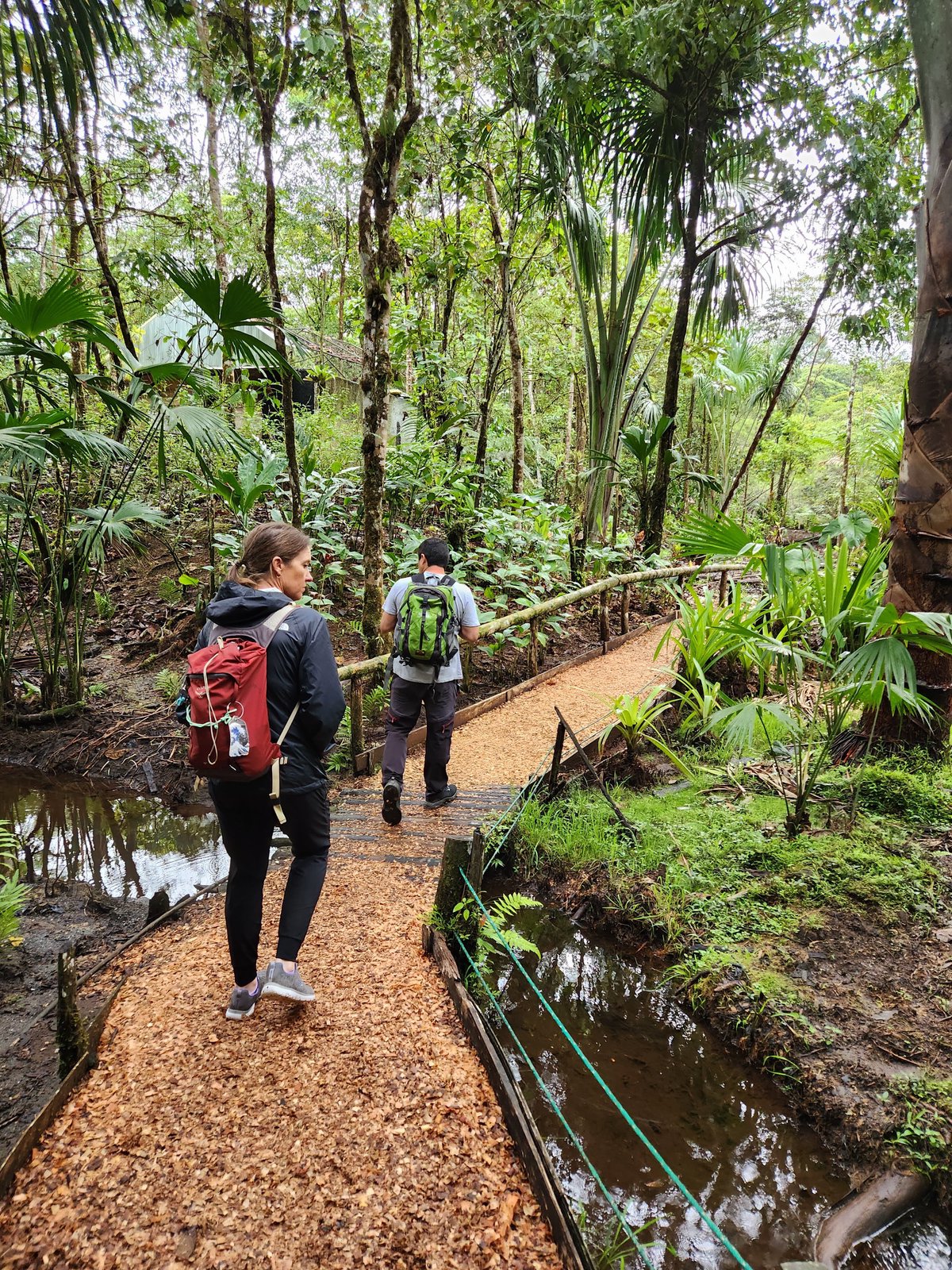
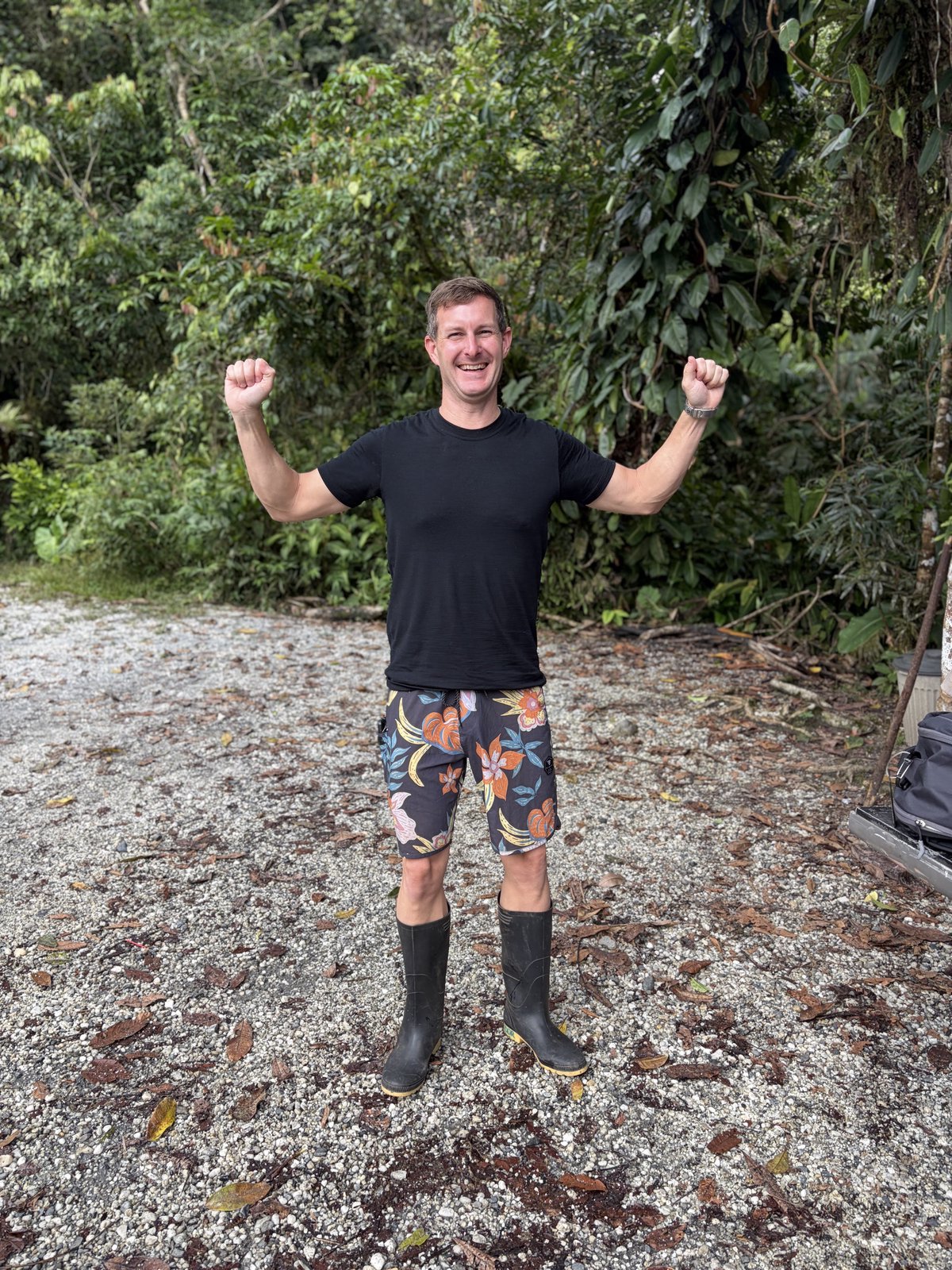
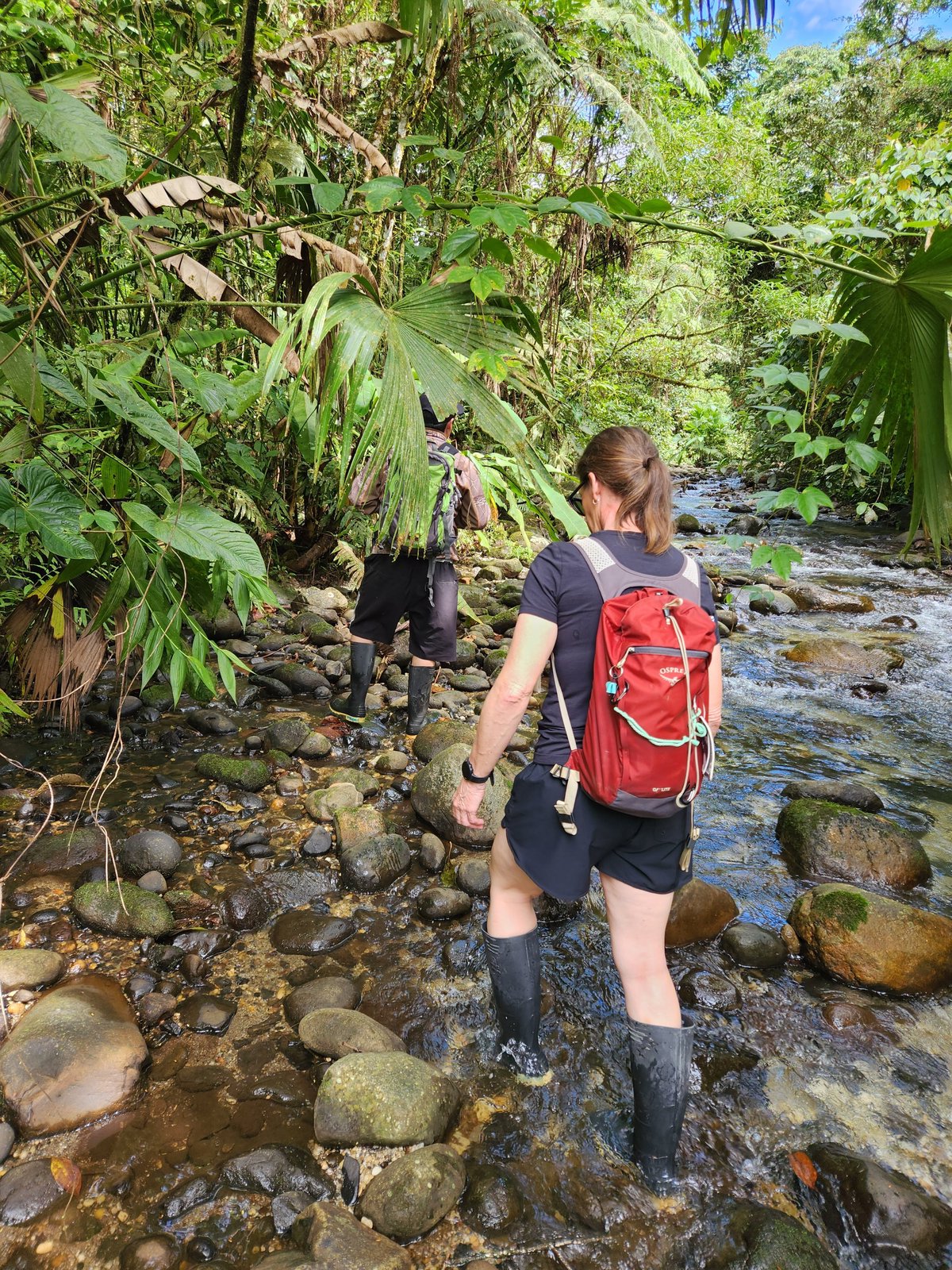
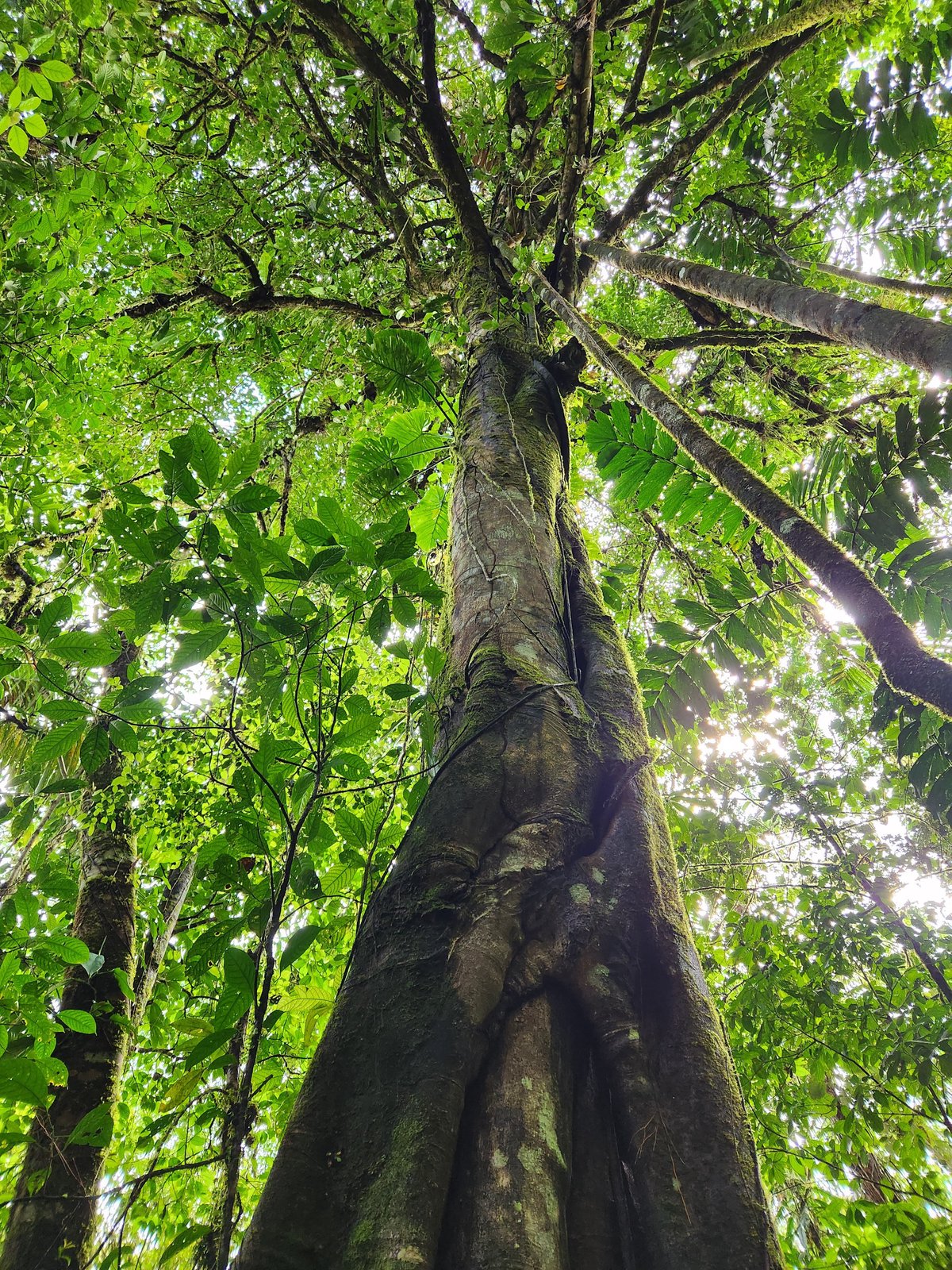
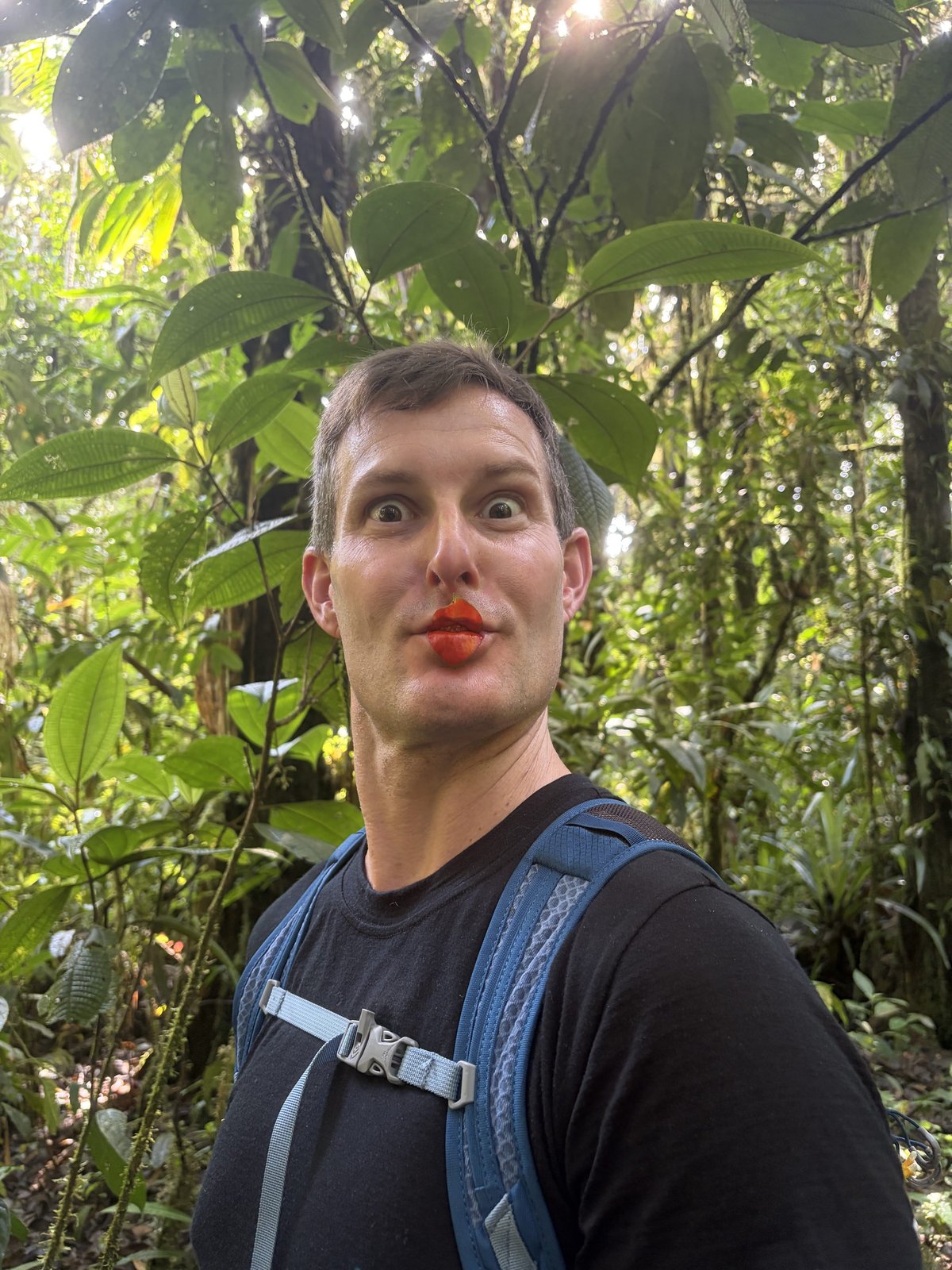
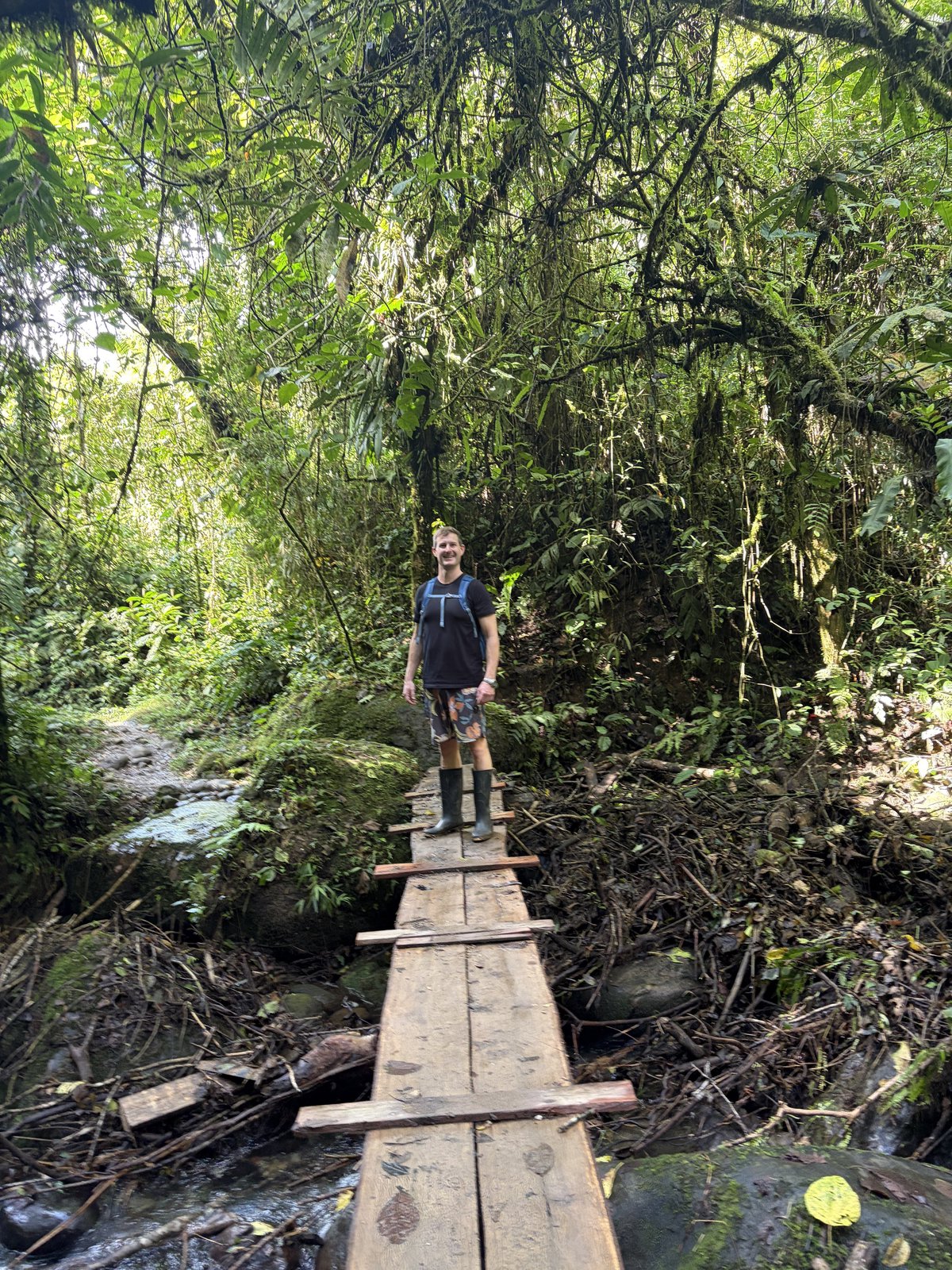
After lunch we drove down the road to embark on today’s main event, a hike to the Cascada Hola Vida. We donned the rubber boots that he had brought for us and off we went. The hike also served as a narrated nature walk and Carlos showed us various plants and taught us about their properties and uses in indigenous culture. He was quite skilled at identifying bird calls as well and could tell what sort of bird we were hearing and then would show us a picture of it from an app on his phone if we were unable to see the actual bird itself.
He had taken us on the “off the beaten path” trail so that he could show us certain plants, and perhaps to also add to the idea of the allure of the Amazon jungle, and we laughed when we connected with the main trail that was much easier to navigate than the route we had taken.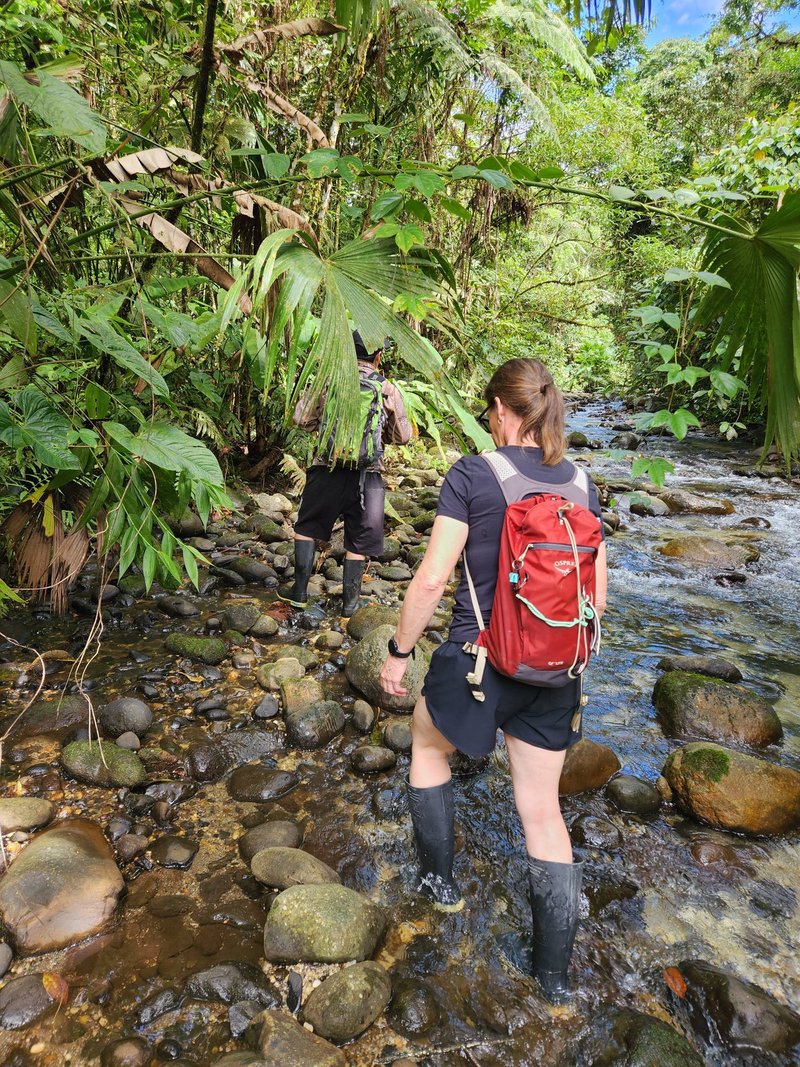
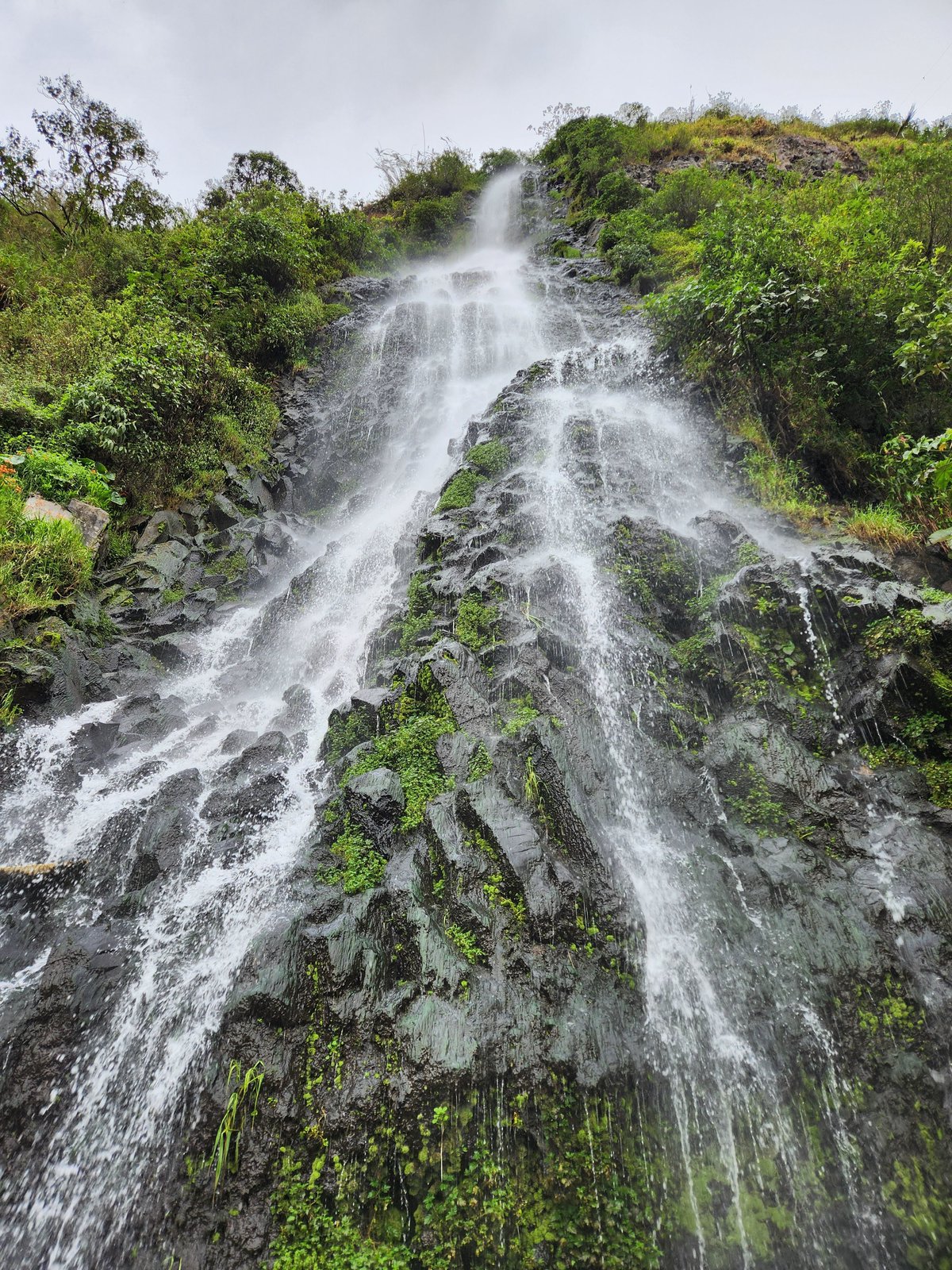
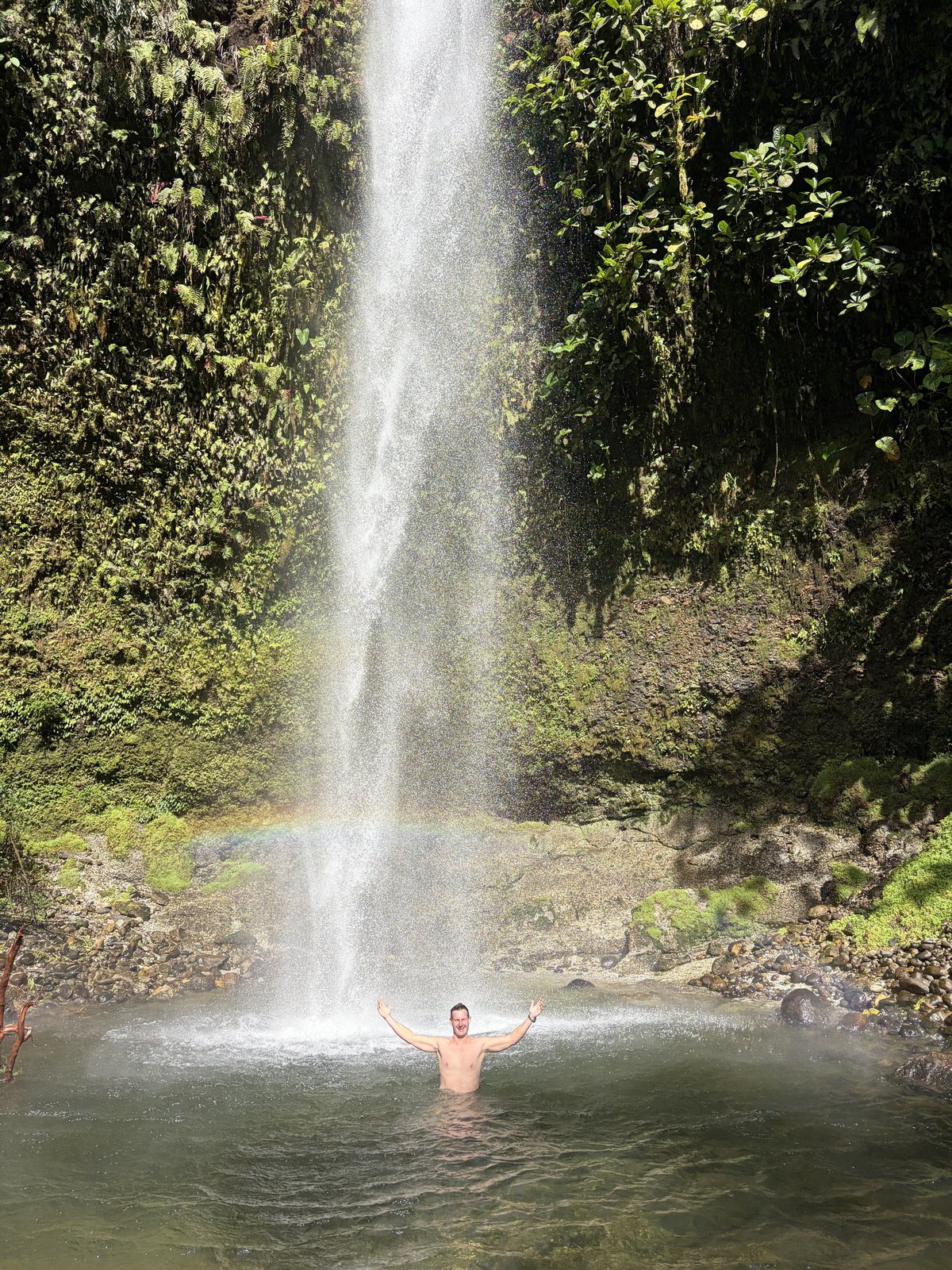
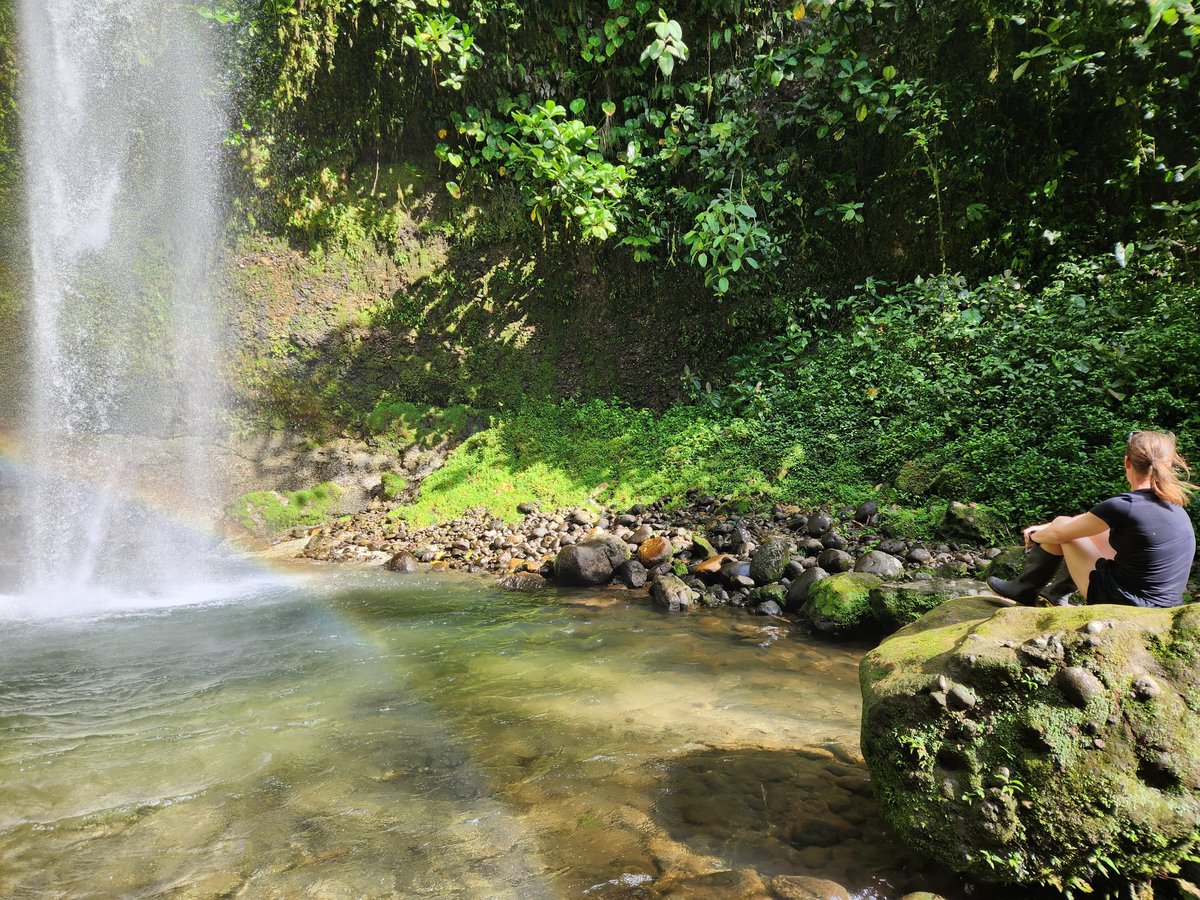
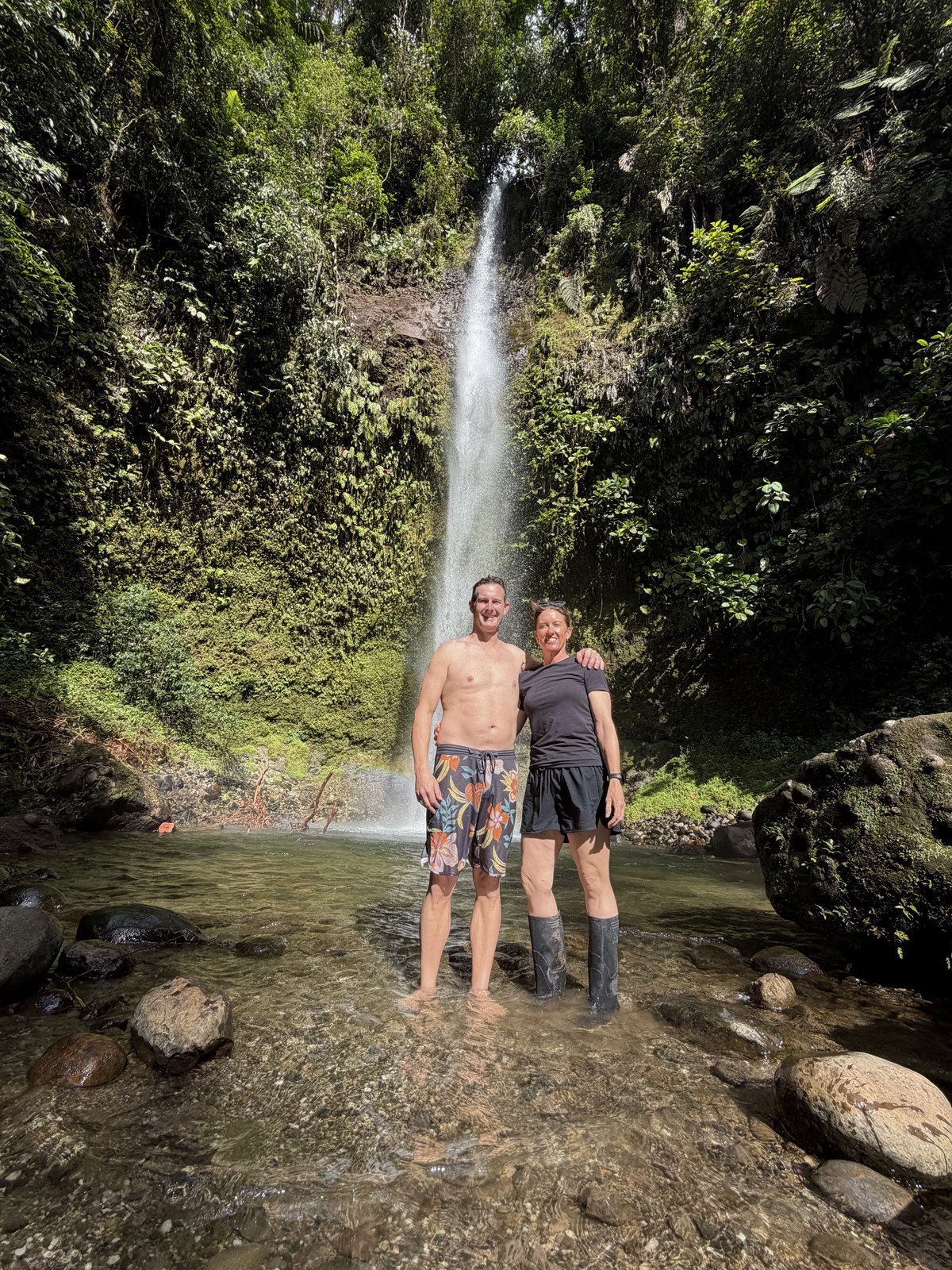
A few minutes later we arrived at the waterfall. In typical Scott fashion, he stripped down (thankfully just to his swim trunks since Carlos was chaperoning this adventure), and hopped in the water, headed for the 21 meter waterfall. I stayed on the shore and perched myself on a boulder to watch since I was still feeling off. He enjoyed getting pummeled by the strong water for a bit before coming back over to the edge of the pool and redressing.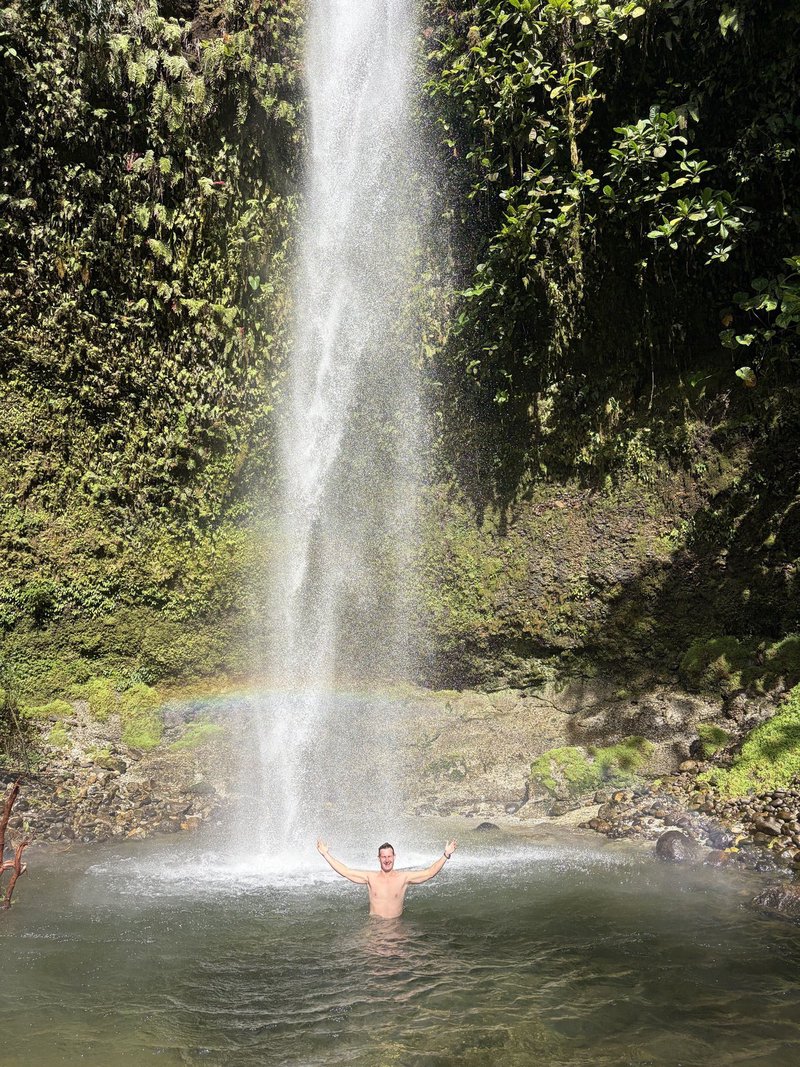
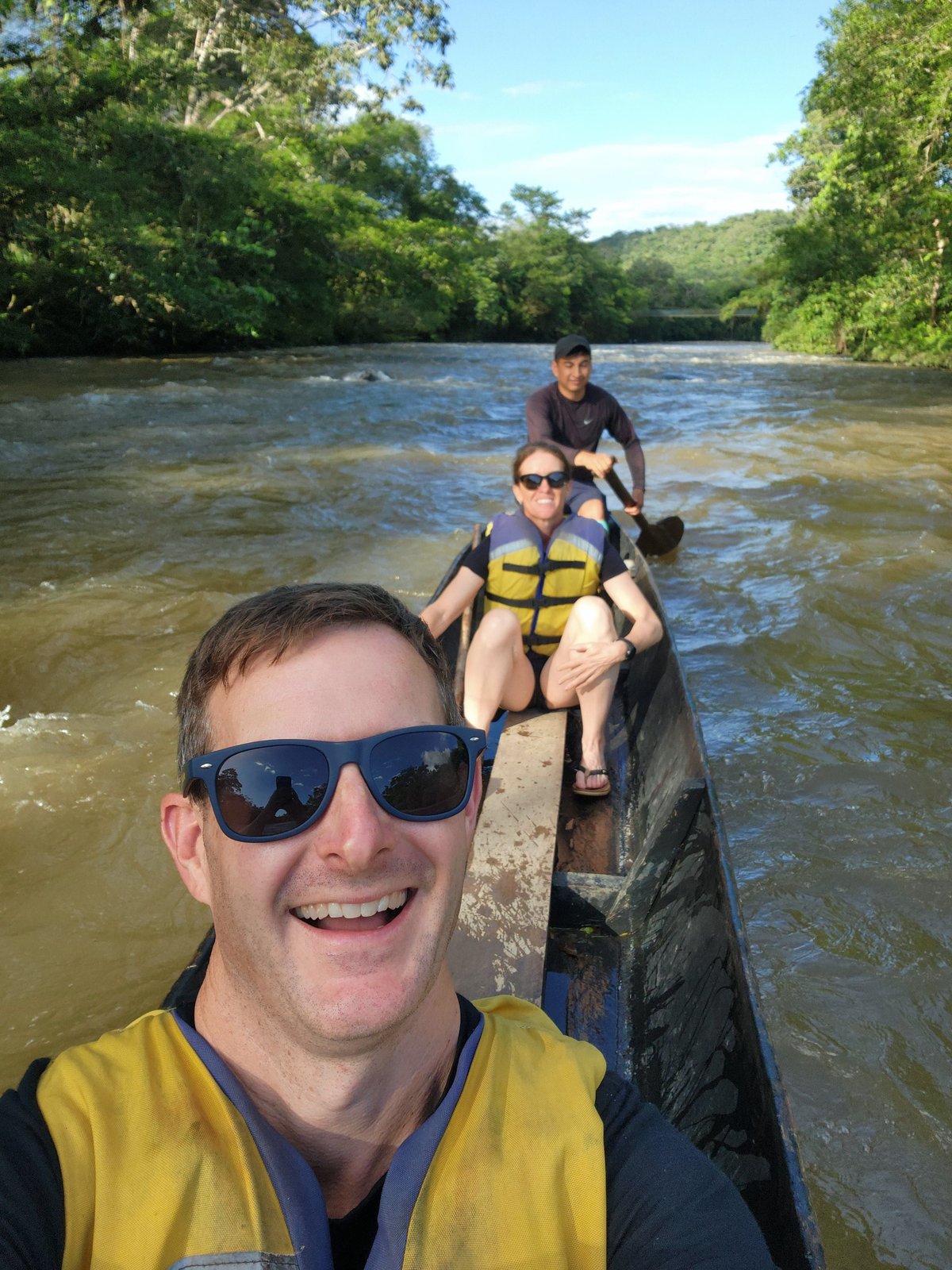
We made our way back to the truck and changed out of our rubber boots. The next adventure that lay ahead for us was a canoe ride on the Puyo river. Carlos took us to the put in where a dugout canoe and guide awaited us. We were instructed to put on PFD’s and to climb in. Scott was bummed that we weren’t handed paddles and instead would just be passengers.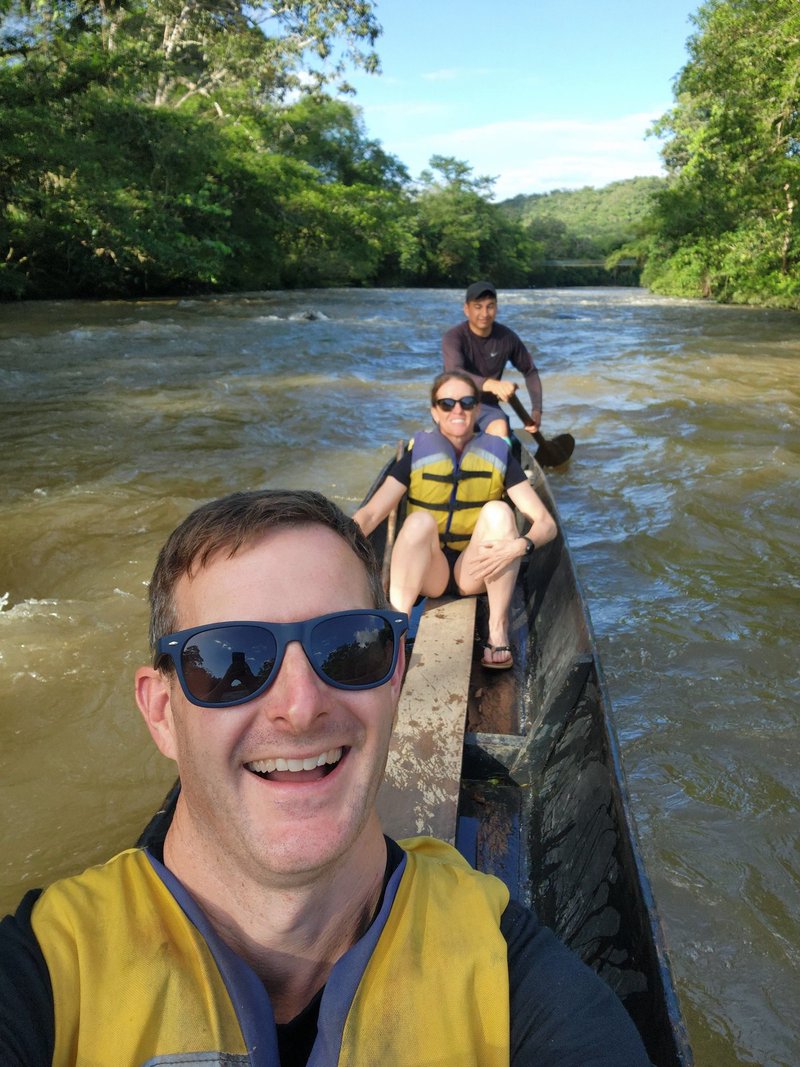
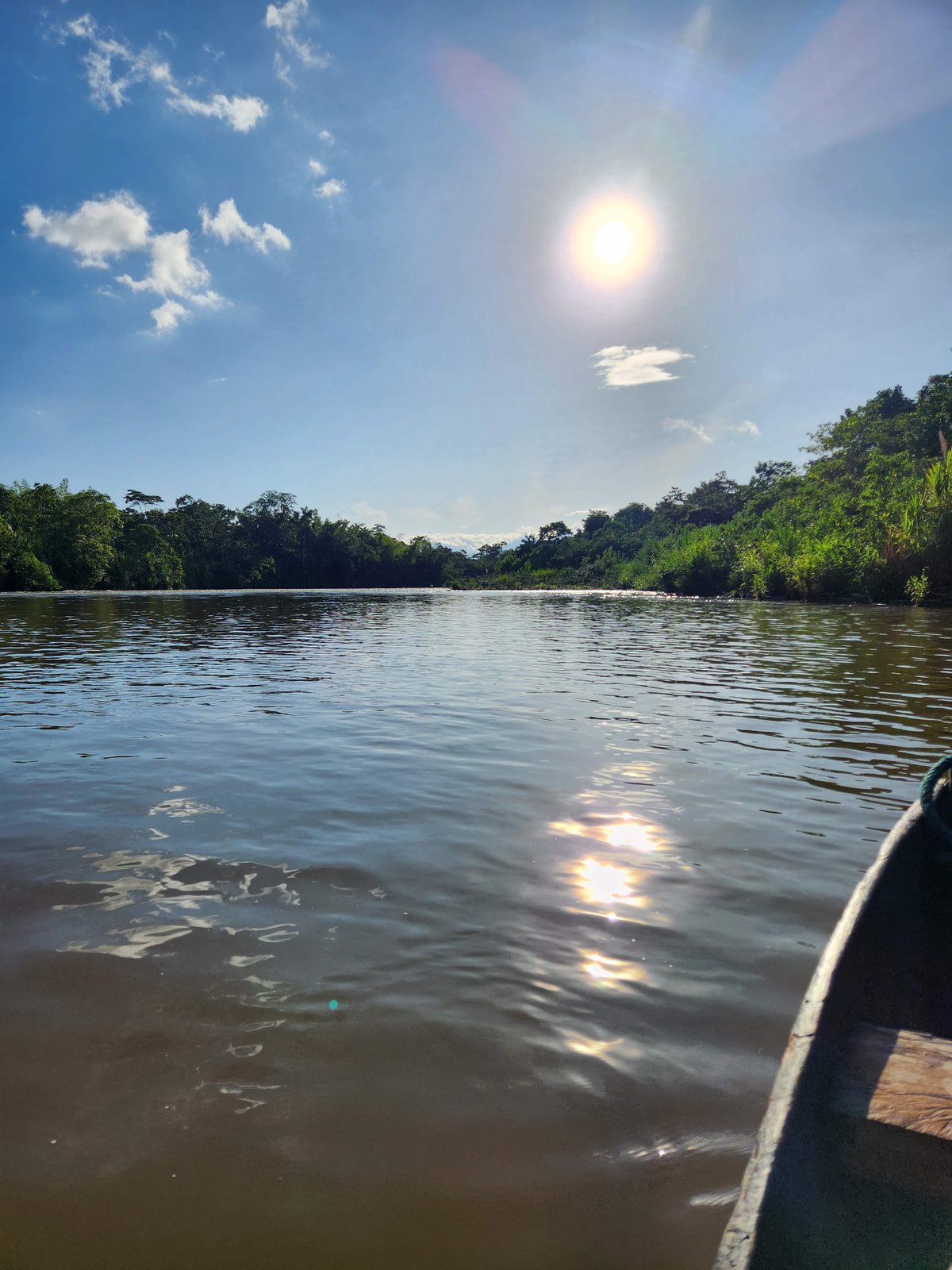
It was fun to see the Amazon from the middle of the river and we could see the Sangay volcano ahead of us in the distance when we rounded one of the bends. As far as canoe rides go, it was pretty sedate, but it was still enjoyable and my stomach actually calmed down for a while, probably because I was distracted. Seemingly, we blinked and then we were at the takeout with Carlos standing on the shore to help us out of the canoe.
We thanked our canoe guide and then followed Carlos back to the truck. He then informed us that we were heading to another “mirador” (viewpoint). We would be watching the sunset over the Pastaza river basin from this overlook.
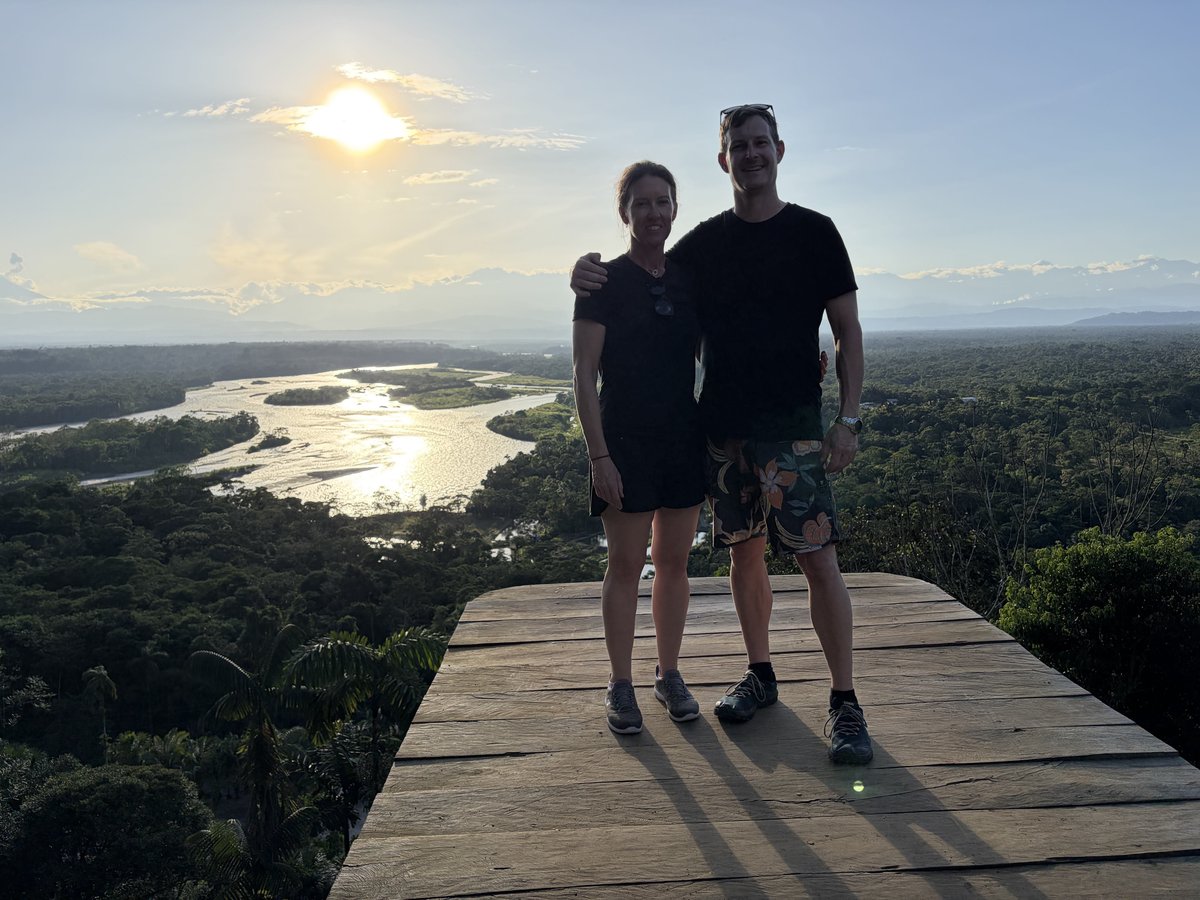
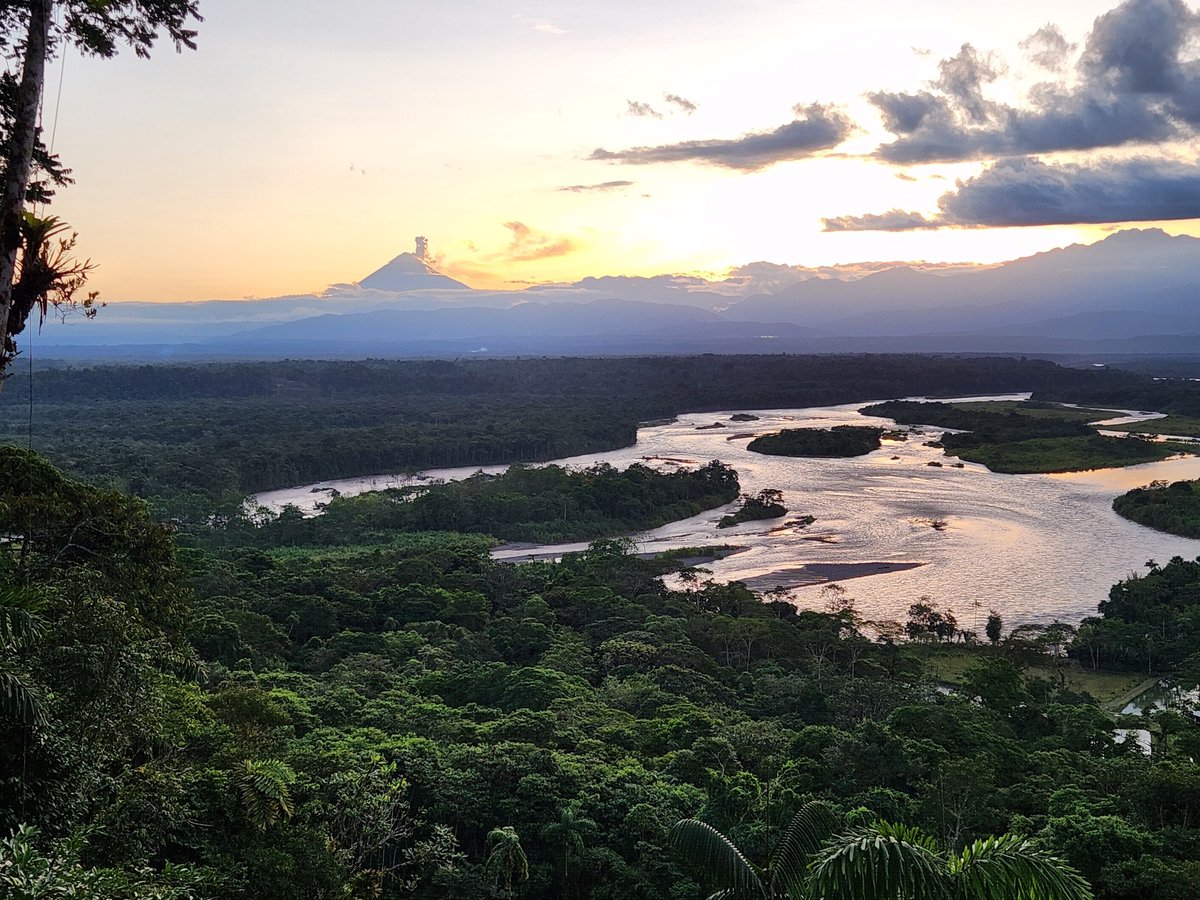
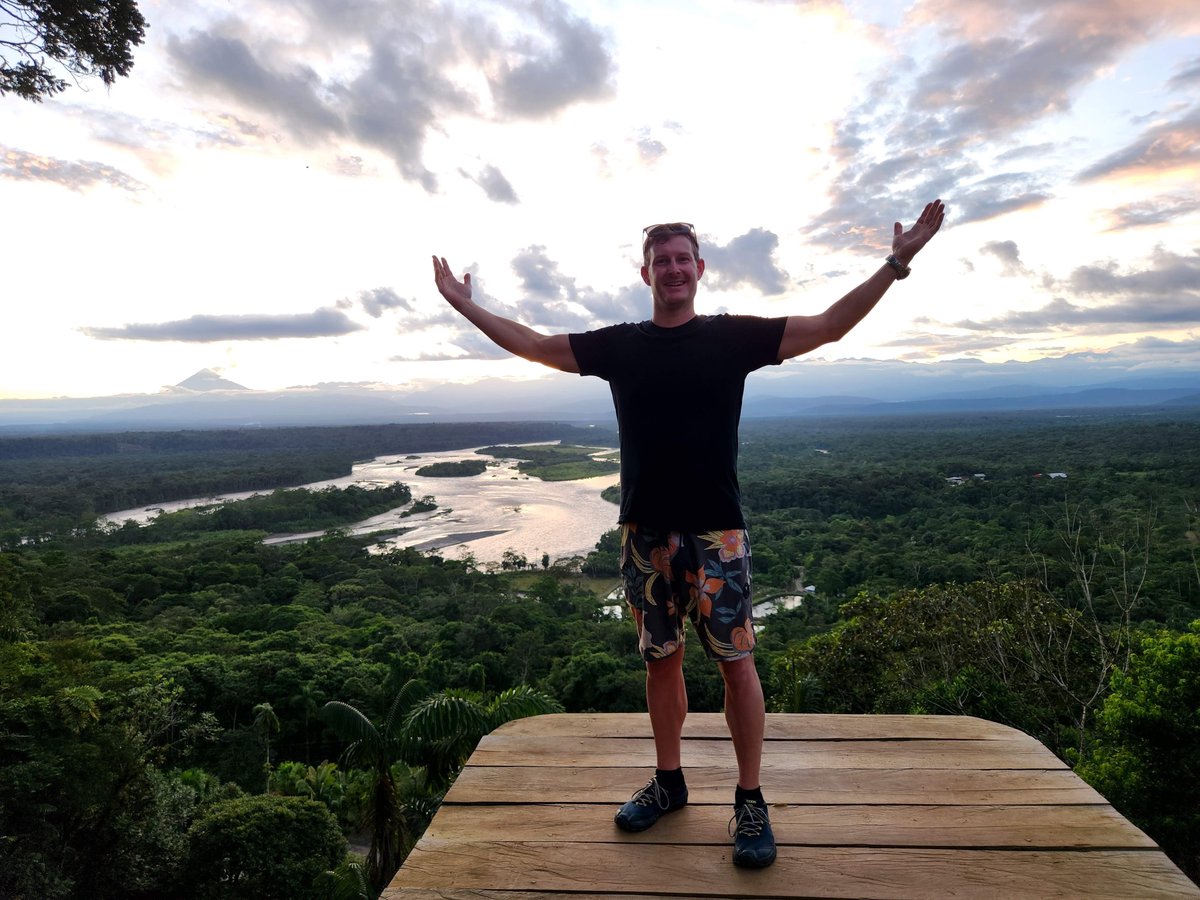
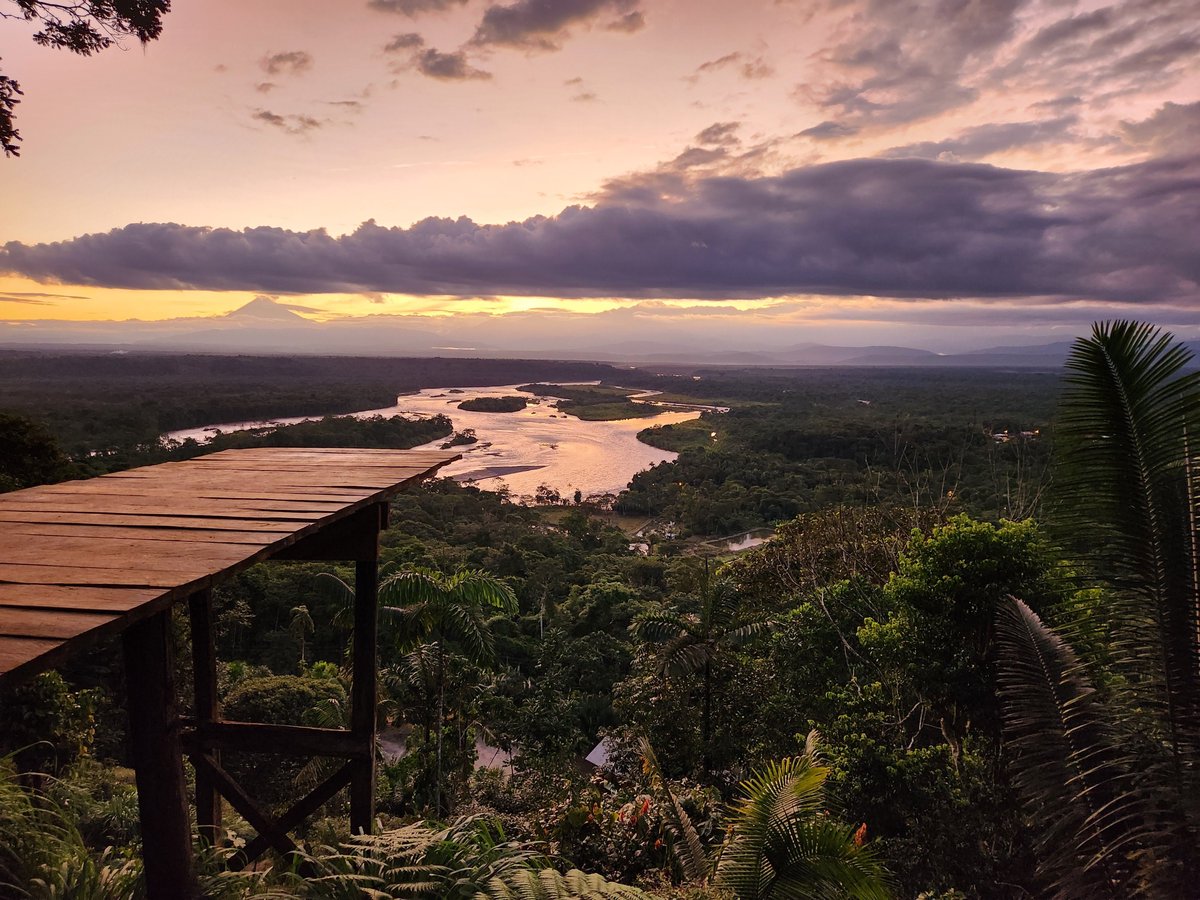
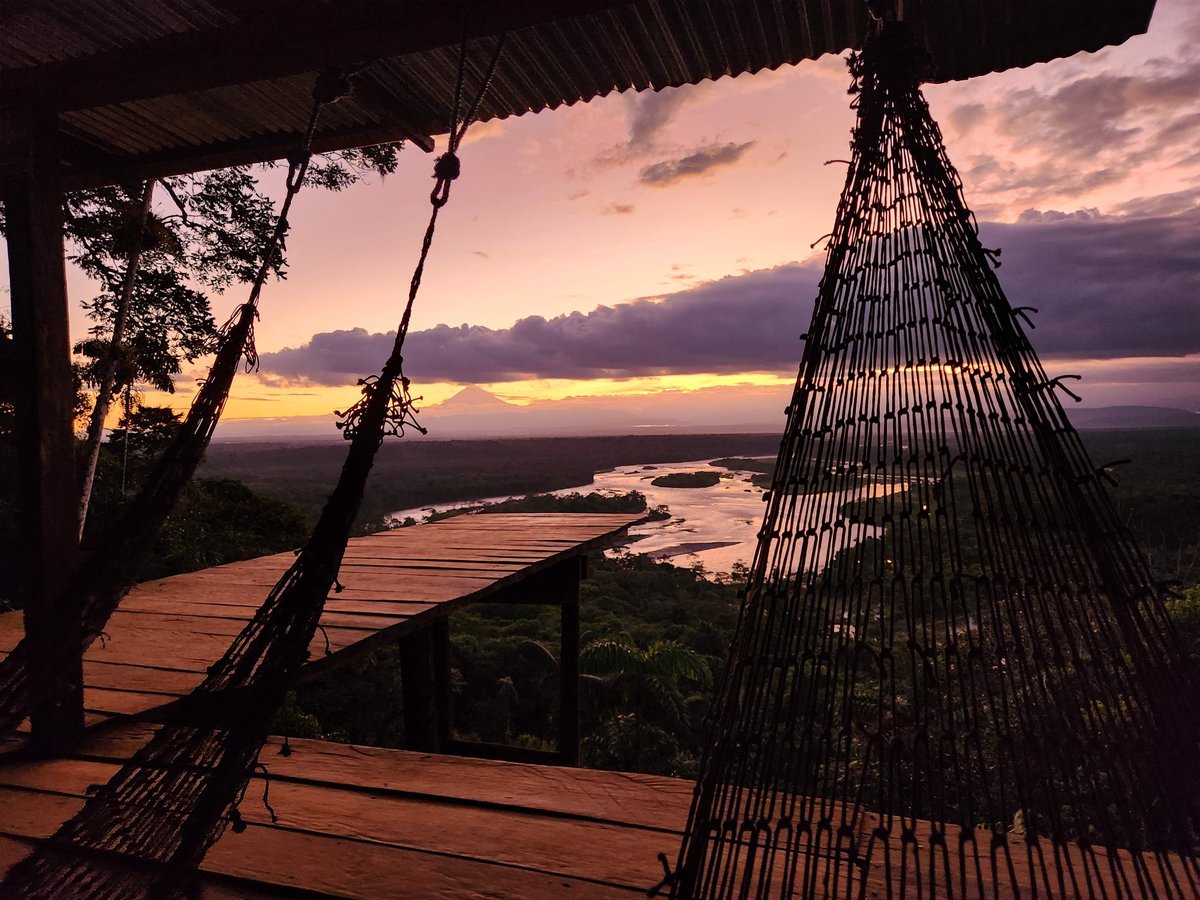
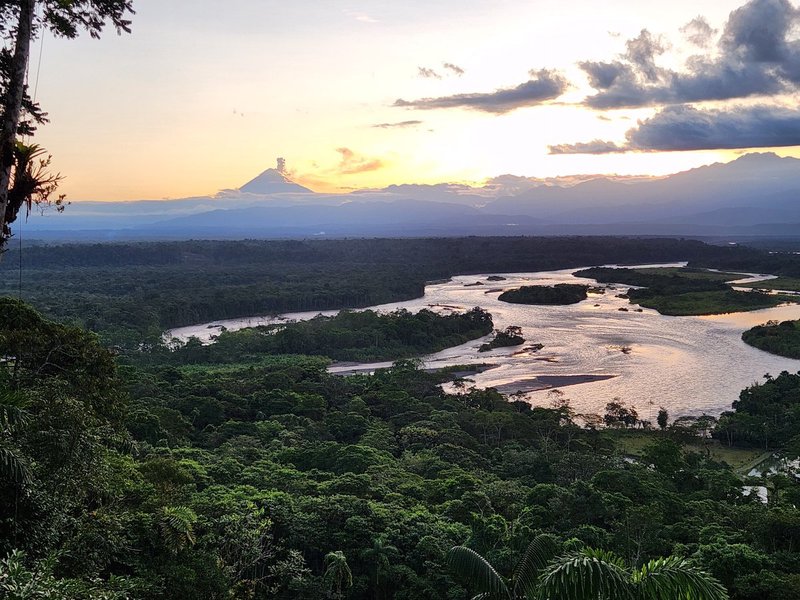
Once there, Carlos and Scott opted for the steeper climb and I took the more looping trail with switchbacks and met them up at the observation platform. It was an incredible view and you could see miles and miles of the Amazon jungle spread out below with the Pastaza river running widely through it, and way beyond that, looming over the jungle, several of the famous volcanoes; Tungurahua in Baños being the closest.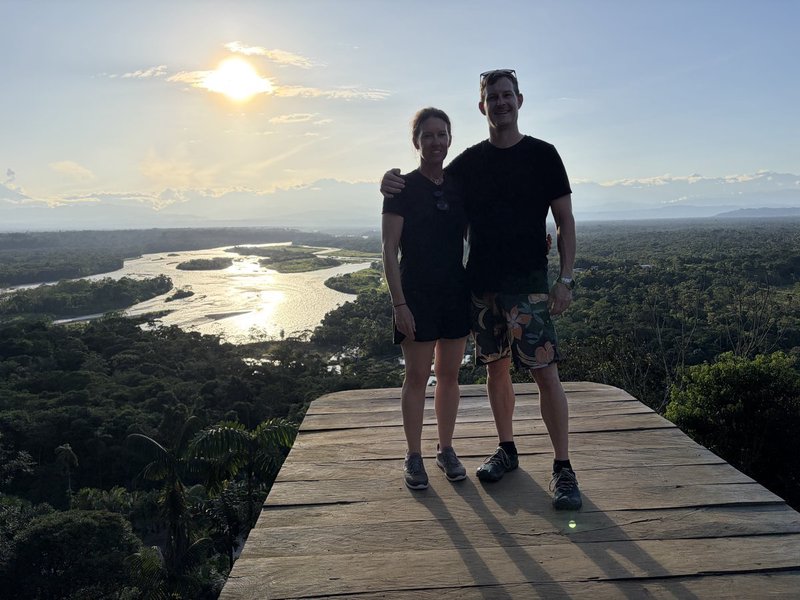
I parked myself in a hammock and looked out at the lovely scenery in front of me and Scott enjoyed taking pictures of the sunset. He showed Carlos his “PeakFinder” app which identifies the mountain peaks that you are seeing.
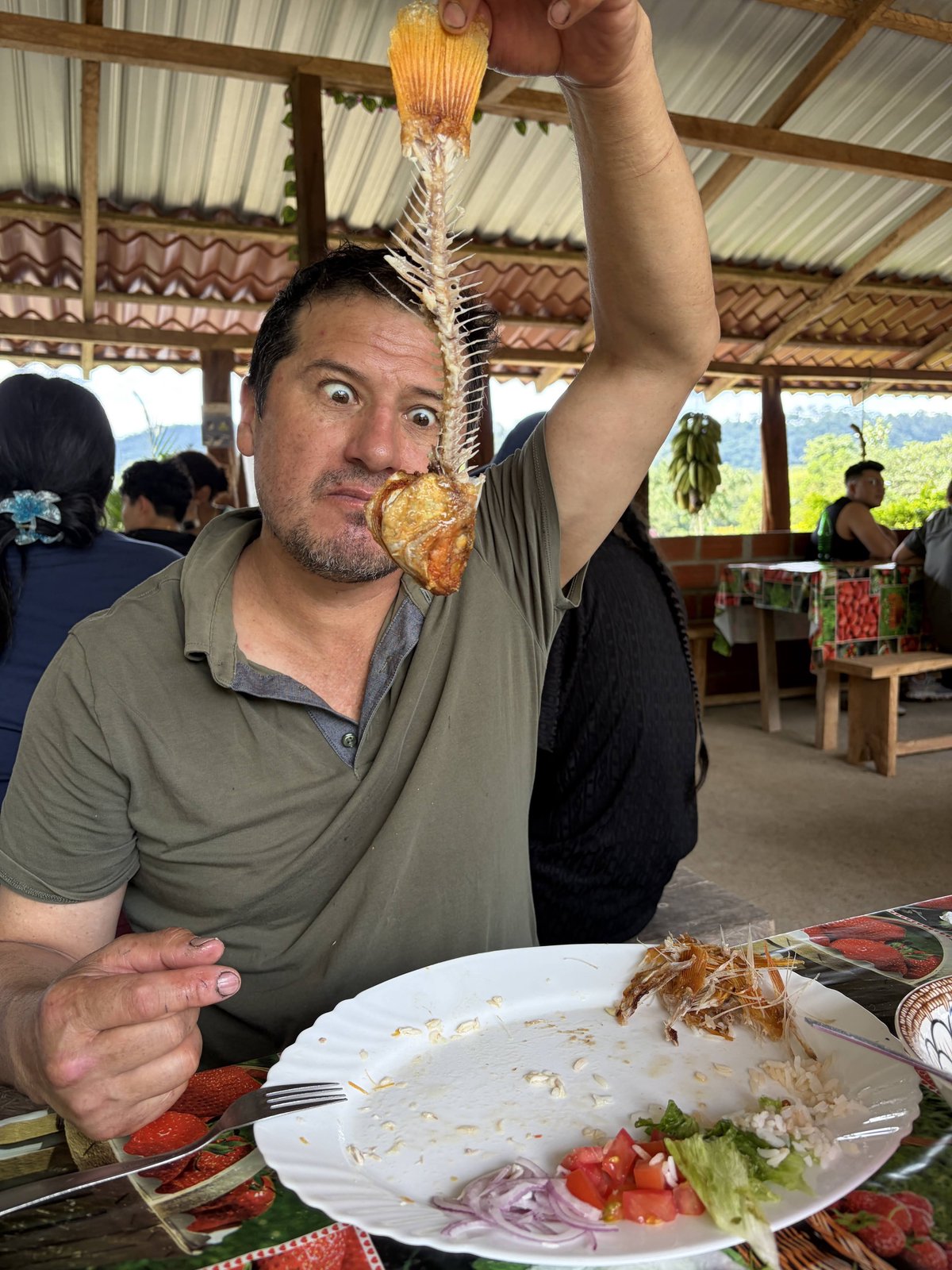
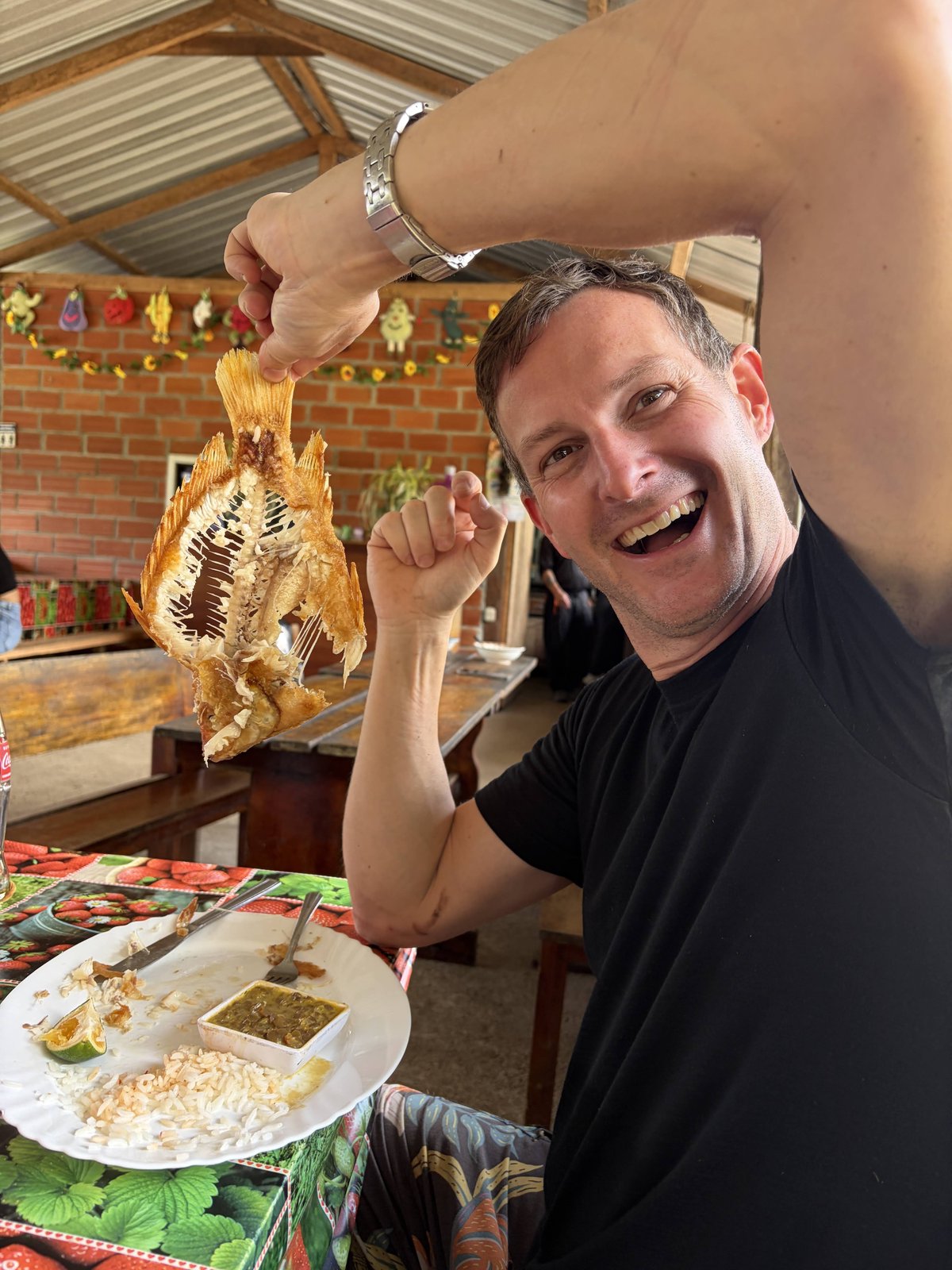
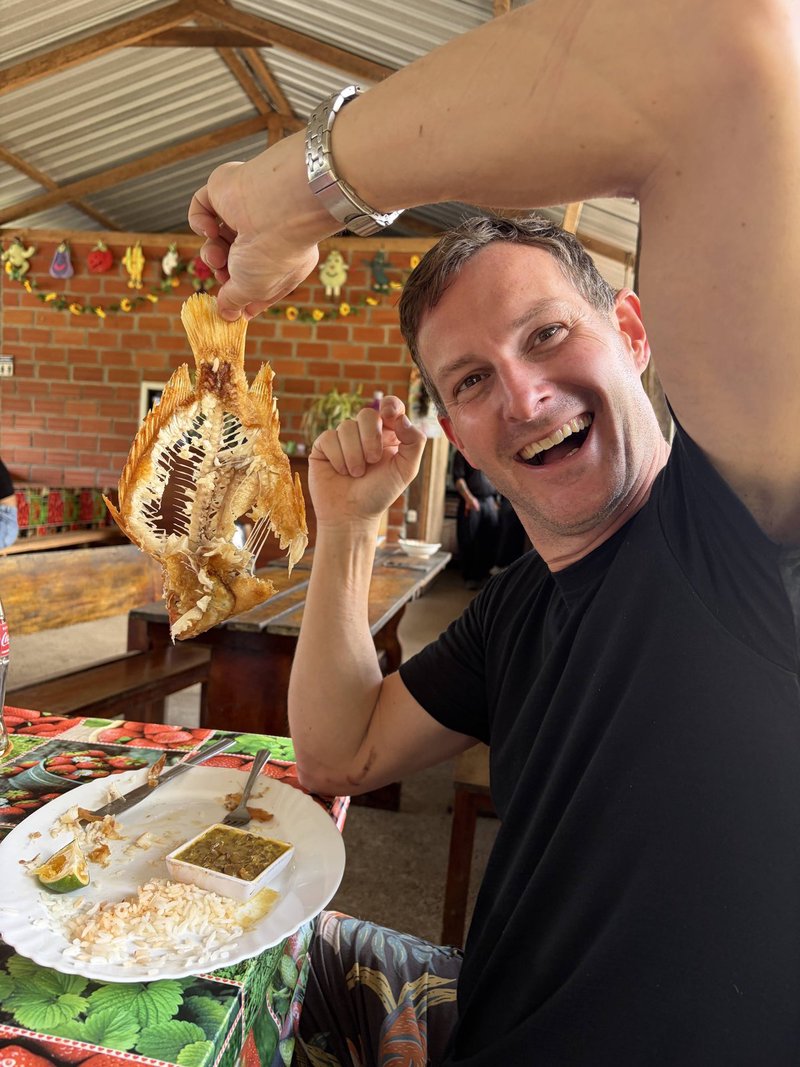
When the sun had dipped below the horizon we descended back down the trail and returned to the same restaurant for dinner. I was feeling better but was still cautious and stuck to soup while Scott went for tilapia again, but this time opting to have it fried. Carlos had the same meal as Scott and put Scott to shame in his ability to harvest every fleck of meat from the fish’s body, leaving just a clean skeleton at the end.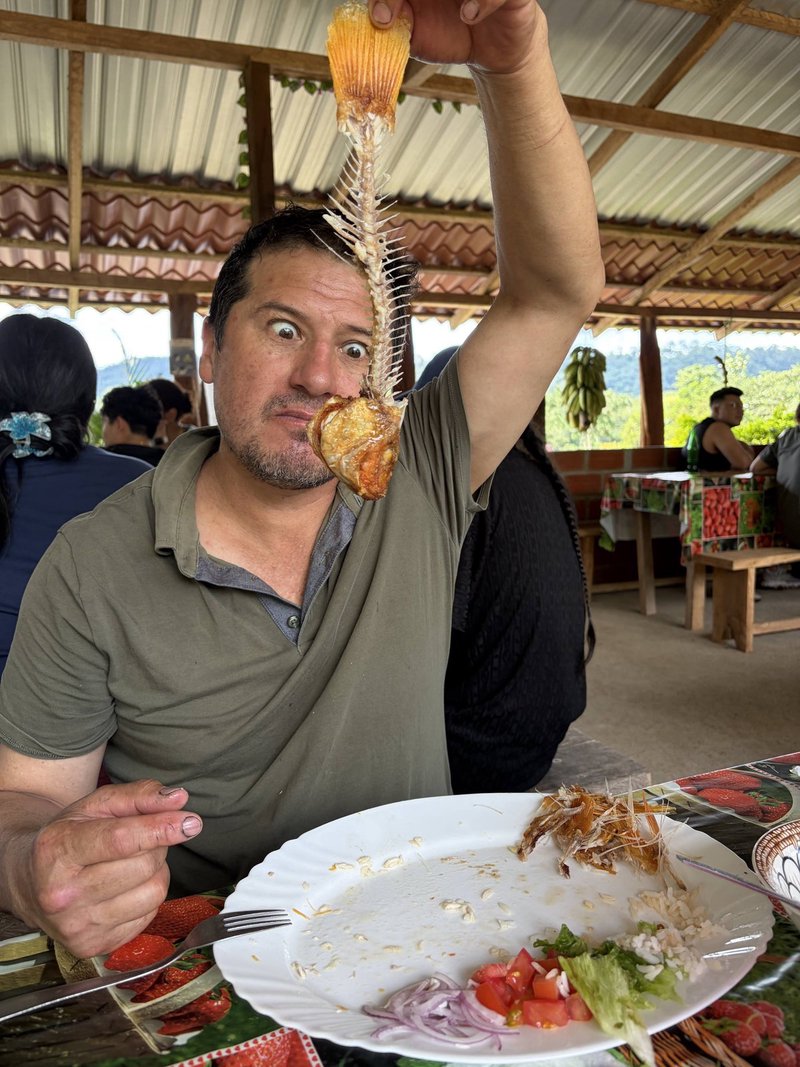
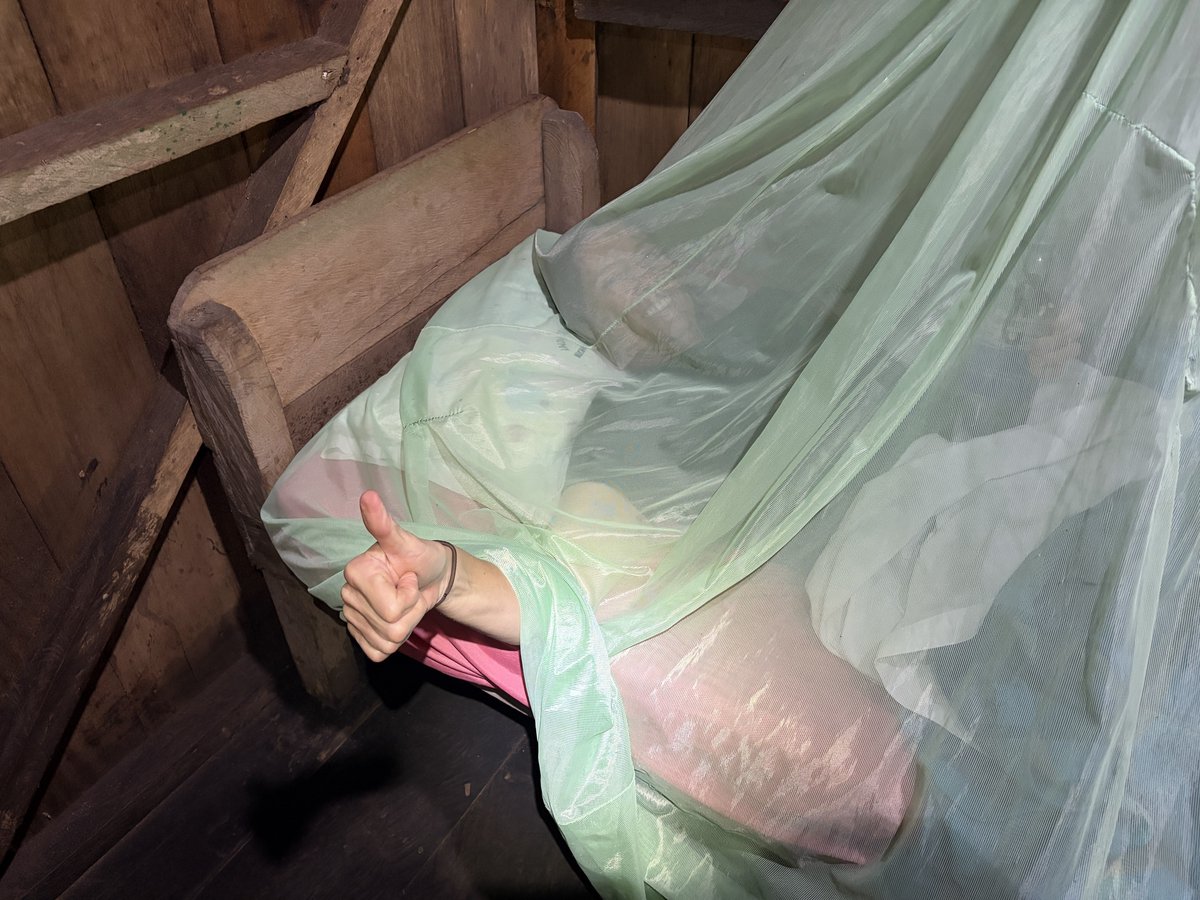
At this point I wanted nothing more than to just be able to sleep, so we headed to our accommodations for the evening so I could get dropped off before Carlos took Scott on the “night hike.” It was the most basic bungalow imaginable, and I didn’t care what it looked like at that point. I only cared about climbing under the mosquito net above my bed and sleeping, which is exactly what I did.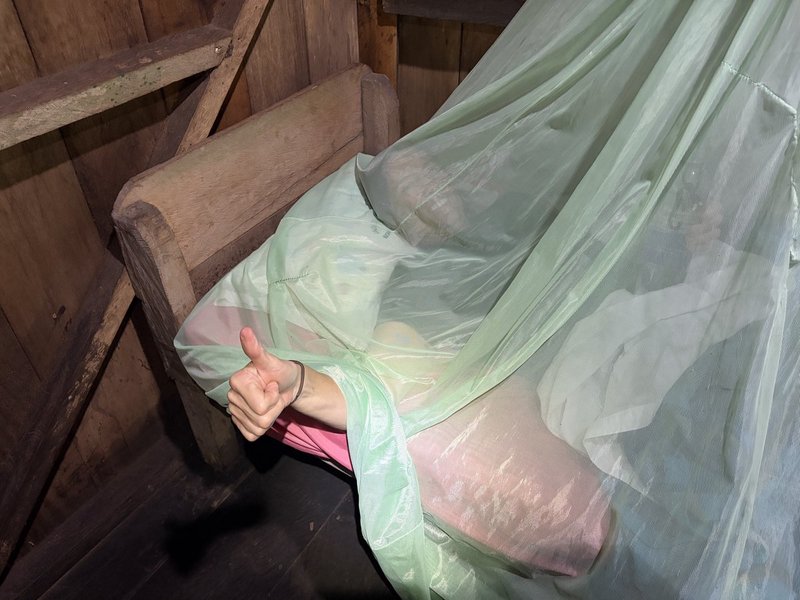
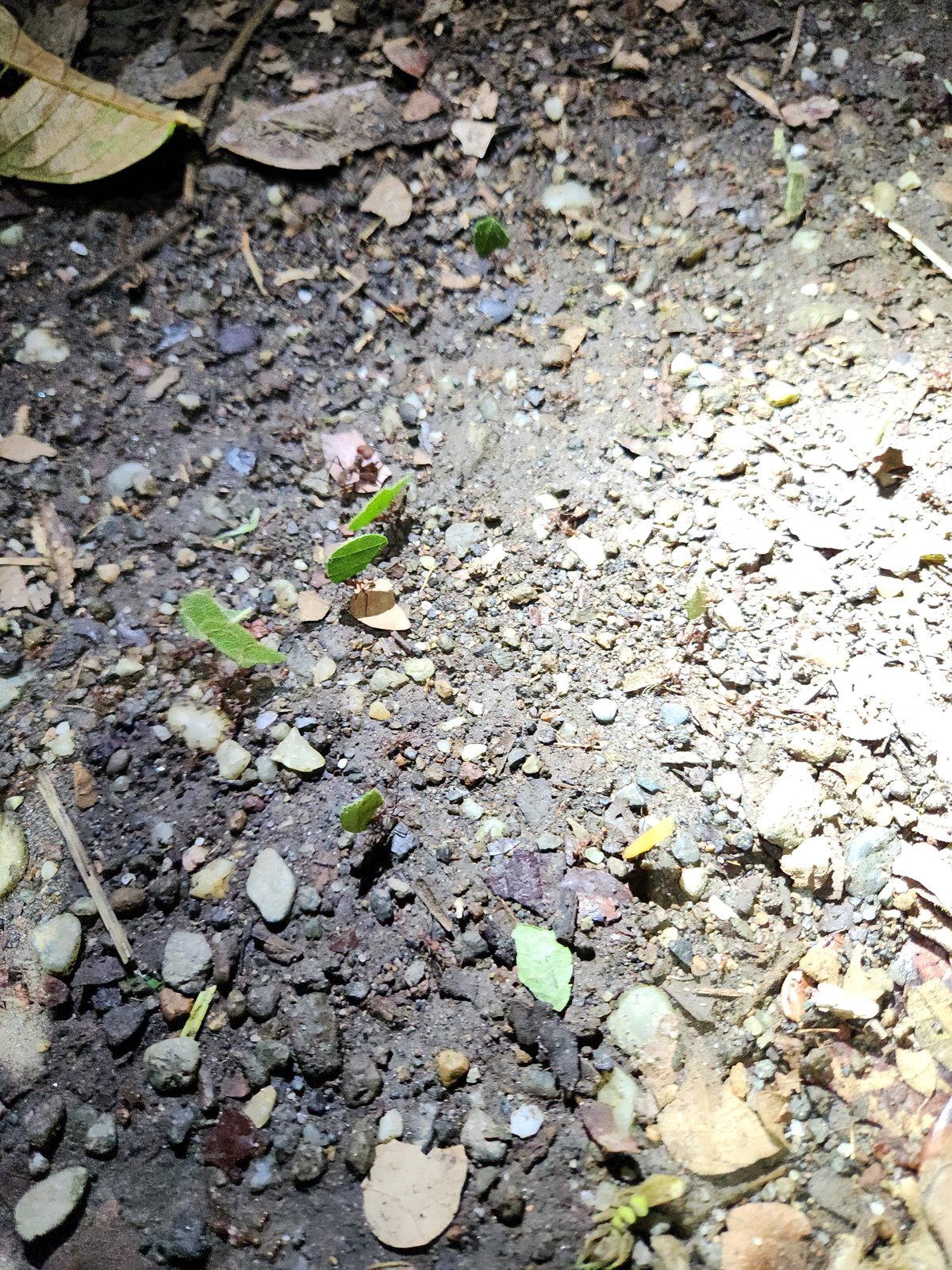
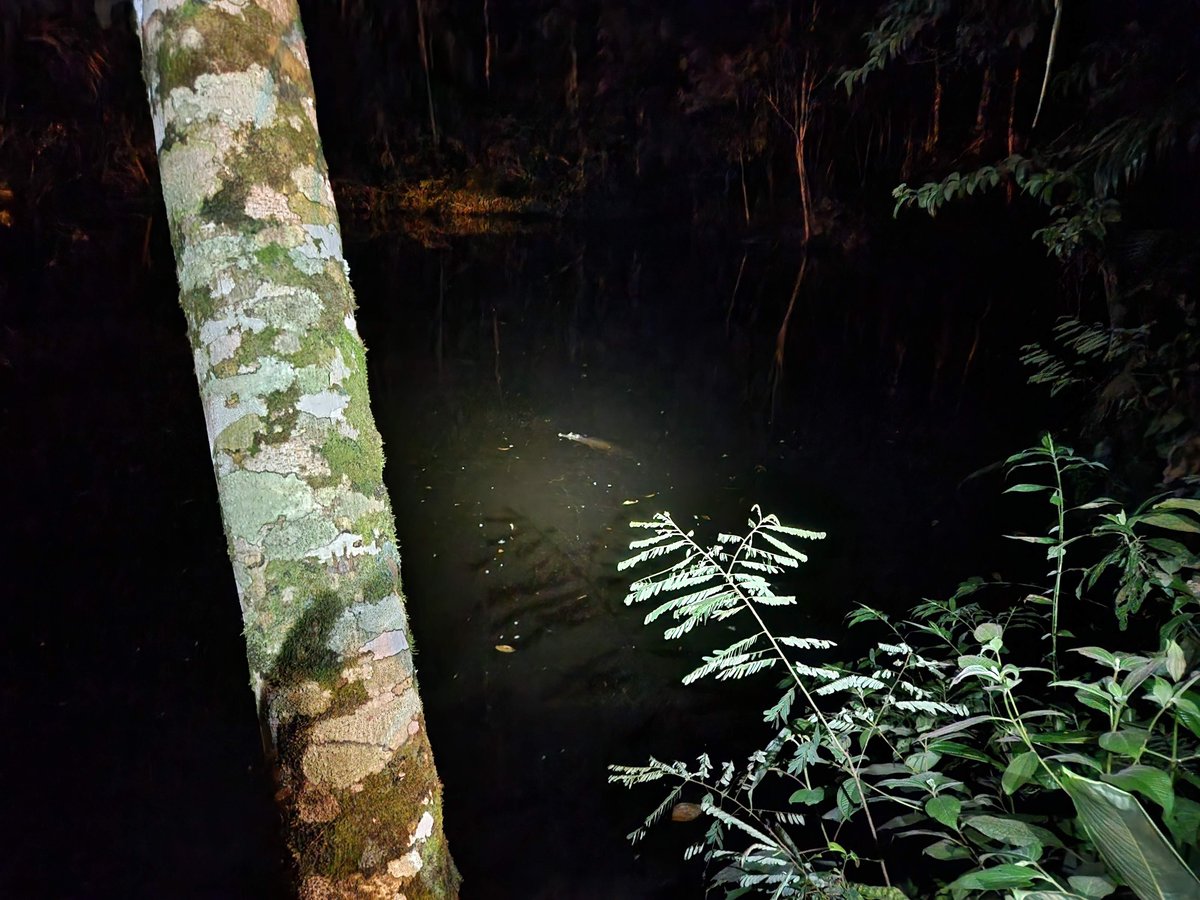
The night hike consisted of a walk around the grounds looking for some of the nocturnal Amazonian species. Scott said they encountered leaf cutter ants, and then when they got to a pond and shined their flashlight out over the water, saw a dozen pairs of eyes reflecting back at them… eyes that belonged to caimans!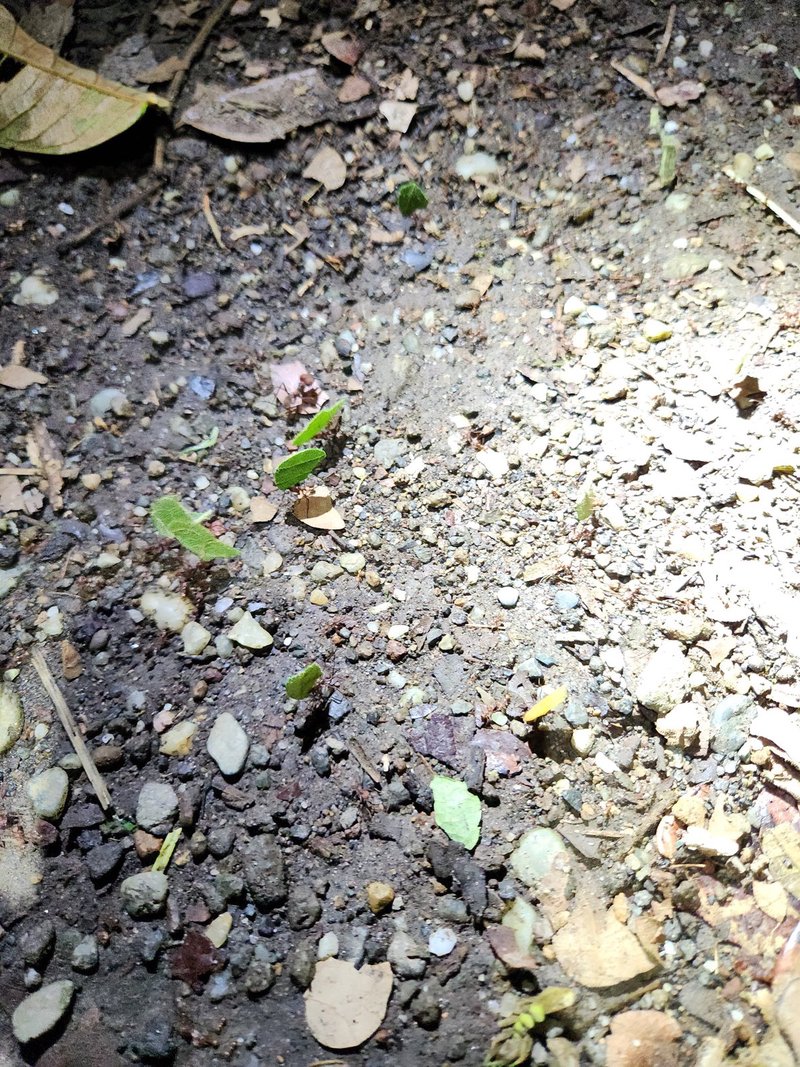
After the night hike was over, Scott came back to bed although I barely heard him come into the bungalow. He crawled under the mosquito net over his bed and tucked in for the night. We didn’t even bother playing white noise in the background this evening because the Puyo river right outside our open windows was an even better white noise backdrop.